
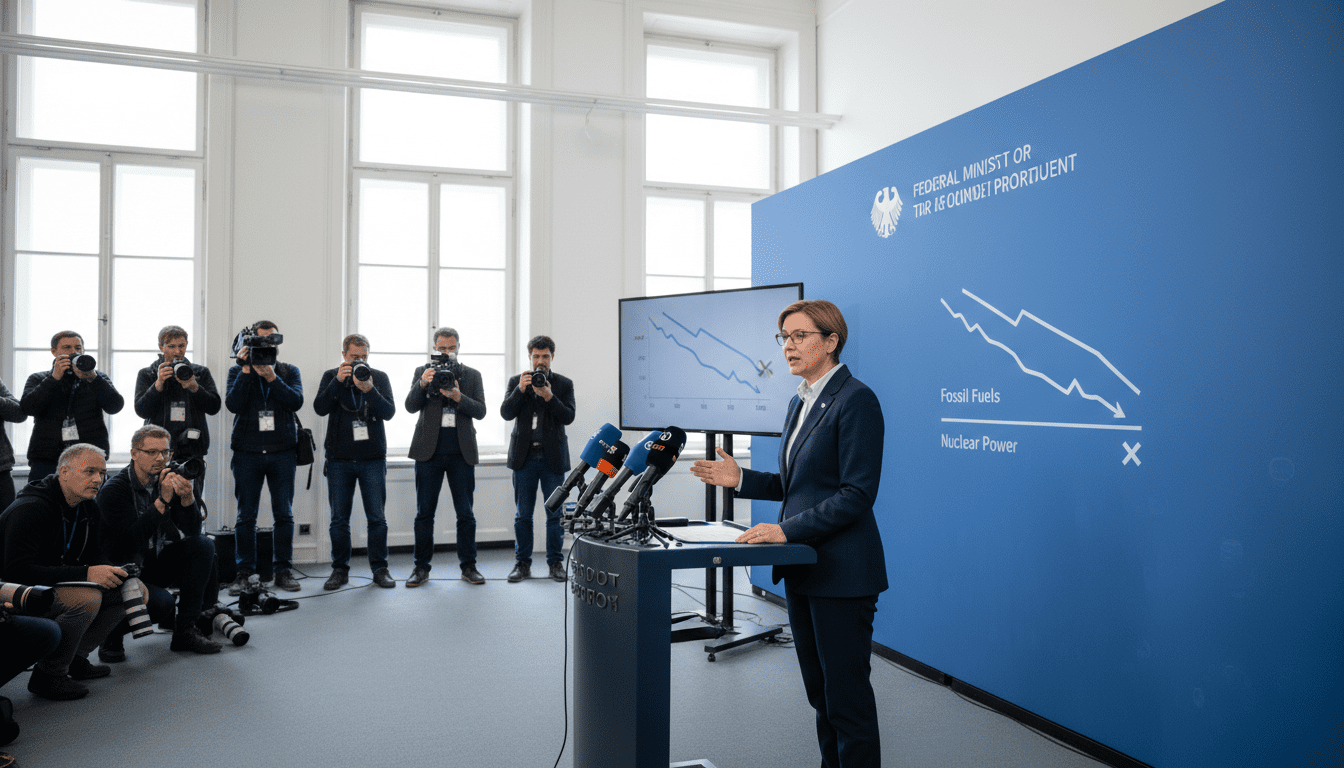
Nuclear power not the answer to the fossil energy crisis, German official says
Germany urged to focus on renewables as nuclear power deemed too costly, risky, and reliant on state guarantees to solve the fossil fuel emergency.
A senior German government official argued on May 5, 2026 that nuclear power is not a viable response to the current fossil energy crisis and urged a shift toward renewable alternatives. The commentary described nuclear as expensive, dependent on state guarantees, and beset by safety and waste-management challenges. The statement framed renewables, storage, and efficiency measures as the practical pathways for rapid emissions reduction and energy system resilience.
Official Statement Rejects Nuclear Renaissance
A commentary published on May 5 made clear that the government does not see a renaissance of nuclear power as a realistic or desirable remedy for the fossil fuel emergency. The official emphasized that reviving atomic energy would require substantial public subsidies and long-term state commitments that are incompatible with rapid climate action.
The piece argued that political momentum should instead be directed at accelerating technologies that deploy faster and cheaper than new reactors. Emphasis was placed on scalable solutions that can be rolled out widely without locking in high public liabilities for decades.
Costs, Timelines and Government Backstops
The government critique highlighted the high capital costs and long construction timelines that make nuclear projects poor candidates for short-term energy crises. New reactors typically take years or decades to plan and build, delaying any near-term relief for consumers and industry.
Equally significant, the commentary noted that many recent reactor projects have required government guarantees or bailouts to become financially viable. That reliance on public support was presented as a decisive factor against viewing nuclear power as a market-led solution to rising fossil fuel dependence.
Safety Risks and Waste Persist
Safety concerns remained central to the official argument, with the commentary stressing that nuclear incidents, while rare, carry catastrophic potential and long-term consequences. The piece underscored the need to weigh those risks alongside any purported climate or supply benefits.
Long-term radioactive waste disposal was described as an unresolved policy challenge that compounds nuclear’s overall risk profile. The official argued that safe, politically acceptable waste solutions remain elusive and would add costs and delays to any expansion.
Deployment Limits and Capacity Realities
The commentary drew attention to the practical limits of scaling nuclear power quickly enough to offset fossil fuel shortages. Even where new builds proceed, lead times and regulatory hurdles constrain how rapidly additional capacity can enter the grid.
Planners, the official warned, should not rely on hypothetical future reactors to meet immediate or medium-term seasonal shortages. Instead, realistic planning must account for the time needed to permit, finance and construct complex nuclear facilities.
Global Trends Do Not Signal a Wide Renaissance
While a handful of countries have advanced new nuclear projects, the commentary argued that this does not amount to a global renaissance. The official noted that many nations are prioritizing renewables, grid upgrades and storage technologies that deliver faster results with lower sovereign risk.
The statement pointed to the diversity of international energy strategies and highlighted that nuclear expansion is uneven and often contingent on heavy state intervention. That pattern, the official said, undermines claims that nuclear power is re-emerging as a universally scalable solution to the fossil fuel crisis.
Renewables, Storage and Efficiency as Immediate Tools
The official called for a rapid acceleration of renewable energy deployment, backed by stronger grid planning and investment in storage and demand-side measures. These approaches were presented as cost-effective, quick to install, and less dependent on enduring state guarantees than large nuclear projects.
Practical policy recommendations included faster permitting for wind and solar, targeted incentives for battery and hydrogen storage, and programs to boost energy efficiency across industry and buildings. The official argued that such measures offer the best combination of speed, cost containment and emissions reductions.
The debate over nuclear power’s role in the energy transition remains contentious, but the government’s public rejection of nuclear as the short-term fix narrows policy options. With the fossil fuel crisis pressing utilities and consumers, the statement frames renewables and system-level reforms as the immediate policy priorities that can deliver relief without imposing large, long-term public liabilities.
