
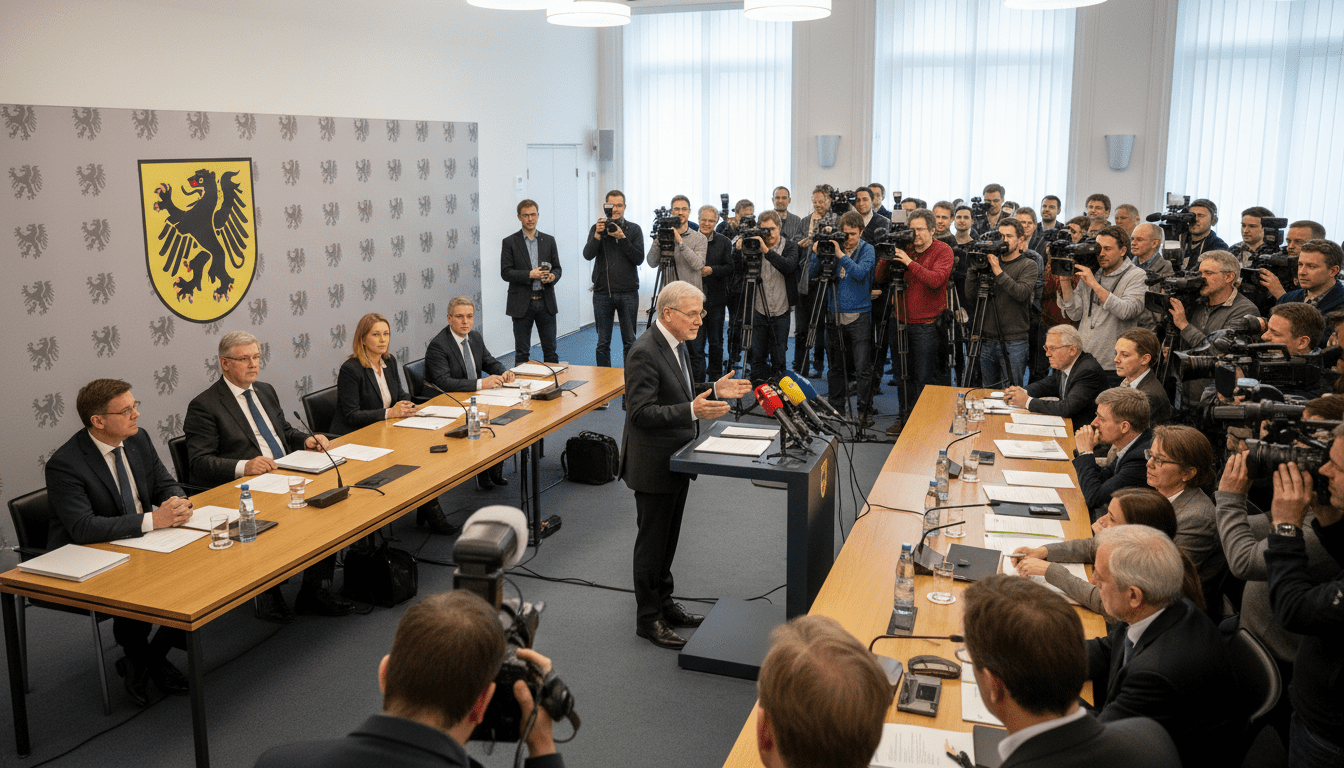
Baden-Württemberg pushes dual-use shift as regional task force maps civilian firms for defense production
A task force led by Jürgen Fleischer surveys Baden-Württemberg firms to map dual-use conversion potential and produce a guide for civilian companies eyeing defense work.
Jürgen Fleischer has launched a regional inspection to identify which civilian firms in Baden-Württemberg can pivot to defense production, with an explicit focus on dual-use capabilities. Commissioned by the Staatskanzlei in Stuttgart, Fleischer’s team will visit manufacturers across the state and deliver an overview by December 31, 2026. The initiative aims to generate actionable data and a practical guide for companies considering entry into defence-related markets.
Fleischer’s mission and mandate
Fleischer, president of the Wissenschaftliche Gesellschaft für Produktionstechnik and a professor at the Karlsruhe Institute of Technology, frames the effort as preparatory rather than alarmist. He has told associates that while Germany remains at peace, geopolitical conditions are shifting and the industrial base should be ready to respond where necessary. Bureaucratic hurdles in Berlin and Brussels, he said, make a regional, pragmatic approach necessary.
The task force approach will combine company visits, capability mapping and data analysis to assess technical fit, workforce needs and certification gaps. Fleischer has signaled the final product will be a guideline to help medium and small enterprises evaluate pathways into defense production while respecting legal and export controls.
Industry footprint in the state
Baden-Württemberg, anchored by the Stuttgart and Lake Constance regions, is long established as a hub for advanced manufacturing and security technologies. The state hosts roughly 4,000 noted industrial firms, many of them specialized “hidden champions” with niche technologies and global market leadership. That dense ecosystem provides a broad base for evaluating dual-use potential across sectors.
Clusters of suppliers, OEMs and research institutions create opportunities for rapid partnerships and technology transfer, but they also concentrate strategic dependencies. The regional review will therefore look not only at individual firms but at supply-chain resilience and where redundancies could be beneficial for national security.
Current defense spending and industry scale
Official figures referenced by the task force note the German security and defense industry reported a 2022 turnover of about €47 billion and employs roughly 390,000 people, with two-thirds of revenue stemming from defense and one-third from security markets. The sector is largely medium-sized in composition, with nearly 40 percent of companies falling into the small and medium enterprise category. These data shape the economic scale of any potential conversion effort.
Observers cited by the team underline that public defense spending has been trending upward after decades of relative decline as a share of GDP, and that planning assumptions suggest substantially higher budgets in coming years. That fiscal trend makes assessments of industrial capacity and bottlenecks more urgent for policymakers and companies alike.
Corporate moves toward defense work
A number of firms in the region already have ties to defense or are moving closer to defense partnerships, providing case studies for the task force. Established defense companies and subsidiaries of international groups operate in Baden-Württemberg alongside industrial manufacturers that previously eschewed military customers. Some corporate leaders now describe pivoting to defense as a response to security needs rather than a pure market decision.
Notable examples under discussion include manufacturers known for optics, laser systems, automotive components and precision engineering, some of which are actively negotiating collaborations with defense firms. Executives and industry representatives say these shifts are being presented internally as a societal obligation to national and European security, subject to strict compliance and licensing processes.
Standards, certifications and production hurdles
Fleischer’s team highlights that moving into dual-use or defense production is not simply a matter of retooling a factory; it requires meeting specialized standards, controls and interoperability requirements. European EN 9100 quality standards for aerospace and NATO Standardization Agreements (STANAGs) are among the certifications and harmonization frameworks firms must confront. Meeting these expectations typically demands investments in quality systems and auditing regimes.
Beyond certification, the conversion challenge touches manufacturing philosophy: civilian industries optimize for high volumes and cost efficiency, while defense work often requires low-volume, high-reliability production with tightly controlled supply chains. Industry 4.0 and flexible manufacturing concepts can reduce the gap, but Fleischer stresses that many companies will need dedicated processes and supply-chain safeguards to comply with export and security regulations.
Roadmap, data use and political follow-up
The task force plans to collect and analyze operational and technical data from the surveyed firms, producing a guideline intended to map entry routes into dual-use production and identify where state support or regulatory clarification is needed. That output is intended for companies and for regional and national policymakers to inform investment, certification assistance and workforce training programs. Fleischer anticipates significant interaction with ministries in Berlin and institutions in Brussels once the regional findings are compiled.
Policymakers will face choices between incentivizing protective industrial capacity, funding certification and training, and managing export-control obligations. The regional effort in Baden-Württemberg is framed as a preparatory step that seeks to provide evidence-based recommendations rather than immediate industrial directives.
Germany’s industrial landscape is thus entering a consequential period of reassessment, where decisions about dual-use capabilities will weigh technical feasibility, legal constraints and public debate. The Fleischer-led review aims to clarify which civilian firms can contribute to defense needs, what investments are required, and how public policy can support responsible conversion while maintaining oversight and compliance.
