
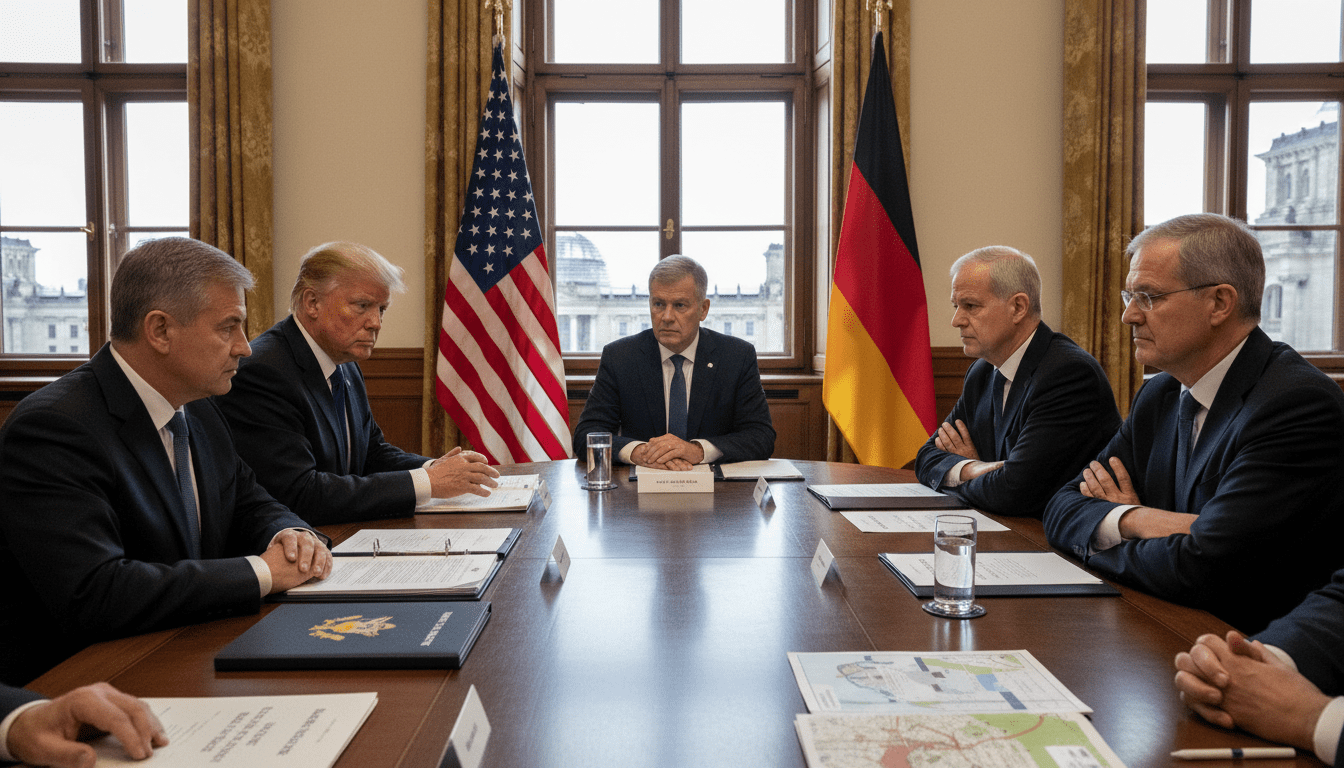
US troop withdrawal from Germany: Berlin alarmed as missile deployment is canceled
Germany alarmed as Trump orders US troop withdrawal from Germany and cancels missile plans; Berlin weighs diplomacy and pressure as NATO reassesses defense.
The German government expressed alarm after an announcement that includes a US troop withdrawal from Germany and the cancellation of planned intermediate-range missile deployments on German soil. Chancellor officials are said to be pursuing a two-track strategy of courting Washington as a security partner while preparing targeted political pressure to preserve deterrence. The decision has already set off debates in Berlin, at NATO headquarters and in communities that host American forces.
Berlin voices alarm over U.S. decision
The cabinet in Berlin described the planned reduction and the scrapping of missile stationing as deeply concerning for European security and alliance cohesion. Officials say the government will engage both publicly and behind the scenes to argue that sustained U.S. presence and coordinated NATO planning are central to deterrence. The chancellor’s approach, according to senior aides, combines diplomatic outreach with contingency planning to shore up European capabilities should U.S. forces be reduced.
Cancellation of missile stationing raises NATO questions
The removal of the planned intermediate-range missile deployment in Germany has prompted immediate questions about NATO’s shared posture and doctrine. Allies now face a potential capability gap in Europe that could require accelerated procurement, redeployment of other assets, or new burden-sharing arrangements. Military planners and diplomats are weighing how to reconcile Washington’s decision with NATO commitments while avoiding an escalation of regional tensions.
Ramstein officials skeptical of local pullout
At Ramstein Air Base, where U.S. logistics and operations for Europe, the Middle East and Africa converge, local leaders and base officials expressed skepticism that a wholesale withdrawal would occur. The mayor of Ramstein-Miesenbach indicated the community still expects the base to play a strategic role given its infrastructure and regional footprint. Local economies that rely on civilian and military contracts are already bracing for uncertainty, even as base commanders emphasize continuity of critical missions.
U.S. redeployment framed alongside Middle East posture
U.S. officials framed the troop movement and changes to European deployments in the context of an intensified focus on the Middle East, where the administration has signaled a tougher posture toward Iran. Announcements accompanying the redeployment included approvals for additional arms deliveries to Gulf partners and deployments intended to bolster air and missile defenses. Analysts caution that shifting forces between theaters can complicate alliance signaling and create short-term vulnerabilities that adversaries might seek to exploit.
Industrial and diplomatic fallout for German automakers and trade
The announcement arrives amid broader tensions in transatlantic trade policy, as Washington has recently floated higher tariffs aimed at encouraging foreign manufacturers to move production to the United States. German automakers, already navigating supply-chain and regulatory headwinds, now face another layer of geopolitical risk tied to bilateral relations. Business groups in Germany are urging diplomatic engagement to prevent long-term disruptions to investment and to maintain the integrated production networks that underpin Europe’s export sector.
European institutions confront broader trust and rule-of-law issues
The episode amplifies existing strains between Brussels and several member states over corruption, governance and the recovery of misused public funds. European institutions, already engaged in complex negotiations on financial accountability with Eastern European capitals, now confront an added challenge of ensuring that internal divisions do not weaken collective security responses. Diplomats say that a coherent EU stance on defense and the rule of law will be crucial to sustaining credible engagement with the United States.
Local concerns and other domestic developments surface
Beyond the strategic and economic implications, the news has refocused attention on local and humanitarian issues that often intersect with military decisions. Communities near bases are assessing the impact on housing, schools and services, while separate reports of hazardous consumer goods on online marketplaces and high-profile environmental rescues have kept domestic policy makers on alert. These concurrent stories underscore how international decisions filter down to affect municipal budgets, regulatory priorities and public sentiment.
The coming weeks are likely to see intense diplomatic activity as Berlin seeks clarifications and reassurances from Washington while NATO partners review force postures and contingency plans. German leaders face a delicate task of preserving transatlantic ties, sustaining deterrence in Europe and protecting local communities that have long hosted allied forces. Uncertainty remains high, and policymakers in Berlin and Brussels will be watching for concrete signals on force levels, redeployment timelines and cooperative measures to avoid a prolonged security gap.
