
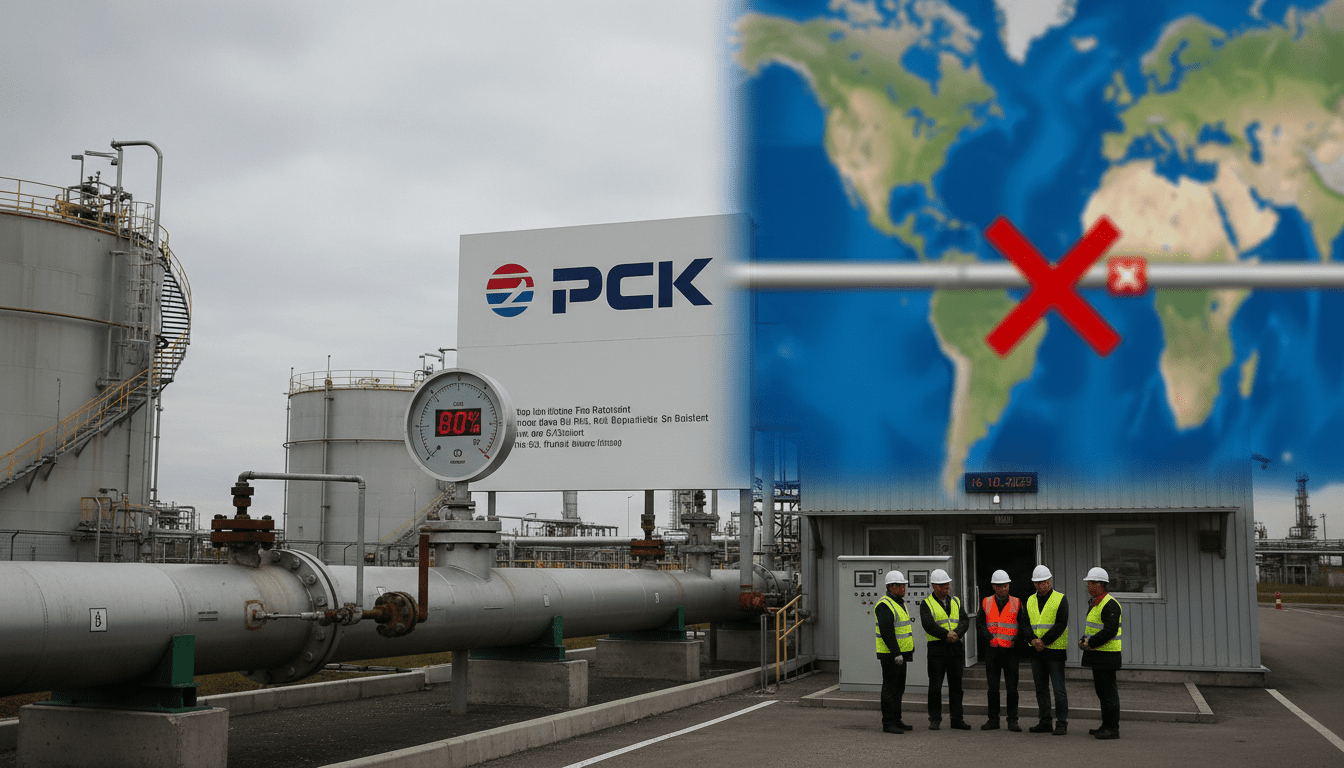
PCK refinery cuts throughput to 80% after Russia halts Druzhba crude transit
Russia halted Druzhba transit on May 1, forcing the PCK refinery near Berlin to cut throughput to 80% as Germany pursues supplies via Poland’s Danzig route.
The PCK refinery in Schwedt has begun operating at reduced capacity after Russia stopped the transit of Kazakh crude through the Druzhba pipeline on May 1, 2026. Management and workforce representatives say the plant can continue technical operations in the short term, but the loss of roughly two million tonnes of Kazakh crude poses a risk to profitability if the disruption persists.
Druschba transit stopped on May 1
The Russian decision to halt the flow of Kazakh oil along the Druzhba pipeline took effect on May 1 and immediately affected deliveries to the PCK refinery. The lost volume equates to about one-fifth of the refinery’s 2025 crude intake and represents a significant single-source reduction.
Officials described the suspension as originating from Moscow for “technical” reasons, triggering rapid contingency planning by PCK leadership and regional authorities. Days of remaining crude in transit and tank inventories have given the refinery limited runway to secure alternatives.
PCK reduces processing to 80 percent
PCK has lowered its processing rate from roughly 90 percent to around 80 percent utilization for May, a level company and state officials describe as the lower boundary for viable operations. Plant managers and the works council have emphasized that immediate technical functionality is intact and that production schedules will be adjusted to match feedstock availability.
Industry sources warn that sustained operation at or below 70 percent utilization would have clear economic consequences for the site and its owners. Labour representatives reiterated that reserves in pipelines and tank farms provide short-term cover, but they cautioned against assuming a prolonged steady state at current throughput.
Reserves, technical safety and short-term outlook
Plant engineers report no imminent technical risks tied directly to the reduction in crude receipts, and PCK says safety and maintenance regimes remain unchanged. The refinery’s inventory buffers and product pipelines mean immediate supplies of refined fuels to the Berlin metropolitan area and key customers are not at risk for now.
Brandenburg’s premier has publicly sought to reassure consumers that regional fuel security is maintained. Still, company and political leaders acknowledge that the window created by onboard reserves is finite and that the coming weeks will be decisive for securing alternative crude flows.
Poland’s Danzig link considered primary contingency
German authorities and PCK are pursuing additional crude imports routed through Poland’s Naftoport terminal in Gdańsk and the so-called Pomeranian pipeline as the principal short-term remedy. Poland’s state pipeline operator, PERN, told German interlocutors it can provide additional capacity and infrastructure for deliveries to Schwedt.
PERN officials indicated the Gdańsk facilities and pipeline corridor could supply roughly two million tonnes of crude annually as an incremental volume, which would materially offset the lost Kazakh flows. Negotiations between Berlin and Warsaw are ongoing, and Polish willingness to scale shipments is being tested against logistical constraints and political considerations.
Political stakes and ownership questions
The interruption has also reopened political debate over ownership and control of refinery assets tied to Russian-linked stakeholders. Federal regulators have maintained temporary trusteeship over shares held by a Russian parent, a status that Berlin hopes will ease international and Polish concerns about handling flows associated with Rosneft-related interests.
Polish officials and some German parliamentarians have framed the situation in strategic terms, noting Warsaw’s opportunity to position Gdańsk as an energy gateway for the region. Calls have resurfaced for broader state intervention at Schwedt, including proposals for federal acquisition of contested stakes and longer-term investments in pipeline upgrades to reduce single-route dependence.
Germany’s diplomatic engagement with Poland continues alongside consultations with U.S. authorities, as Berlin seeks assurances that any expanded handling of Russian-linked cargoes will remain compatible with sanctions and international finance measures. Political actors on the regional left and right have offered differing views on nationalisation and infrastructure spending priorities.
The coming weeks will test whether additional shipments via Gdańsk and transfers along the Pomeranian pipeline can restore PCK’s intake to sustainable levels, or whether lower utilization and its economic effects become a protracted reality for the Schwedt site.
