
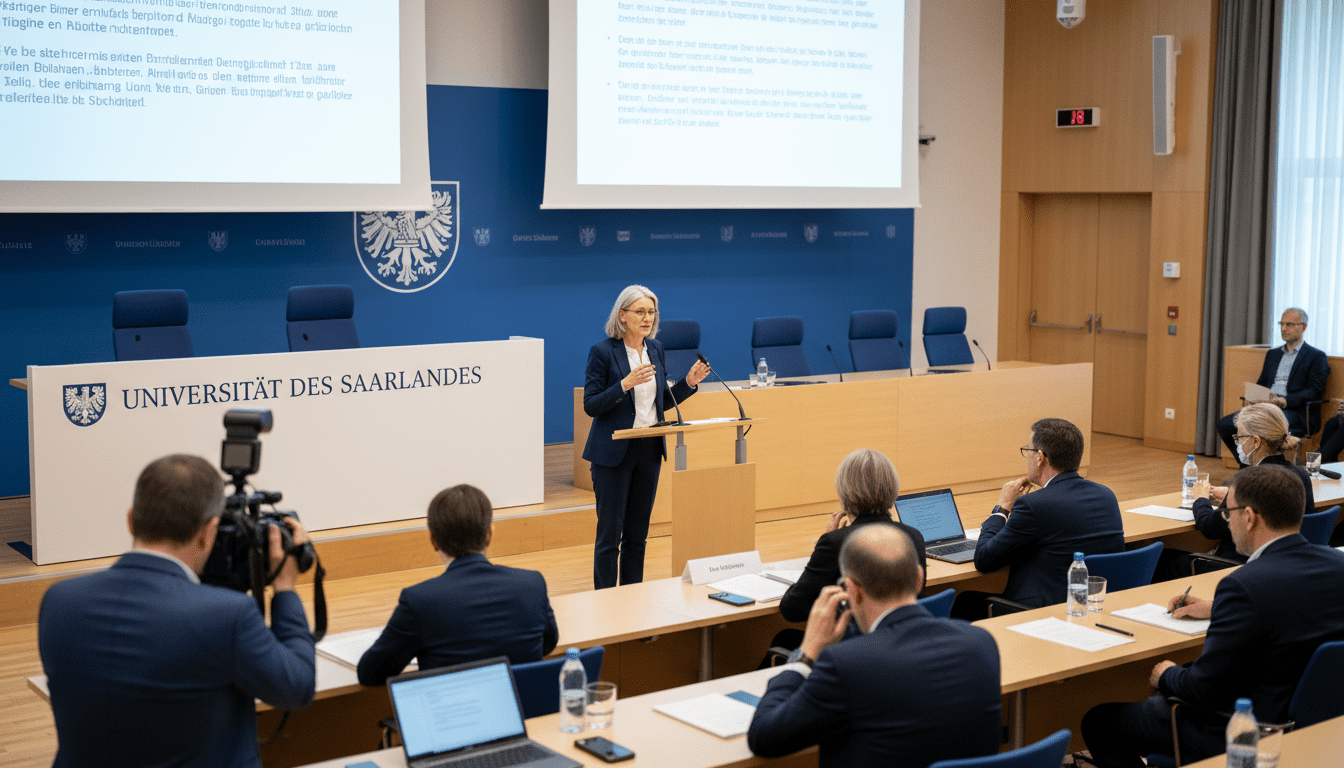
Saarland constitutional amendment criticized as largely symbolic by legal scholar
Saarland constitutional amendment adds God reference and state anti-discrimination goals; scholar Christoph Gröpl calls most changes cosmetic and praises only the judge-election reform.
The Saarland constitutional amendment approved this week adds a preamble invoking “responsibility before God and the people” and names the fight against antisemitism and antiziganism as explicit state goals, but a leading constitutional scholar dismissed much of the package as symbolic. Christoph Gröpl of Saarbrücken said the additions are largely rhetorical and will not change everyday legal realities, while he singled out the revised judge-election procedure as the only provision likely to have practical effect. The state parliament adopted the amendments on Wednesday, marking the first insertion of a preamble into the Saarland constitution since 1957.
Parliament adopts new preamble with religious language
The Saarland parliament voted to insert a preamble that frames the constitution in the “awareness of its responsibility before God and the people.” Lawmakers described the move as an affirmation of the state’s values rather than an endorsement of any specific faith. Supporters argued the language reflects historical tradition and expresses humility by political institutions. Critics warned that symbolic language can create the impression of substantive reform without delivering legal change.
State targets added for antisemitism and antiziganism
Alongside the preamble, the amendment established the fight against antisemitism and antiziganism as explicit state objectives. Proponents said naming these targets reinforces the state’s commitment to protecting vulnerable communities and strengthens political messaging on inclusion. Observers noted, however, that many of these aims are already embedded in federal law and constitutional protections. Gröpl highlighted that the Basic Law already obliges the state to defend fundamental rights, making some passages in the land constitution redundant in practice.
Scholar calls the package “cosmetic” and questions impact
Christoph Gröpl told reporters that much of the amendment amounts to what he described as “cosmetic” changes that do not alter legal obligations or citizens’ daily lives. He argued that state constitutions’ fundamental-rights sections are subordinate to federal law, limiting the practical effect of many new formulations. Gröpl said the additions may serve political and moral signaling by legislators seeking to demonstrate concern for social issues. He cautioned that constitutional rhetoric does not replace policy measures or enforcement mechanisms.
Judge-election reform seen as the sole substantive change
Among the measures adopted, the parliament revised the procedure for electing judges to the state constitutional court to block potential obstructions by extremist or anti-democratic factions. Legal experts and Gröpl alike identified this procedural change as the only amendment likely to affect governance and the rule of law in a tangible way. The revised mechanism aims to prevent deadlock in appointments and to protect the court’s independence, a matter not regulated at the federal level. Supporters framed the reform as a targeted response to contemporary political risks, while opponents questioned whether the new rules go far enough.
Political motives and reactions from parties
Lawmakers across the chamber offered differing rationales for the package, with some framing the changes as moral reaffirmation and others emphasizing institutional safeguards. Opposition figures argued that the preamble and declarations on social harms were unnecessary and designed to create political optics. Backers countered that explicit naming of antisemitism and antiziganism sends a clear signal in a period of rising intolerance in parts of Europe. The debate revealed broader tensions over the function of regional constitutions: whether they should serve primarily as legal instruments or also as symbolic manifestos.
The adoption of the Saarland constitutional amendment opens a broader conversation about the role of symbolic language in constitutions and the limits of state-level change under a federal legal order. While the preamble and state goals may shape political discourse, Gröpl and other legal analysts note that enforceable rights and institutional protections remain anchored in federal law and practical policymaking. The judge-election reform stands out as the provision most likely to affect the state’s constitutional architecture, as it directly addresses the functioning and independence of the Saarland constitutional court.
