
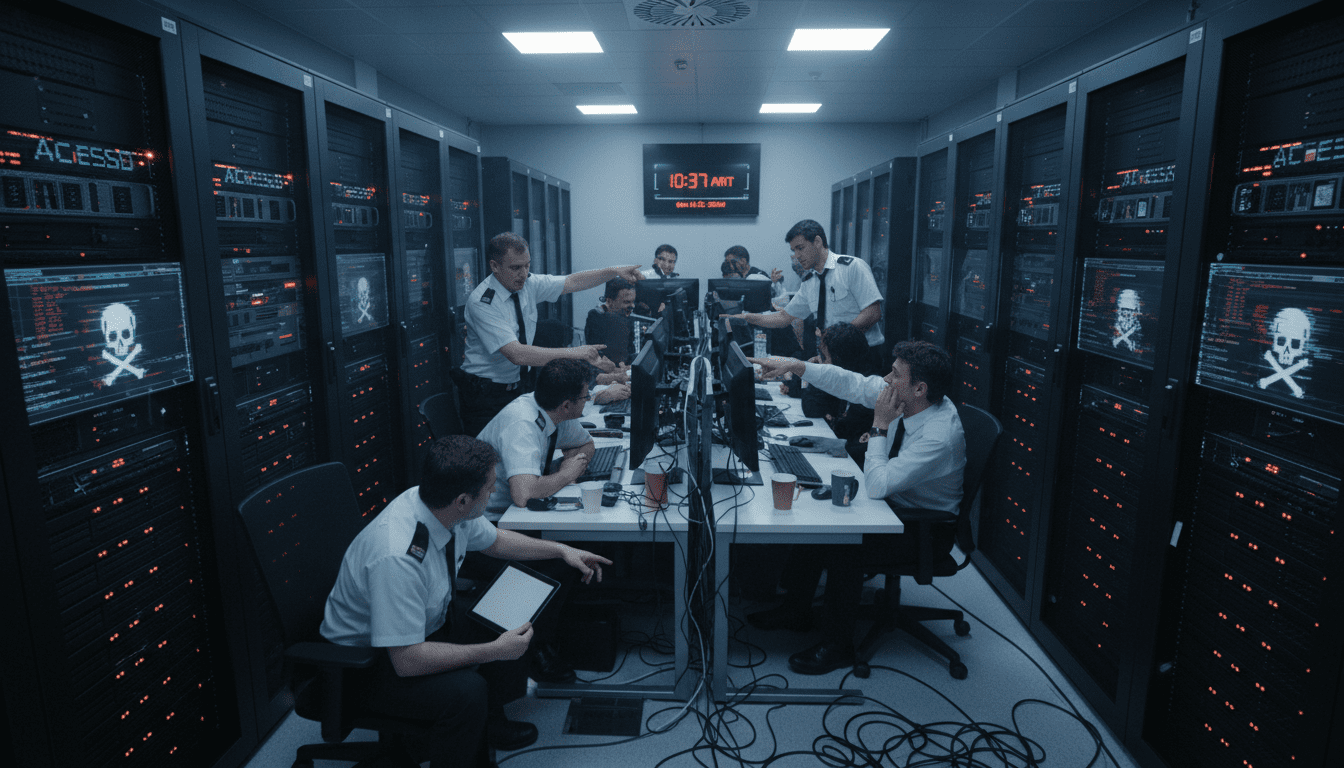
Ubuntu DDoS attack disrupts Canonical websites and update services
Ubuntu DDoS attack disrupts Canonical websites and update services, blocking security APIs and package installs; hacktivists claim responsibility via Telegram.
Canonical web infrastructure knocked offline by sustained attack
The public-facing web infrastructure for Ubuntu and Canonical was disrupted by a sustained distributed denial-of-service campaign that began on Thursday, April 30, 2026. Canonical acknowledged the incident on its status channel, saying its web infrastructure was under a cross-border attack and that teams were working to restore services. The disruption affected multiple Canonical and Ubuntu-facing websites and services relied upon by users and administrators.
The outage persisted into Friday, May 1, 2026, with reports indicating roughly 20 hours of degraded or unavailable service at the time of reporting. Canonical has not provided a detailed technical postmortem, but the company indicated it would publish more information through official channels when available. Customers and community members reported intermittent access and service errors across a range of endpoints.
Users and developers report failed updates and blocked security API
Ubuntu community forums and threat-intelligence posts described failures when attempting to install updates or fetch security metadata during the outage. Several developers on community sites reported HTTP 503 and other service errors when accessing package repositories and the security API that Ubuntu systems use to check for updates. Independent tests also showed package installations and updates failing on affected devices, preventing routine patching and software installation.
For organizations that rely on automated update pipelines, the interruption posed an immediate operational concern because security patches and package upgrades could not be retrieved. Administrators were advised to delay non-essential changes and to consider alternative, cached mirrors where available until Canonical restored full service. The inability to reach Canonical’s update infrastructure underscored how centralized services can become a single point of failure for rolling updates.
Hacktivist group claims responsibility on messaging channel
A group identifying itself as The Islamic Cyber Resistance in Iraq 313 Team claimed responsibility for the disruption on a Telegram channel. The group asserted that it launched the attack against Canonical and published messages attributing the outage to their campaign. Security analysts cautioned that claims on social platforms can be opportunistic and that attribution requires corroborating technical evidence.
The same group said it used a DDoS-for-hire service to execute the attack, a claim that aligns with the profile of many recent public-facing denial-of-service incidents. While the messaging provided a public claim of responsibility, investigators typically look for corroboration such as traffic fingerprints, command-and-control patterns, or unique operational artifacts before confirming attribution.
Attackers reportedly employed a commercial DDoS-for-hire service
The perpetrators named a booter or stresser service in their communications and claimed to be leveraging its capacity for a volumetric flood. DDoS-for-hire platforms allow relatively unskilled actors to rent attack bandwidth and orchestration, enabling high-volume floods that can saturate network links or overwhelm application stacks. The service named by the attackers purportedly advertises multi-terabit capacity, a scale sufficient to overwhelm many corporate and public networks.
These commercial offerings have been the focus of law enforcement for years, with authorities periodically disrupting infrastructure and seizing associated domains. Nevertheless, takedowns are often temporary; new providers emerge or existing platforms relocate, allowing criminal misuse to continue. The use of rented DDoS capacity shortens the technical barrier to launching disruptive campaigns against prominent targets like Canonical.
Scale of the incident compared with prior large DDoS events
The attackers’ claimed capacity — reportedly in excess of 3.5 terabits per second in this case — would place the incident among the larger volumetric floods seen in recent years. By comparison, security companies have documented multi-terabit attacks previously, including one notable event that exceeded seven terabits per second. The raw numbers are only part of the story, however, because effective mitigation depends on routing, peering relationships, and the defensive controls a target has deployed.
Organizations with robust distributed mitigation and upstream scrubbing capabilities can absorb or reroute large attacks, while those without such arrangements may experience prolonged outages. The interruption at Canonical suggests the attackers chose a combination of volume and targeting that exploited critical public endpoints, including update and package infrastructure used by millions of devices.
Law enforcement and industry responses to booter services
Authorities such as national police units and international law enforcement agencies have pursued booter operators and their infrastructure over the past decade. Past actions have included domain seizures, arrests, and disruption of payment channels to reduce availability of DDoS-for-hire services. Despite these efforts, the economics of the ecosystem and the ease of setting up mirror services have hindered full eradication.
Industry defenders recommend a layered approach: network-level filtering, traffic scrubbing, redundant mirrors for critical services, and rate-limiting on APIs and update endpoints. For software distributors, maintaining geographically distributed mirrors and offering offline update packages can reduce single points of failure during attacks. Many organizations are also partnering with cloud providers and scrubbing services to ensure continuity when volumetric attacks occur.
Canonical’s brief public statement emphasized remediation work and promised updates on official channels as systems come back online. In the meantime, system administrators are urged to monitor official Canonical status pages and community channels for guidance, to use local caches where possible, and to prioritize critical security work that can be performed offline or from verified mirrors.
As investigations continue, the incident highlights the vulnerability of widely used open source infrastructure to relatively accessible denial-of-service tools and the ongoing need for resilient distribution architectures and coordinated responses to high-capacity attacks.
