
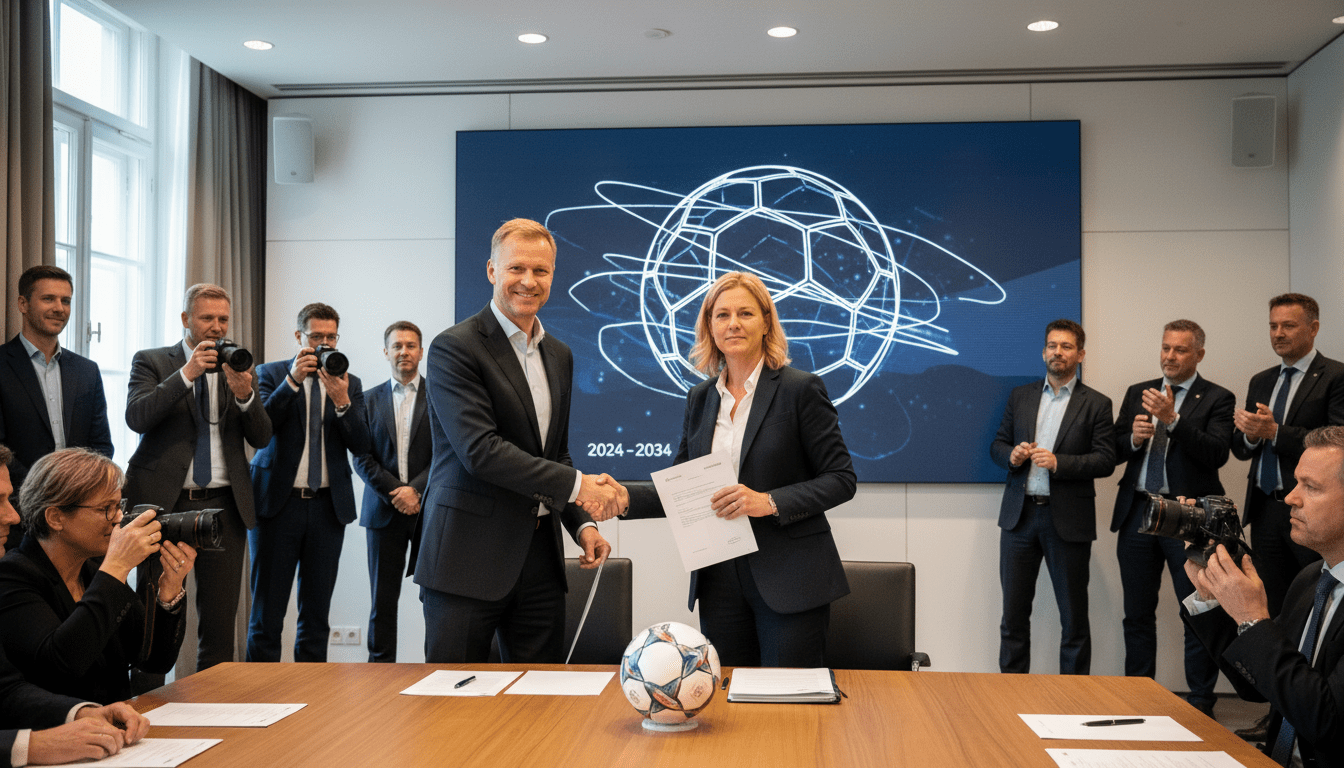
Adidas-DFL Partnership Secures €100 Million Loan and Ball Deal After DFB Kit Switch
Adidas-DFL partnership: Adidas will provide a €100 million loan to the DFL, secure Bundesliga match-ball rights through 2034, and maintain visibility after the DFB’s move to Nike.
Adidas will lend the Deutsche Fußball-Liga (DFL) €100 million in a strategic partnership that ties the sportswear giant to German professional football even as the German national teams shift to Nike uniforms from January 1. The agreement, announced alongside Adidas’s first-quarter results, combines staged financing, a long-term ball supply contract and commercial rights designed to keep the Three-Stripes brand highly visible in domestic top-level competition. The move comes after the German Football Association (DFB) reached a separate, higher-value kit deal with Nike that will see the national teams outfitted by the US company going forward.
Loan structure and contractual commitments
Adidas has committed up to €100 million to the DFL, delivered in tranches of no more than €20 million per year under a low-interest arrangement. The loan carries an annual interest rate of 1.5 percent, but the repayment profile is materially altered by linked commercial commitments that reduce the DFL’s cash burden. Under the transaction, Adidas will supply the official match ball for the Bundesliga’s first and second divisions from the upcoming season through at least 2034, a provision valued in the deal at roughly €5 million per season.
The package includes additional commercial elements that extend beyond the ball supply, such as the right to provide the “Man of the Match” trophy awarded after each Bundesliga game. Those commercial rights are part of the quid pro quo that limits the DFL’s required cash repayment to around €60 million, according to terms communicated by the parties.
DFL’s investment plan and use of funds
DFL executives framed the partnership as a solution to close an investment gap and to safeguard the “future and competitiveness” of German professional football. The funds are earmarked for international central marketing and digitalization projects intended to expand the Bundesliga’s footprint abroad and modernize its commercial operations. Unlike a prior proposal that would have injected investor capital directly into clubs, the Adidas financing remains with the DFL and will be deployed at the league level.
League management has also pointed to parallel initiatives that are expected to generate additional revenue, including a 2024 cooperation with Relevent Sports Group aimed at raising the Bundesliga’s profile in the Americas, and a streaming arrangement with Onefootball to reach paying audiences in selected foreign markets.
Brand strategy after the national team switch
The deal is a clear attempt by Adidas to retain a prominent role in German football despite losing the DFB kit contract to Nike. While the DFB arrangement—worth up to €100 million per year in cash and equipment—transfers national-team visibility to Nike, Adidas’s new ties to the Bundesliga will keep the brand in front of domestic and international audiences on a weekly basis. Executives argued that league matches, broadcast every week during the season, offer sustained exposure that can counterbalance the symbolic and commercial loss linked to the national-team switch.
Adidas’s leadership positioned the partnership as a pragmatic response to the DFB decision, emphasizing continuity in German football rather than retreat. The company’s agreement to invest in the DFL is designed to ensure a lasting presence in the country’s most-watched football competition and in clubs it already outfits.
Financial backdrop and market position
Adidas reported robust first-quarter results that executives said were strongly supported by football-related sales. The group generated €6.6 billion in revenue from January through March, marking a seven percent increase year‑on‑year, and posted an operating profit of €700 million—approximately €100 million higher than the comparable period. Company guidance anticipates annual revenue rising to about €26.8 billion with an operating profit target near €2.3 billion.
Football merchandise was singled out as a principal growth driver: product income tied to the sport rose by nearly half compared with the same quarter in 2025. Ahead of the upcoming World Cup, Adidas outfits 14 national teams, including reigning champions and other high-profile sides, while competitors Nike and Puma supply fewer squads. That manufacturer footprint is central to Adidas’s argument that it remains a market leader in the football category.
Commercial logic and longer-term implications
Analysts and industry insiders see the Adidas-DFL arrangement as a strategic recalibration rather than a simple charitable loan. The financing allows Adidas to deepen commercial ties with the league and position itself to benefit if the DFL succeeds in expanding international rights and merchandising revenues. By locking in ball-supply rights and ancillary deliverables, Adidas secures recurring visibility and potential downstream sales for clubs it outfits, particularly high-profile partners such as FC Bayern.
The agreement also reflects a wider dynamic in which Bundesliga clubs and the league have been cautious about investor-led overseas marketing deals after fan pushback against some ownership or commercialization models. Adidas’s entry into the space fills a gap left when clubs rejected certain investor proposals, offering a corporate-backed route to monetize and internationalize the competition without handing control to financial buyers.
The deal leaves several open questions about future revenue splits, performance targets tied to investments and the precise commercial activation Adidas will pursue to turn exposure into sales. League officials say the funding is intended to strengthen the Bundesliga’s global positioning, but the ultimate measure will be whether those investments translate into higher rights fees and broader fan engagement abroad.
For now, the partnership binds a historic German sporting brand to the league’s commercial future, even as national-team shirts change color at the start of the new kit cycle.
