
Germany to Relax German-Luxembourg Border Controls, Replace Fixed Checks with Mobile Units
Germany will replace fixed checks on the A64 with mobile German-Luxembourg border controls, a Koblenz court ruling challenged the measures and Berlin plans to appeal.
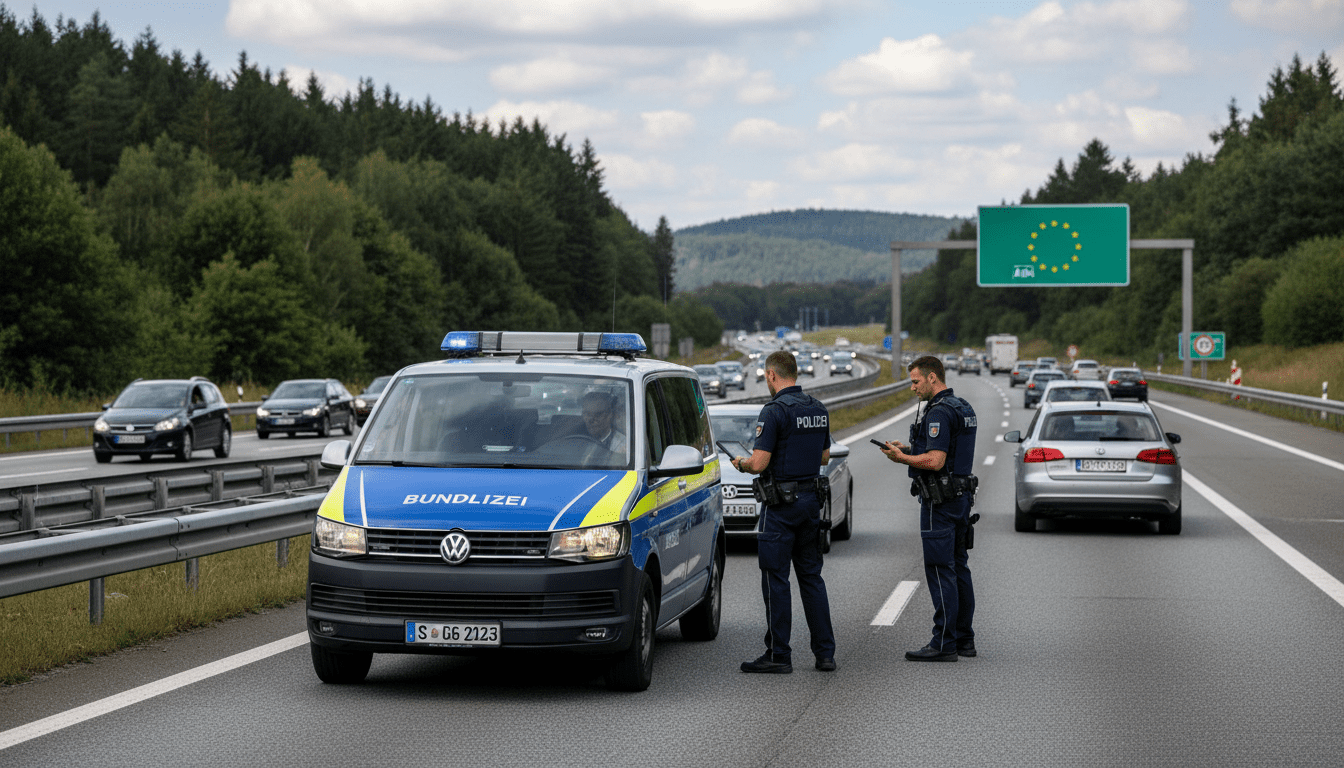
Germany will replace fixed checks on the A64 with mobile German-Luxembourg border controls, Interior Minister Alexander Dobrindt announced after talks in Luxembourg. The change moves stationary checks near the border to flexible, movable inspections at the Markusberg rest area roughly six kilometres inside Germany. Work on the new arrangements is scheduled to begin in early May, according to the minister.
Shift from stationary to mobile checks on the A64
The ministry said the permanent control point on the A64 heading toward Trier will be dismantled and replaced by a system of selective, mobile inspections. Authorities plan to carry out targeted controls from the Markusberg rest area to keep the motorway lanes open for traffic while allowing officers to conduct checks off the main carriageway. The stated goal is to reduce congestion on the autobahn while retaining the ability to carry out identity and security checks when needed.
Dobrindt described the new approach as an “adapted control situation” and framed it as a pragmatic response to traffic and commuter concerns. The minister emphasized flexibility: mobile units will be deployed according to operational assessments rather than maintaining a constant, visible barrier on the motorway. The shift follows precedents elsewhere on cross-border routes where spot checks have been used to limit traffic disruption.
Luxembourg reaction and commuter relief
Luxembourg’s Interior Minister Léon Gloden welcomed the announcement and said the move would be good news for daily cross-border commuters. Gloden has repeatedly criticised the fixed German controls introduced in September 2024, arguing they caused unnecessary delays and undermined the spirit of free movement in the Schengen area. He pointed to the model used on the A8 between Schengen and Merzig, where selective parking-area inspections have allowed traffic to flow freely on the main road.
Commuters and local officials on both sides of the border have long complained about bottlenecks and unpredictable delays caused by the permanent control point. Flexible checks are intended to preserve road capacity during peak hours while still enabling law enforcement to respond to incidents or intelligence. Luxembourg’s government has also taken the issue to the European Commission, citing concerns now echoed in recent court findings.
Koblenz court finds controls insufficiently justified
A day before the ministerial announcement, the Administrative Court in Koblenz ruled that the border checks at the German-Luxembourg frontier were unlawful in a specific case brought by a man stopped on a bus after the Perl-Schengen crossing. The court concluded that the identity check had lacked a lawful basis because authorities had not demonstrated the exceptional circumstances required to justify continued internal border controls. The judgment focused on the evidentiary standard for starting or extending such measures under EU and domestic rules.
Judges noted that border controls may only be initiated or prolonged when extraordinary circumstances seriously threaten public order or internal security in the member state. The court found the federal interior ministry had not shown the threat had arisen from a sudden development or was supported by a robust factual basis. The ruling is a first-instance decision in a single case and can be appealed.
Federal government to appeal and begin adjustments
Dobrindt acknowledged the Koblenz decision but framed it as an individual, first-instance ruling that does not immediately alter operational policy. The interior minister said the federal government would file an appeal against the judgment and stressed that the court ruling did not remove the legal framework for conducting internal border controls. At the same time, Berlin announced practical adjustments to lessen traffic impact by moving to mobile checks at Markusberg.
Officials said the appeal and operational changes will proceed concurrently, with the ministry preparing the legal arguments in response to the court’s findings. The government argues it has the discretion to assess security risks and implement proportionate measures, while critics say such assessments must be transparently documented. In the interim, the new deployment model is intended to balance judicial scrutiny with the stated need to preserve security capabilities.
Political context and migration figures cited by leaders
The debate over controls unfolded against a broader political backdrop in which migration numbers have become a central argument. Dobrindt has defended the government’s overall approach, saying recent policy shifts reflect a tougher stance on irregular migration. Chancellor Friedrich Merz was quoted as asserting that arrivals have fallen sharply, a claim the government uses to justify scaling back overt border infrastructure while retaining the ability to act when intelligence dictates.
Opposition parties and civil liberties advocates counter that any continuation of internal border checks must be tightly constrained and justified by clear, current evidence. Luxembourg officials have repeatedly pressed the German government and the EU institutions to ensure Schengen rules are upheld and that measures are proportionate to actual threats. The Koblenz ruling adds legal weight to those concerns, prompting renewed scrutiny of how threat assessments are prepared and presented.
The move to mobile controls and the pending legal appeal set up a test case for how Germany balances mobility, cross-border cooperation and judicial review. As work begins at the Markusberg rest area and legal arguments are prepared, commuters and officials on both sides of the border will be watching to see whether the new arrangements reduce delays without compromising security.
Germany’s adjustment of its German-Luxembourg border controls reflects a pragmatic pivot toward less intrusive policing of cross-border traffic while the courts weigh the legality of earlier, more extensive measures.
