
German federal budget 2027 calls for €196.5bn new borrowing to boost defence
German federal budget 2027 proposes higher borrowing to finance a sharp rise in defence spending: €110.8bn net core borrowing, €196.5bn total new debt, and €105.8bn for defence.
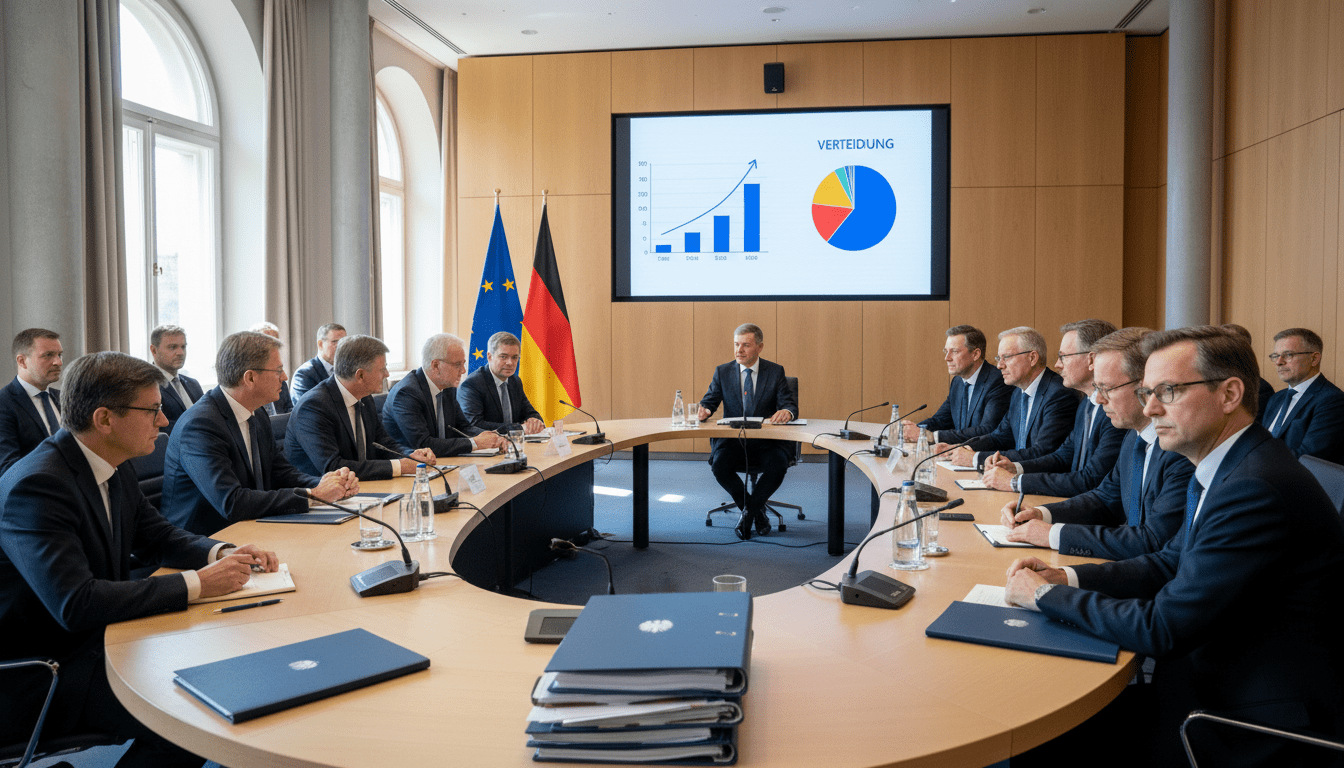
The federal government presented key figures for the German federal budget 2027 in Berlin, with Finance Minister Lars Klingbeil saying higher new borrowing is necessary to strengthen national resilience. The cabinet approved the budget framework that foresees a net borrowing (NKA) of €110.8 billion in the core budget and a total planned new debt of €196.5 billion when debt-financed special funds are included. Total expenditures for 2027 are set at €543.3 billion, with defence allocated €105.8 billion, making it one of the largest single items in the plan.
Klingbeil frames borrowing as investment in resilience
Lars Klingbeil, speaking at a Berlin press conference, defended the increase in planned borrowing as a fiscal choice to invest in the country’s resilience and security. He said the budget proposal is a binding foundation for all ministries and stressed the need for further savings across government. Klingbeil emphasized that the coalition intends to pair those investments with reforms aimed at strengthening Germany’s economic capacity. He identified protecting existing jobs and creating new ones as central aims of the fiscal package.
Core budget versus special funds: the numbers
The government’s figures distinguish net credit uptake in the core budget—the NKA—of €110.8 billion from the wider borrowing total of €196.5 billion that includes debt-financed special funds. Those special funds, known in German as schuldenfinanzierte Sondervermögen, are being used to finance targeted programs outside the regular budget envelope. Finance officials say the separation allows strategic investments while preserving a structured fiscal approach to departmental allocations. Together, the two measures drive the planned new borrowing to the €196.5 billion level.
Defence receives the largest single allocation
Defence spending is earmarked at €105.8 billion for 2027, accounting for roughly one-fifth of total planned federal expenditure. The allocation represents a major share of the government’s investment priorities and underscores a shift toward bolstering military capacity and related procurement. Officials have argued that higher defence outlays are necessary to meet evolving security requirements and to support associated industrial investment. The scale of the defence line item will shape discussions in parliament and among coalition partners as budget negotiations progress.
Cabinet signs off on budget framework
Cabinet ministers formally endorsed the budget’s key parameters before the figures were released, marking the start of the parliamentary process that will examine and refine the plan. The framework sets binding ceilings for departments and establishes a basis for ministries to prepare detailed spending proposals. Government sources say the endorsement reflects an agreement among coalition partners to prioritize investments and reforms while acknowledging fiscal constraints. The approval is procedural but significant, since it launches the months-long legislative scrutiny and committee work that will determine final allocations.
Savings targets and reform commitments
While advocating increased borrowing for certain priorities, Finance Minister Klingbeil also signalled a continued commitment to fiscal discipline through targeted savings. He told reporters that the draft budget requires ministries to find efficiencies and that the government will not abandon austerity where prudent. The coalition’s public messaging ties higher investment to structural reforms intended to boost productivity and economic growth. Those reforms, officials say, are meant to offset the medium-term fiscal impact of elevated borrowing by expanding the revenue base and improving public-sector performance.
Germany’s federal budget 2027 will now move into parliamentary debate, where lawmakers from across the political spectrum are expected to press for changes to spending priorities and to scrutinize the magnitude and structure of the new borrowing. The coming weeks of hearings and committee scrutiny will determine whether the cabinet’s framework becomes the final budget or is altered significantly. Lawmakers will also weigh the trade-offs between immediate investments in defence and resilience and longer-term commitments to fiscal stability and job creation.
