
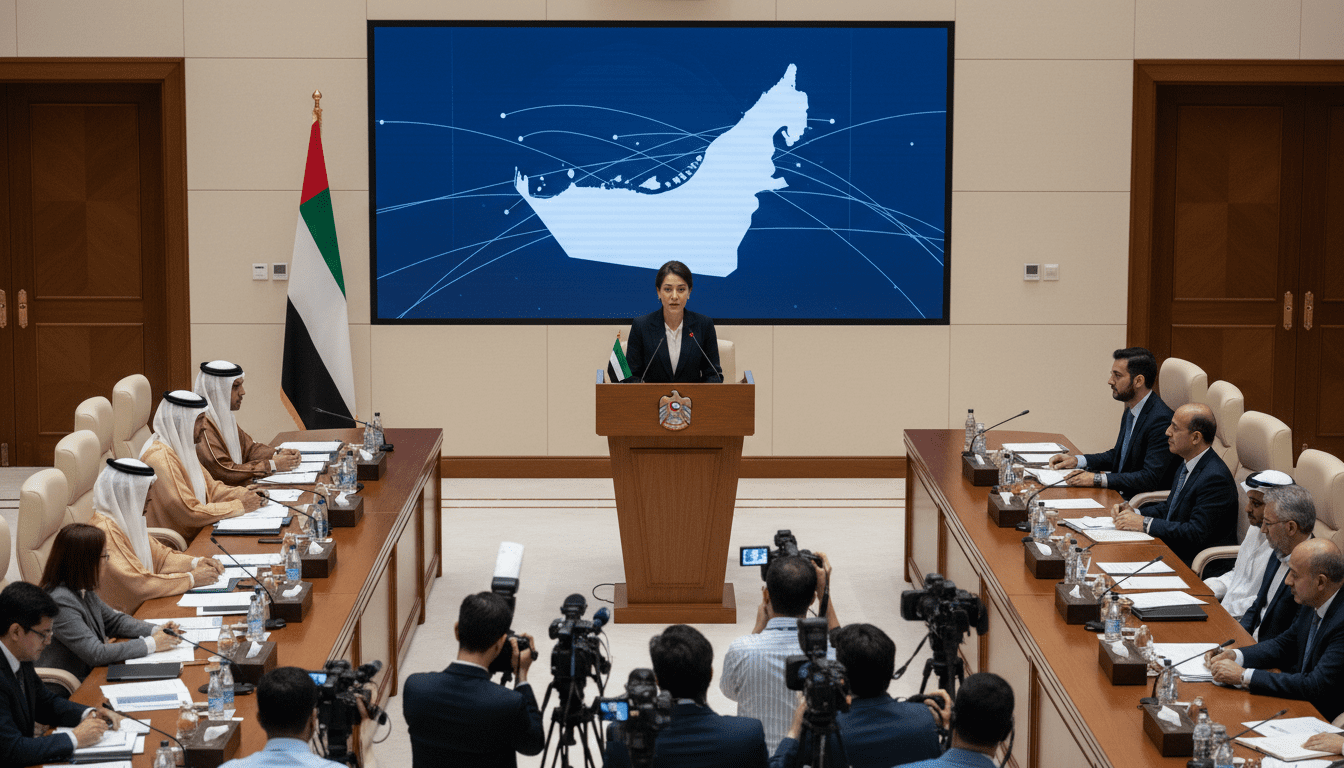
UAE leaves OPEC: Abu Dhabi to Exit OPEC and OPEC+ Effective May 1
UAE leaves OPEC and OPEC+ effective May 1, withdrawing a 4.8m bpd producer to prioritise national interests and reshape its oil policy amid regional shocks.
The United Arab Emirates announced on Tuesday that the UAE leaves OPEC and the broader OPEC+ framework, a move that will remove one of the group’s core producers and reshape coordination within the global oil cartel. The ministry said the decision, effective May 1, was taken to prioritise national interests and follows a period of heightened regional tensions and energy market disruption.
UAE to leave OPEC on May 1
The UAE’s formal withdrawal will take effect on May 1, ending its formal membership that began in 1967. Abu Dhabi framed the decision as a sovereign step to focus on domestic strategy and national interests rather than collective quota agreements.
Officials signalled the move was deliberate and timed, not abrupt, and will alter the composition of a group that has influenced oil pricing and supply for decades. The exit removes a member that has been central to OPEC’s ability to respond to market shocks.
UAE’s oil capacity and spare production
The UAE is a substantial crude producer with capacity of roughly 4.8 million barrels per day and significant spare capacity relative to many peers. That spare capacity has long been a strategic tool within OPEC to stabilise markets during unexpected supply disruptions.
Members with meaningful spare capacity have typically been called on to either cut or add barrels to manage prices, but Abu Dhabi’s calculation to withdraw suggests it sees greater advantage in retaining control over those reserves for national use. The decision therefore changes the dynamics of how spare capacity might be deployed in future crises.
OPEC’s founding and the OPEC+ expansion
OPEC was founded at the Baghdad Conference in September 1960 by Iran, Iraq, Kuwait, Saudi Arabia and Venezuela to coordinate petroleum policies and assert sovereign control over oil resources. Over time the organisation expanded; the UAE joined in 1967 and growth continued until OPEC comprised 12 members.
Since 2016, OPEC has operated in a wider cooperative format known as OPEC+, bringing partner producers including Russia, Azerbaijan, Kazakhstan and others into joint output management, raising the bloc’s share of world supply to about 41 percent. Within OPEC itself, the membership has traditionally accounted for about 30 percent of global oil production.
Abu Dhabi cites national interests and geopolitical ties
In its announcement, the UAE said the withdrawal was driven by national priorities rather than technical disputes over quotas. Observers note Abu Dhabi’s evolving foreign policy and stronger ties with the United States and Israel, including the Abraham Accords of 2020, have differentiated it from some fellow OPEC states.
Tensions with neighbouring capitals, divergent positions on regional conflicts and a desire to solidify bilateral strategic channels have all factored into Abu Dhabi’s calculation. The UAE’s leaders view these diplomatic alignments as central tools for safeguarding economic and security objectives, especially amid recent attacks linked to the conflict involving Iran.
Market reaction and immediate implications
The exit of a 4.8 million bpd producer raises near-term questions for market participants about supply coordination and price stability. OPEC and OPEC+ have used collective quotas to influence prices; the loss of a willing participant may complicate future agreements and could reduce the bloc’s capacity to present a unified front.
Traders and analysts will be watching spare-capacity deployment and reserve-release decisions closely, particularly as markets are already experiencing an energy shock tied to the wider regional conflict. Any shift in how Abu Dhabi manages production could have an outsized effect on futures pricing and emergency response options.
Outlook for OPEC and global oil governance
With the UAE’s departure, OPEC will need to reassess its internal mechanics and the burden placed on remaining members to meet policy goals. The organisation has weathered past withdrawals from members such as Indonesia, Qatar and Ecuador, but the loss of Abu Dhabi represents one of the more consequential exits because of its production scale and strategic reserves.
OPEC+ partners outside the core OPEC membership may face new pressure to fill gaps or recalibrate coordination. How remaining producers respond — through voluntary increases, quota renegotiation or deeper cooperation with non-OPEC partners — will shape market sentiment over the coming months.
The decision by the United Arab Emirates to withdraw from both OPEC and OPEC+ effective May 1 removes a major coordinating voice from the cartel and injects fresh uncertainty into an already volatile energy landscape. The coming weeks will reveal whether Abu Dhabi’s move prompts policy adjustments inside OPEC, shifts in spare-capacity deployment, or a reorientation of alliances among major oil producers.
