
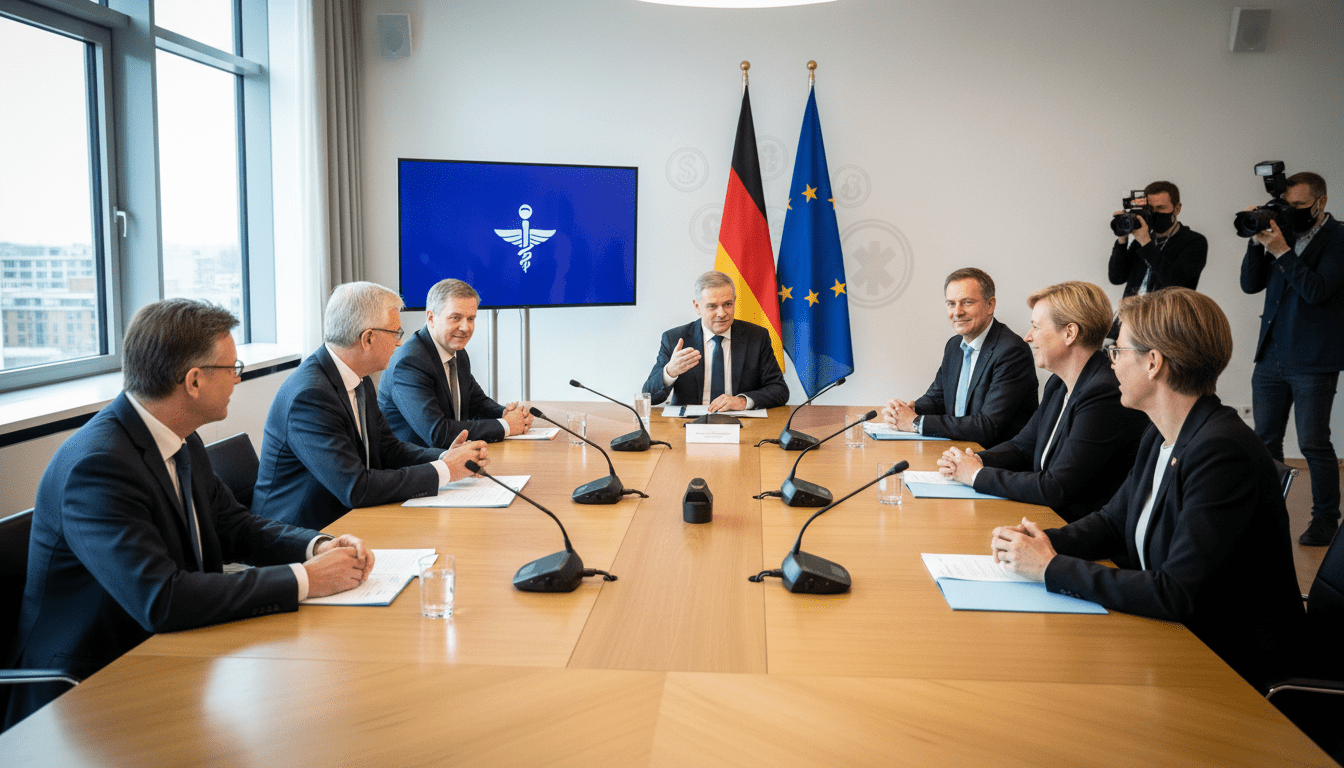
Germany Debates Increased Federal Support for Bürgergeld Health Insurance Funding
Federal plan to raise the government’s flat-rate contribution toward Bürgergeld health insurance could reduce GKV costs, but faces budget and political hurdles.
Opening summary
Bürgergeld health insurance funding is at the center of a renewed debate after an SPD proposal to raise the federal flat-rate contribution for recipients drew praise from the CDU/CSU and the head of the statutory health insurers. The SPD’s health spokesman proposed boosting the federal payment for Bürgergeld beneficiaries from the current level toward the minimum contribution for voluntarily insured people, a move estimated to cost several billion euros annually. Lawmakers, health insurers and the government are weighing a staged approach amid competing budget constraints and a broader reform package due in late April 2026.
SPD proposal and estimated costs
The SPD plan recommends increasing the federal lump-sum contribution for Bürgergeld recipients from €144 to €233 per person, a change that would affect roughly 3.9 million insured individuals. At that level, analysts cited by the SPD estimate an annual fiscal impact of roughly €3.5–4 billion, while an insurer-commissioned calculation suggested a fully adequate payment would be closer to €311 per person, implying a potential funding gap approaching €12 billion. The proposal is aimed at shifting more of the burden for these statutory contributions from the sickness funds to the federal budget.
Political reactions in parliament
Senior CDU/CSU officials publicly welcomed the SPD’s openness to increasing federal budget support, but emphasized the need for a gradual entry point that limits immediate household strain. The CDU/CSU parliamentary manager described a mid-range increase as a meaningful start that could provide relief to contributors across the statutory system. At the same time, the federal finance minister and other coalition figures have warned that sizable new expenditures must be weighed against existing fiscal targets and the government’s broader savings plan for the health sector.
GKV leadership backs phased funding
Oliver Blatt, chair of the National Association of Statutory Health Insurance Funds (GKV-Spitzenverband), signaled support for a staged solution, saying an incremental roadmap toward full cost coverage by the federal budget would be feasible. He proposed an initial federal payment of around €4 billion next year, rising to €8 billion in 2028, with a goal of complete taxpayer-based coverage from 2029 onward. Insurer officials argue a phased approach would give the federal budget time to adjust while immediately reducing the contribution pressure on insured members.
Budgetary and reform context ahead of cabinet decision
The debate over Bürgergeld health insurance funding coincides with a larger savings and reform package for the statutory health insurance system that is scheduled to be discussed in the federal cabinet on Wednesday, April 29, 2026. The government’s draft health reform initially did not include full federal cost-shifting for Bürgergeld contributions, with the health minister citing household constraints as the reason. The issue was flagged by the expert commission on GKV finances in a late-March report that quantified the system’s financing shortfall and recommended full federal assumption of costs as the long-term solution.
Implications for contributors and private insurance
If adopted in part, the SPD proposal would lower the share of Bürgergeld-related costs borne by statutory insurance contributors, indirectly easing upward pressure on contribution rates for the broader insured population. The current arrangement means the bulk of the expense is carried through contribution income of the sickness funds, while privately insured citizens do not participate in financing those statutory obligations. Shifting a greater portion of the bill to general taxation would alter that distribution and fuel discussion about fairness between taxpayer-funded and contribution-funded elements of the health system.
Germany now faces a political choice between accelerating relief for contributors and preserving tight fiscal discipline. Advocates of federal funding say a staged increase is manageable and would address an inequity identified by the GKV commission, while critics warn that multi-billion-euro additions to the budget require offsets elsewhere or additional revenue measures. With the cabinet considering the reform package on April 29, 2026, lawmakers will need to decide whether to integrate the SPD’s proposal, adopt a modified timetable, or leave the current financing model largely intact.
The outcome will influence the GKV’s funding picture in the years ahead and could set a precedent for how social benefits linked to employment and subsistence support are financed in Germany.
