
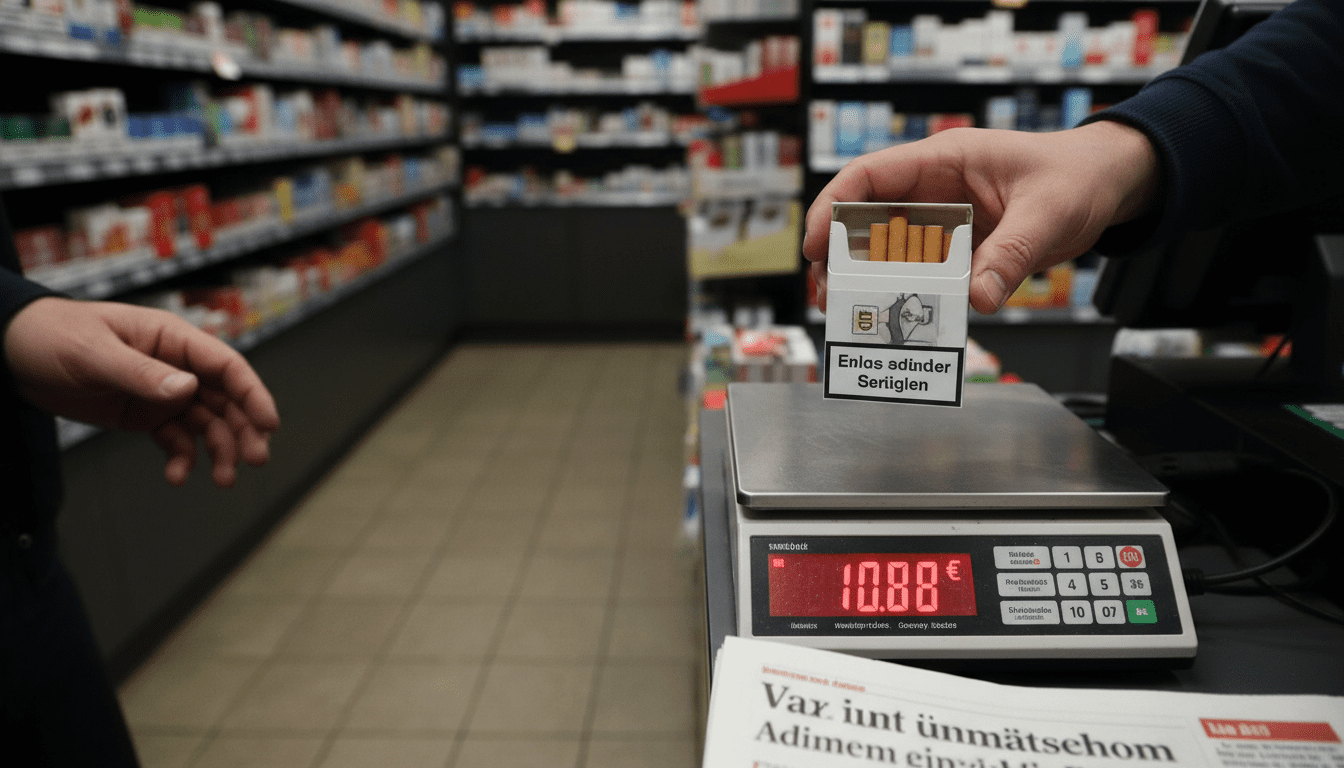
Germany to raise tobacco tax, with some cigarette packs set to top €10
Germany plans a tobacco tax increase: rates rising from Sept 1, 2026 and Jan 1, 2027 that will push some cigarette packs past €10 and raise €2.8bn in revenue.
The federal government is preparing a substantial tobacco tax increase that would take effect in two steps, beginning on September 1, 2026, and again on January 1, 2027. The proposed changes, outlined in a draft from the Federal Ministry of Finance, would raise both the per-cigarette levy and the percentage-based tax on pack prices, with an average uplift of roughly 13 percent in the first step. Lawmakers expect the move to push retail prices higher and to generate roughly €2.8 billion intended to offset relief measures for households affected by rising energy costs.
Government proposal and timing
The Finance Ministry’s draft specifies an immediate rise in the fixed tax per cigarette from 12.28 cents to 12.90 cents on September 1, 2026, followed by a further increase to 13.74 cents on January 1, 2027. In parallel, the ad valorem component would be raised from 19.84 percent to 21.66 percent of the pack price. Officials say the proposal will be formally tabled in the legislative process next week, with a Bundestag vote provisionally scheduled for June 12, 2026, and Bundesrat consideration expected on July 10, 2026.
How the tobacco tax is calculated
Germany’s tobacco tax combines a specific amount charged per cigarette and a percentage of the retail price, which means higher-priced brands carry a larger absolute tax burden. The dual-structure design makes premium brands more sensitive to the percentage change, while budget and discount labels are affected mainly by the per-unit increase. The ministry’s draft updates both components, ensuring that consumers of expensive brands absorb a disproportionate share of the overall increase.
Projected impact on retail prices
Under the proposal, the average retail price of a pack sold in Germany would rise from about €7.76 today to roughly €8.90 on September 1, 2026, and to approximately €9.48 on January 1, 2027. Because some premium brands already retail at or above €9.50, market observers say it is likely that several mainstream products will exceed the €10 mark this year once manufacturers adjust their prices. Tobacco companies typically respond to lower volumes by raising list prices, which could add further upward pressure beyond the tax-driven increases.
Effect on roll-your-own and fine-cut tobacco
Smokers who make their own cigarettes are likely to face one of the steepest relative increases. The new levy raises the cost of a 30-gram pouch of fine-cut tobacco from around €6.55 today to an estimated €7.39 in September and roughly €7.76 by January 2027. Historically, Germany’s tax on fine-cut tobacco has been low by European standards, and the planned adjustment narrows that gap, reducing the price advantage of roll-your-own products compared with factory-made cigarettes.
Heated tobacco and cross-border price differences
The draft applies analogous increases to heated tobacco products such as IQOS and TEREA, treating a tobacco stick as carrying 80 percent of the tax burden of a conventional cigarette. That treatment leaves Germany more expensive than some neighboring markets: in Poland, for example, comparable heated-tobacco packs retail for several euros less than in Germany. Analysts warn that widening price differentials could encourage cross-border shopping and increase demand for lower-cost imports, complicating enforcement and smuggling deterrence measures.
Revenue goals and political rationale
The Finance Ministry projects that the proposed increases would yield about €2.8 billion in additional revenue, money the government intends to use to help finance relief measures tied to higher energy expenses. Chancellor’s office and Finance Minister statements earlier this spring signaled a willingness to move the timetable forward, and the draft reflects that political intent. Still, ministers caution that the figures remain subject to parliamentary amendment and negotiation with the Bundesrat, so final revenue outcomes could change.
Industry representatives declined to comment on the draft when approached, saying they expect the ministry to refine the proposal in the coming days. Retailers and tobacco firms are likely to weigh timing and magnitude of any further price moves carefully, balancing revenue goals against risks of accelerated declines in consumption and increased cross-border purchasing.
If approved by the Bundestag on June 12 and by the Bundesrat on July 10, 2026, consumers would see the first tax-driven price rise at the start of September 2026, with a second adjustment on January 1, 2027. The longer-term schedule in the draft foresees only modest additional increases in 2028 and 2029, each adding a small percentage to cigarette taxes, but the immediate two-step rise is expected to have the most visible impact on retail prices and consumer behavior.
