
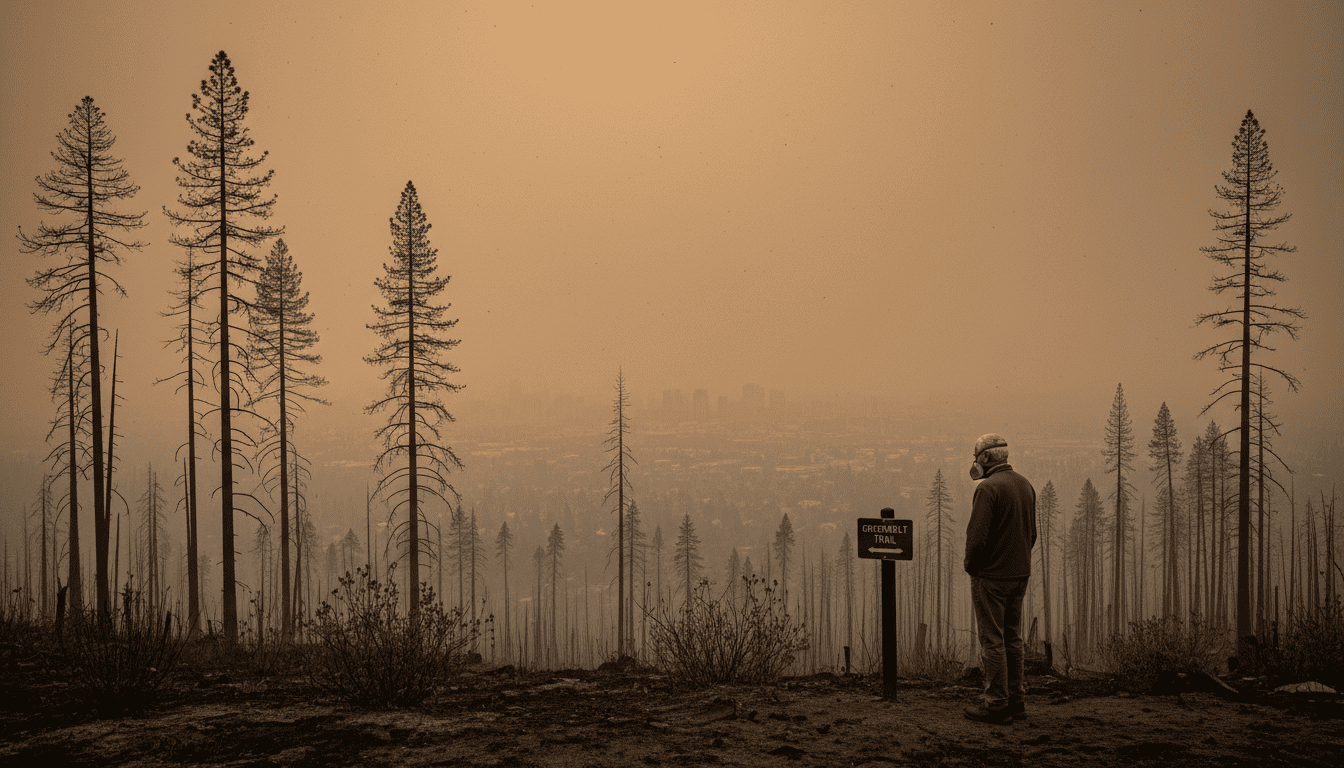
Wildfire smoke linked to shorter life expectancy, Ohio State study finds
Ohio State study finds wildfire smoke exposure shortens life expectancy and undermines greenspace benefits, highlighting risks for public health and planning.
Wildfire smoke has a measurable impact on life expectancy, researchers at The Ohio State University reported this week, finding that living in areas prone to persistent smoke can shave years from average lifespans and blunt the health advantages of local greenspaces. The team presented their results at the American Geophysical Union meeting and said the effect remains significant after accounting for neighborhood vegetation and demographic differences. The findings raise new questions about how communities should weigh the benefits of parks and forests against emerging wildfire risks.
Ohio State team links smoke exposure to reduced longevity
The Ohio State researchers reported a statistical relationship between days of wildfire smoke exposure and lower life expectancy across U.S. communities. Their analysis indicates that repeated or prolonged smoke events correlate with measurable reductions in the average number of years people live.
Study authors told the AGU audience that the association persists even after controlling for factors such as greenspace coverage, suggesting that smoke itself is a distinct and harmful environmental stressor. The team framed the finding as evidence that long-term public health planning must incorporate wildfire smoke as a chronic hazard, not only an episodic emergency.
Large-scale demographic data underpins analysis
To reach their conclusions, the researchers examined more than 66,000 U.S. census tract records spanning the period 2010–2015, combining demographic information with satellite-derived measures of smoke exposure and vegetation. The dataset allowed the team to compare life expectancy estimates across diverse regions and to isolate the incremental effect of smoke days on population-level outcomes.
The study drew on established life-expectancy estimation methods and linked exposure metrics to public-health records, enabling the authors to translate exposure into years of life lost. By using a wide geographic sample, the researchers sought to capture variation from high-fire seasons in the West to smokier periods elsewhere in the contiguous United States.
Greenspaces provide benefits but can amplify smoke risk
Greenspaces such as parks and forests have long been associated with improved health through cleaner air, temperature regulation and opportunities for physical activity and social interaction. The Ohio State analysis confirmed that, absent heavy smoke exposure, higher shares of greenspace are associated with modest gains in life expectancy.
However, the study found a countervailing dynamic: vegetation can serve as fuel for wildfires, and places with dense greenspace can experience higher smoke emissions when fires occur. That means the protective benefits of parks and urban forests may be reduced or reversed in regions that face frequent or intense wildfire smoke.
Quantifying the health toll of smoke exposure
The researchers estimated that each additional day of wildfire smoke exposure corresponds to a decrease in life expectancy of about 0.02 years — roughly one week. While that figure appears small on a per-day basis, repeated seasonal smoke events can accumulate into a sizable public-health burden over time for communities with regular exposure.
The team also noted that even small percentage changes in greenspace can move the needle on longevity, though those gains can be eroded by smoke. The combined evidence positions wildfire smoke as a measurable contributor to population health loss rather than a solely transient nuisance.
Socioeconomic and demographic factors modify risk
Ohio State researchers emphasized that the impact of smoke is not uniform across populations; income, age, race and local population density all influence vulnerability and exposure. Higher-income households tend to have advantages — from better housing and healthcare access to the ability to relocate temporarily during smoke episodes — that can reduce the health effects of pollution.
By contrast, communities with lower incomes or larger shares of marginalized groups often face elevated exposure and fewer protective resources, widening existing health disparities. The study’s authors warned that policy responses must consider these inequities to avoid reinforcing disproportionate burdens.
Policy implications, public health guidance, and next steps
The presenters said the results have clear implications for urban planning, public-health messaging and climate adaptation strategies. They urged local and state officials to integrate wildfire smoke risk into land-use decisions, emergency planning and investments in air-quality mitigation, such as improved filtration in public buildings and notification systems for vulnerable residents.
The team signaled that further research is planned to examine regional differences, including detailed studies in Ohio where seasonal drought and other environmental stresses can interact with smoke exposure. They also highlighted the need for clearer public communication about when greenspace use is safe and when protective actions are warranted.
The Ohio State findings underscore that wildfire smoke is more than a short-term hazard; it is a chronic environmental factor that can shorten lives and complicate the health benefits of natural landscapes. As wildfire seasons lengthen and intensify in many regions, officials and planners will need to weigh trade-offs between preserving greenspace and protecting communities from the long-term health effects of smoke.
