
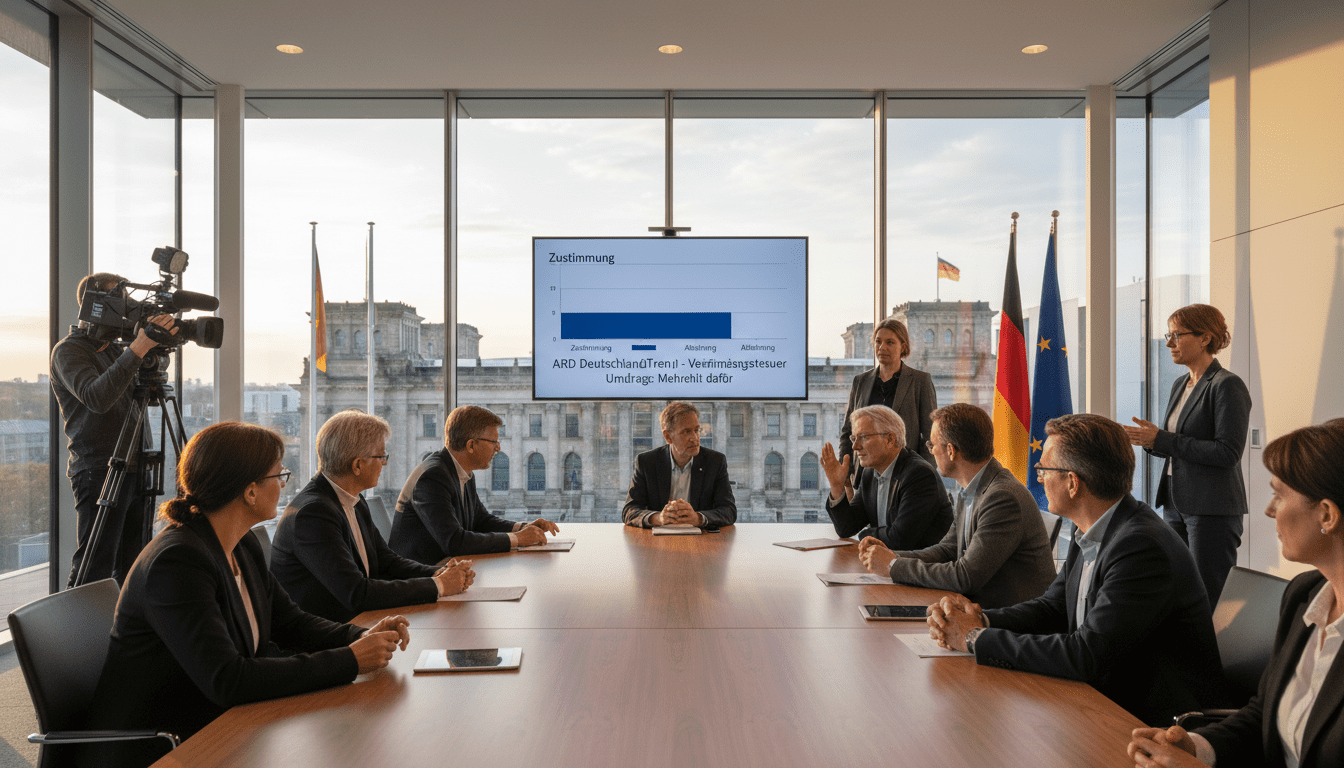
Majority of Germans Back Return of Wealth Tax as 81% Say Distribution Is Unfair
ARD/WDR poll: 81% of Germans see wealth distribution as unfair; 64% favour reintroducing a wealth tax, with clear regional and party divides shaping the debate.
A new WDR-commissioned survey shows 81 percent of Germans consider the country’s wealth distribution unjust, and a majority would support the return of a wealth tax. The representative poll, carried out by Infratest dimap in April 2026 among 2,084 people aged 16 and over, also found broad backing for higher inheritance taxes. The results place the wealth tax — or Vermögensteuer — back at the centre of public and political discussion.
Survey Finds 81% Say Distribution Is Unjust
Infratest dimap’s April 2026 survey recorded a striking perception of economic unfairness across the population. Eighty-one percent of respondents described the distribution of wealth in Germany as unfair, while just 15 percent said they regarded it as fair. That gap underlines a potent public sentiment that could influence policymaking and electoral debate in the months ahead.
Public concern about inequality cut across age groups and income brackets, according to the survey’s headline findings. The strong majority view suggests sustained pressure on elected officials to address perceived imbalances through fiscal or social policy changes.
Clear Majority Supports Return of Wealth Tax
The poll found 64 percent of respondents favour reintroducing a wealth tax, indicating substantial public appetite for redistributive measures. An additional 61 percent supported higher inheritance taxes as a tool to reduce concentration of wealth and shore up public revenues. Those figures show a readiness among many voters to accept targeted fiscal interventions to address inequality.
Support was strongest among voters who already lean left on economic issues, but the overall numbers point to widespread acceptance of the idea beyond traditional party lines. Still, translating public preference into legislation will require detailed proposals on valuation, exemptions and administrative feasibility.
Regional and Party Patterns Shape Views
Responses varied notably by region and political affiliation, highlighting the divided landscape of public opinion. The perception of unfairness was particularly pronounced in Saxony, Saxony-Anhalt and Thuringia, and in the Berlin-Brandenburg region, where historical and structural economic disparities remain salient. These regional differences may reflect local labour markets, demographic trends and recent political shifts.
On party lines, supporters of The Left, the Greens and the SPD were most likely to back a return of the wealth tax and higher inheritance levies. By contrast, a majority of AfD supporters opposed such measures: 52 percent rejected a wealth tax and 62 percent opposed higher inheritance taxes. Voters for other parties tending toward the centre expressed mixed but often supportive views.
Legal History: Wealth Tax Suspended Since 1997
Germany’s wealth tax has not been collected since 1997, when the federal government suspended it after the Federal Constitutional Court ruled the valuation method unconstitutional. At the time, the governing coalition of the Christian Democratic Union (Union) and the Free Democratic Party (FDP) opted to halt the levy rather than pursue a revised valuation framework. Since then, no consensus has emerged in the Bundestag on how to redesign and implement a legally robust wealth tax.
The court’s decision left lawmakers with complex technical and legal hurdles: establishing fair asset valuation rules, defining thresholds and exemptions, and building an administrative apparatus capable of enforcing the tax without undue burden. Those longstanding obstacles are central to contemporary debates about how, or whether, a renewed wealth tax could be implemented.
Political Debate and Policy Road Ahead
The survey’s findings are likely to intensify discussions among parties, think tanks and fiscal experts about concrete proposals for redistributive taxation. Advocates argue a carefully designed wealth tax could reduce inequality and generate revenue for social programmes, while critics warn of capital flight, valuation disputes and harm to investment. Any successful proposal would need to reconcile public sentiment with constitutional safeguards and practical enforcement.
Coalitions in the Bundestag will face pressure to convert broad public support into specific legislative initiatives, yet the path is narrow. Lawmakers must balance competing priorities — economic growth, legal certainty and social cohesion — while designing instruments that withstand constitutional scrutiny and administrative realities.
Public opinion now gives politicians a clearer mandate to address perceived unfairness, but the technical complexity of a reintroduced wealth tax means debate will likely remain intense and protracted. For many voters, the survey confirms a desire for change; for policymakers, it signals the start of a detailed policy fight about how to achieve it.
The WDR-commissioned poll, conducted by Infratest dimap in April 2026 with 2,084 respondents aged 16 and over, establishes a renewed public focus on wealth distribution and fiscal fairness that will shape political conversations going into the next legislative period.
