
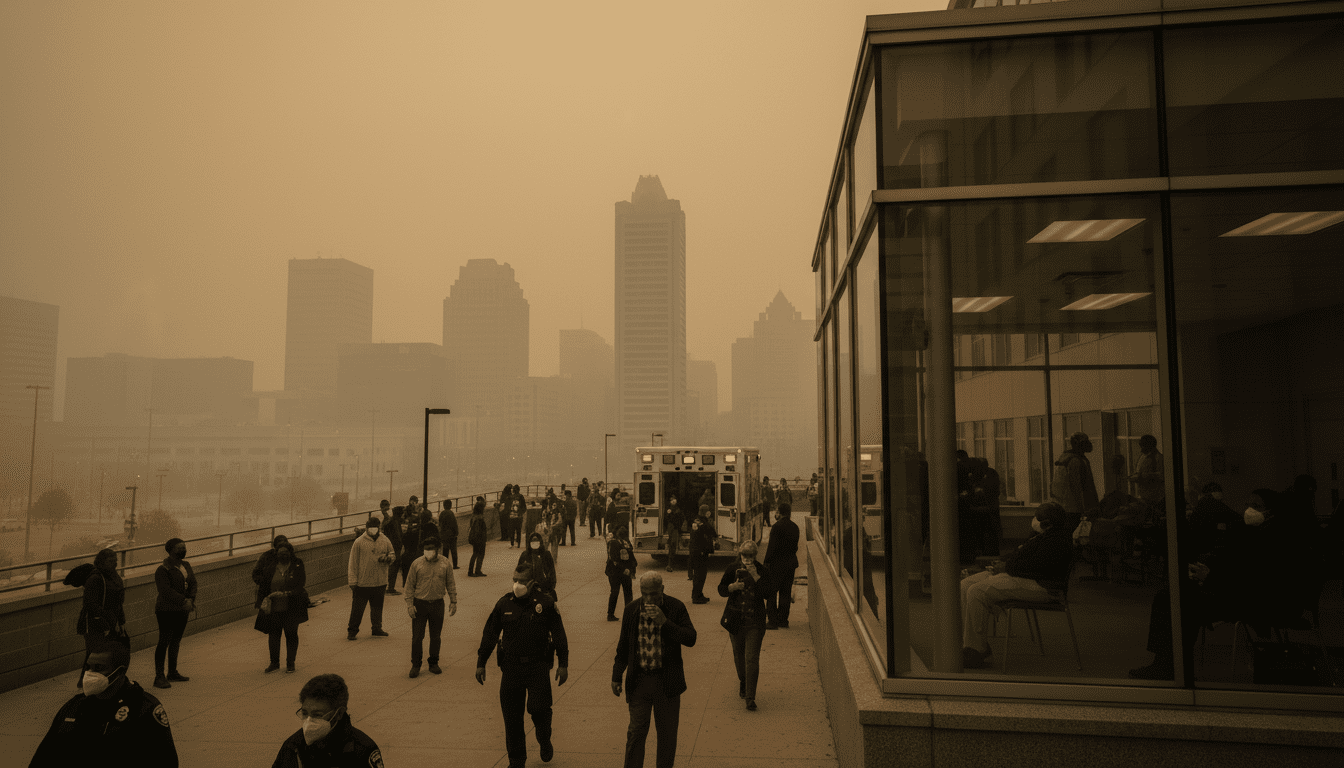
Wildfire smoke from Canadian fires linked to surge in cardiopulmonary visits in Maryland
University of Maryland researchers link wildfire smoke from June 2023 Canadian fires to an 18% rise in cardiopulmonary visits and surge in outpatient care.
A new University of Maryland study finds that wildfire smoke drifting from Western Canada in June 2023 was associated with a marked increase in heart and lung medical visits across Maryland. Researchers report the smoke events coincided with an 18 percent higher likelihood of patients seeking care for cardiopulmonary conditions and a 55 percent jump in outpatient visits during six identified hotspot days. The analysis used de-identified health records from the University of Maryland Medical System to quantify the health burden of distant smoke on local communities.
Study findings and measured increases
The research team compared medical encounters during June 2023 with equivalent months in 2018 and 2019 and identified statistically significant spikes tied to smoke exposure. Emergency department presentations, hospital admissions, and outpatient clinic visits for heart and lung problems all rose on the smoke-affected days. Lead investigators reported an especially large relative increase in outpatient visits, suggesting patients sought non-emergency care for worsening symptoms.
Smoke plume path and local air quality impacts
Satellite imagery and air monitoring showed a smoke plume from Western Canadian wildfires traveling roughly 2,000 miles and degrading air quality on the U.S. East Coast in June 2023. The team identified six discrete “hotspot” days when air pollutant levels exceeded Environmental Protection Agency safety thresholds in all 23 Maryland counties. Residents in urban centers reported visible darkened skies and pervasive smoke odors during the episode, consistent with elevated particulate matter detected by monitors.
Data sources and analytic approach
Investigators combined nearly two million de-identified electronic health records from the University of Maryland Medical System with satellite and EPA air-quality datasets to establish temporal associations. Their methodology matched spikes in cardiopulmonary visits to specific high-smoke days, controlling for seasonal and baseline visit patterns by using prior-year comparisons. This linkage of clinical and environmental data enabled a granular view of how transboundary smoke translated into measurable healthcare utilization.
Who was affected and access-to-care signals
Analysis revealed that the increased outpatient visits were concentrated among older patients who were more likely to be non-smokers and, counterintuitively, tended to be more socioeconomically advantaged than typical cardiovascular patients. Researchers cautioned this pattern may reflect disparities in access, with wealthier patients able to obtain outpatient appointments while disadvantaged individuals potentially faced barriers to care on high-risk days. The finding raises concerns that vulnerable populations may underuse medical services during smoke events despite possibly suffering poor health outcomes.
Clinical and public health implications
Authors argue the results underscore the need for anticipatory clinical strategies on high-smoke days, particularly as climate-driven wildfire activity grows. Health systems with integrated data platforms can identify high-risk patients in advance and deploy targeted outreach, telehealth, medication refills, or air quality advisories to reduce preventable complications. Public health officials may also need to broaden messaging about indoor air management, mask use, and when to seek medical attention during widespread smoke episodes.
Health system leaders highlighted the value of linking environmental surveillance with electronic health records to inform real-time responses. Investing in predictive tools and expanding access pathways such as telemedicine could mitigate immediate harms and reduce pressure on emergency services during prolonged smoke events. Researchers called for further study to track long-term cardiovascular consequences and to evaluate interventions aimed at protecting underserved groups.
The Maryland study provides concrete evidence that wildfire smoke thousands of miles away can produce rapid increases in cardiac and respiratory healthcare needs, and it stresses the importance of preparedness, equitable access to care, and integrated data systems to protect public health during future smoke incursions.
