
Questions Raised After Correspondents’ Dinner Shooting as Security Lapses Scrutinized
Debate erupts after a suspected gunman breached security at the Washington Correspondents’ Dinner; officials probe why full protective measures were not used.
Strong opening paragraph summarizing the news event.
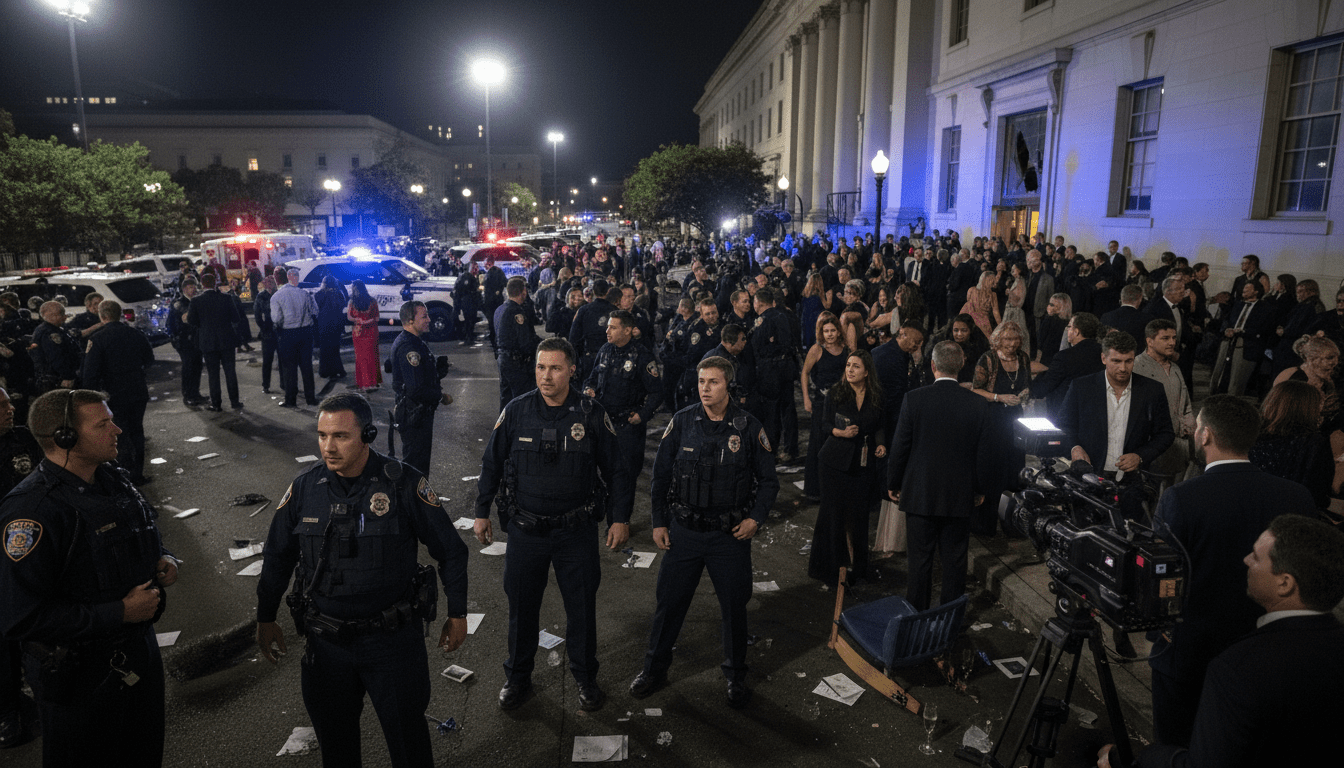
A gunman stormed a security checkpoint at a gala Correspondents’ Dinner in Washington on Saturday evening, firing shots before being subdued by the Secret Service, in an incident now described as the Correspondents’ Dinner shooting. The president and several senior officials were quickly evacuated and no guests were reported injured, though a Secret Service officer was struck in the vest and treated at a hospital. The episode has triggered an immediate debate over the event’s security classification and whether standard protections for high-level gatherings were fully deployed.
Secret Service and administration respond to criticism
Acting Attorney General Todd Blanche defended the security plan, telling NBC News that the arrangements performed as intended and that the attacker reached only as far as the checkpoint. The Secret Service said its agents quickly restrained the suspect and ensured the safety of those present, a point stressed by officials during initial briefings. Yet reports that the government did not invoke the highest security posture typical for comparable events have amplified questions from lawmakers and outside observers.
Lawmakers demand answers and schedule oversight
Republican Senator Chuck Grassley called for a hearing to question Secret Service officials about the security concept used at the dinner, signaling bipartisan concern about preparedness. The planned oversight will seek documents and testimony on how threat assessments were made and why certain resources were not mobilized. Lawmakers emphasized the need to reconcile access for attendees with measures that protect officials and the public at high-profile functions.
Sequence of the breach and immediate response
According to officials, the attacker rushed through a security portal located just outside the ballroom rather than at the hotel’s main entrance, firing as agents intervened to shield the president. The president was rapidly moved to safety by his protective detail while agents subdued the suspect inside the room, preventing further harm. Event organizers and security teams are now examining the checkpoint layout and timing that permitted the assailant to approach the venue’s inner perimeter.
Alleged manifesto and reported motivations
Authorities say the suspect left a manifesto in his hotel room that contained anti-Christian rhetoric and critical remarks about the president, assertions that the president relayed to media outlets following the attack. The White House also cited the suspect’s social-media posts as showing hostility toward Christian groups and the president, though independent confirmation of the manifesto’s full contents has not been released publicly. Investigators are treating motive as a central line of inquiry while cautioning that formal determinations await further forensic and interview work.
Charges filed and next legal steps
Federal prosecutors announced that the suspect is expected to appear in a U.S. court on Monday to face initial charges including use of a firearm in the commission of a violent crime and assault on a federal officer with a dangerous weapon. Officials indicated additional counts could be added as the investigation develops and as evidence is reviewed by grand juries or prosecutors. The suspect remains in custody while investigators process the scene and analyze electronic devices recovered from his room and elsewhere.
Political fallout and security policy implications
The incident has quickly become a political flashpoint, with activists and commentators from across the spectrum criticizing what they described as “lax” security at a gathering attended by the president, the vice president, and senior cabinet members. Some voices called attention to the placement of security screening and the reliance on a single checkpoint near the ballroom as potential operational failures. Security analysts said the event will likely prompt agencies to reassess protocols for close-proximity access to protected principals, balancing public engagement with hardened protective measures.
The investigation remains active as multiple agencies coordinate evidence collection and threat assessment, and congressional oversight is set to probe operational choices made before the attack. Officials have urged patience while forensic work and interviews proceed, and legal proceedings will follow to determine the suspect’s culpability and any broader lapses that may have contributed to the breach.
