
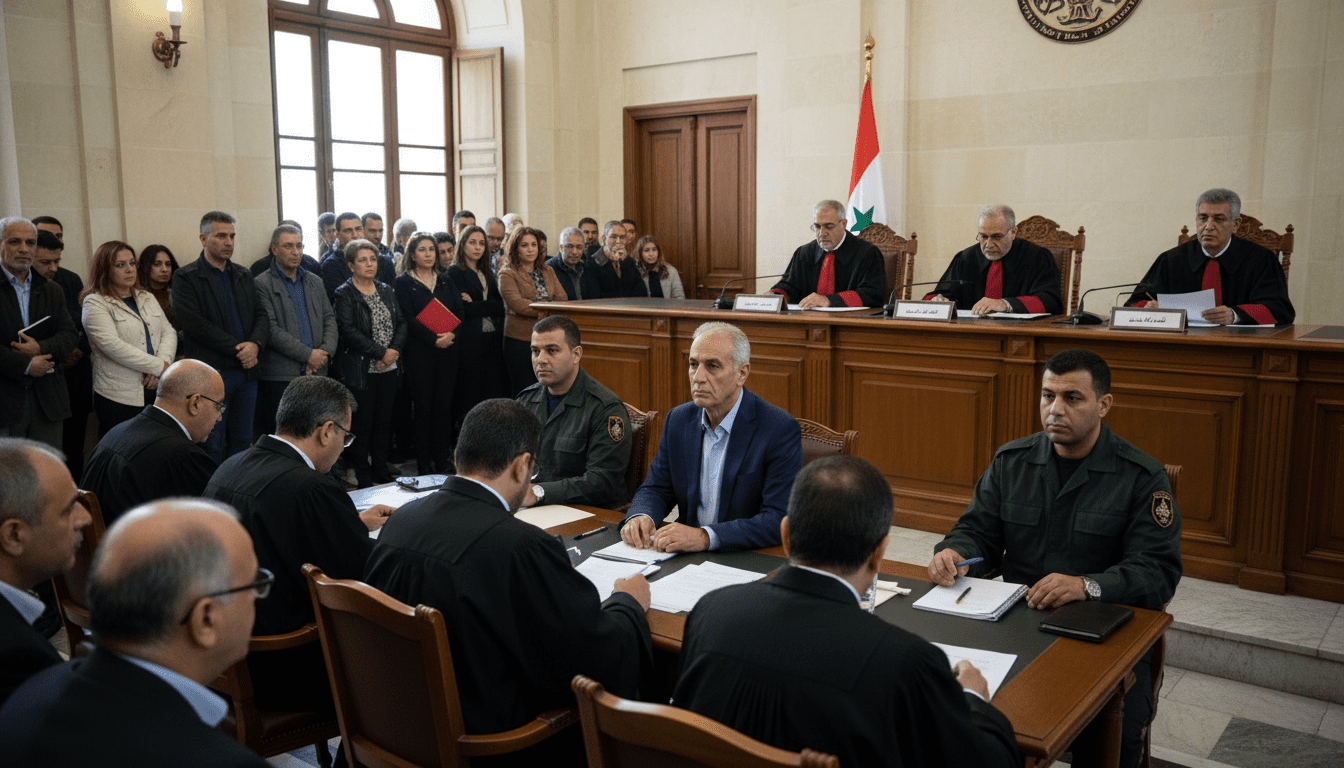
First public trial in Syria opens as former Assad official Atef Najib appears
Atef Najib, a former brigadier general, has made the first public court appearance in Syria as the country’s newly opened public trial in Syria addresses alleged abuses from 2011, state media said.
First Public Court Appearance
Atef Najib was presented before a court in Syria on Sunday, marking the first time an official from the Assad era has stood in a public proceeding since the regime’s collapse. State news agency Sana reported Najib’s appearance and described the hearing as a preparatory session ahead of a fuller trial scheduled for May 2026. Najib is a cousin of the deposed president and once led the political security branch in the southern province of Daraa.
Charges and Allegations
Court documents and the state account indicate Najib faces accusations of committing crimes against the Syrian people during his tenure. Prosecutors allege that under his authority, detainees were mistreated and that security forces used excessive measures to suppress dissent. The charges relate chiefly to the events that ignited nationwide unrest in 2011, though formal indictments include broader counts tied to security operations.
2011 Daraa Arrests Revisited
The immediate focus of the case centers on arrests made in Daraa in 2011 after schoolchildren and youths were detained for scrawling anti-government graffiti. Those detentions, and the reported use of force and torture, are widely recognized as catalysts for the mass protests that quickly spread across the country. Survivors and witnesses have long said the crackdown in Daraa hardened popular resistance and transformed demonstrations into an armed conflict.
Assad’s Fall and In-Absentia Indictments
The proceedings come after President Bashar al-Assad’s removal from power in December 2024, when rebel forces launched a rapid offensive that pushed him from office. Assad fled to Russia, according to multiple accounts, and a number of senior security officials also left Syria in the months that followed. Several top figures, including Assad and his brother Maher, have been formally charged in absentia as part of a wider judicial effort to hold the former leadership to account.
Defendants and Court Schedule
Najib was the only defendant reported to have been personally brought before the court on the first day of hearings; others named in indictments remain abroad and will be tried in absentia unless they return to face charges. Sana said the process is to advance with further sessions planned for May 2026, when prosecutors are expected to present additional evidence and witness testimony. Court officials have indicated investigators are compiling documentary records and victim statements that will be submitted during the upcoming hearings.
Legal and Political Implications
The launch of a public trial against an Assad-era official represents a significant shift in Syria’s post-conflict legal landscape and raises complex questions about accountability, rule of law and reconciliation. Domestic authorities portray the cases as steps toward justice for victims of the decade-and-a-half conflict, while legal observers note the challenges of ensuring fair procedure given the chaos of wartime evidence-gathering. International monitors have previously called for transparent trials that meet recognized legal standards, a matter likely to be scrutinized as proceedings unfold.
Domestic and International Reactions
Reactions within Syria are expected to be mixed, reflecting deep divisions left by years of violence and displacement. Families of detainees and rights groups may view public hearings as overdue recognition of their suffering, while supporters of the former regime and those fearing reprisals may express concern about the judicial process. International governments and human rights organizations will be watching the courtroom closely for signs that trials adhere to impartial standards and provide due process for all accused.
The case of Atef Najib revisits a flashpoint in Syria’s modern history and sets a precedent for how the post-Assad authorities intend to handle allegations of abuses from the conflict years. Observers say the coming weeks will be critical in determining whether the proceedings can balance accountability with legal rigor, and whether they will help chart a path toward broader national reconciliation.
