
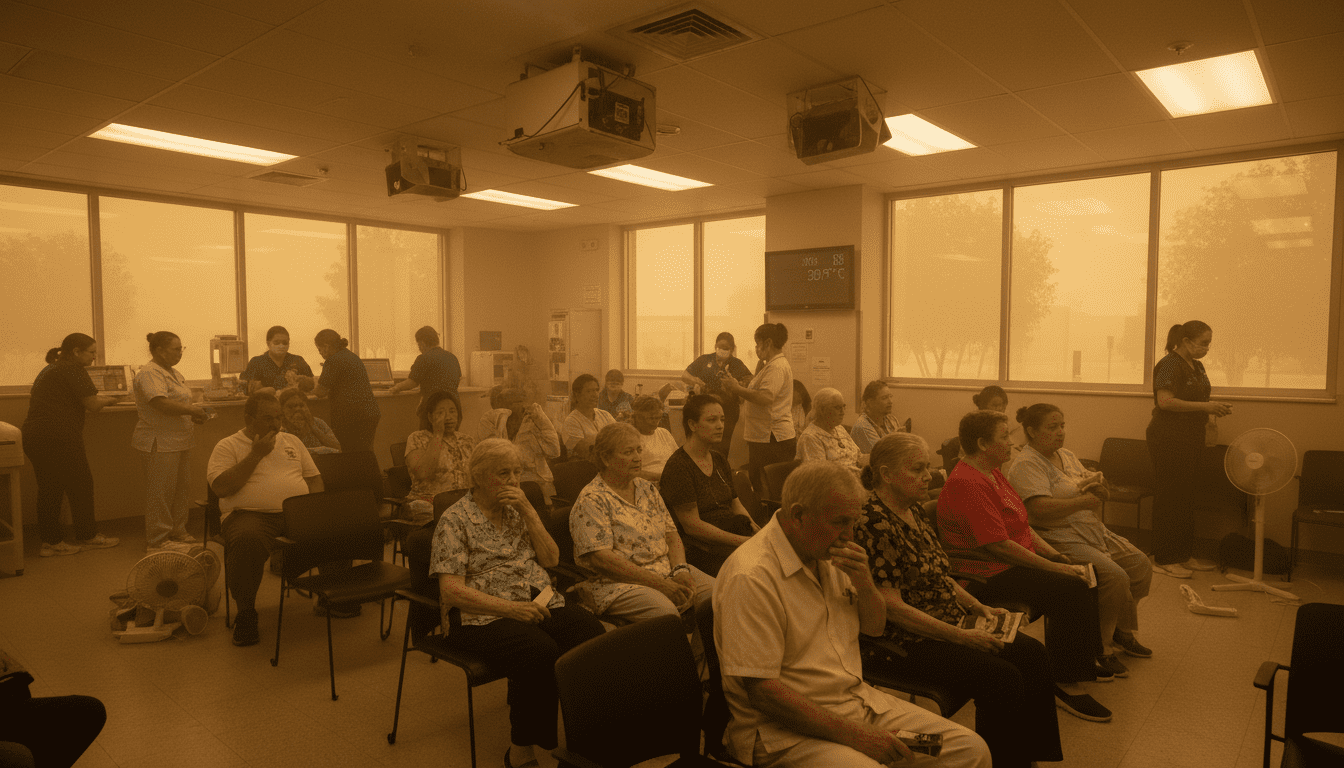
Study: Wildfire Smoke Linked to 22% Higher ER Risk in Areas Lacking Air Conditioning
Study finds wildfire smoke raises ER visits nationwide; limited air conditioning tied to 22% higher respiratory risk. Researchers call for equity and education.
New analysis ties wildfire smoke exposure to increased emergency visits
A multi‑institutional study led by Boston University School of Public Health finds that wildfire smoke exposure is linked to higher rates of emergency department visits across California wildfire seasons. The research, assessing fine particulate matter (PM2.5) from wildfires, identifies stronger associations with respiratory visits and a measurable rise in all‑cause emergency care related to smoke exposure. The study highlights that limited access to residential air conditioning corresponds with notably greater health risks during smoke events.
Researchers used large claims data set and seasonal wildfire windows
Investigators examined more than 50,000 emergency department visits drawn from a nationwide health‑claims database during California’s wildfire seasons between 2012 and 2019. The team analyzed PM2.5 concentrations during the May-to-November periods and compared exposure windows to the timing of emergency care. Lead author Dr. Jennifer Stowell and colleagues applied this approach to quantify the short‑term impacts of smoke on health across demographic groups and communities.
Reduced air conditioning availability linked to higher respiratory risk
The study found that residents in areas with lower estimates of air conditioning availability faced a 22 percent higher risk of visiting the emergency department for respiratory conditions associated with wildfire smoke. The analysis focused on the likelihood of AC access rather than specific system usage or filter types, but results suggest that cooling systems may play a meaningful role in moderating indoor infiltration of fine particles during smoke events. Authors caution that further work is needed to measure actual AC use and differences between system types.
Age and racial disparities emerged in emergency department impacts
Smoke‑related respiratory visits were most pronounced among children under 10 and adults aged 20–74, according to the report. The Black population showed a particularly elevated risk, while increases were observed among White, Hispanic, and Asian/Pacific Islander groups as well. These patterns point to uneven burdens of smoke exposure and limited protective resources in certain communities, prompting calls for targeted public health measures.
Indoor filtration effectiveness varies by filter type and rating
The study discusses how residential cooling systems and filters can reduce indoor PM2.5 concentrations, with filter performance varying widely. High‑efficiency particulate air (HEPA) filters capture the majority of particles larger than 0.3 microns but are costlier than basic fiberglass filters, which remove only larger particles. Filters with a Minimum Efficiency Reporting Value (MERV) of seven or greater are identified as more effective at removing outdoor particulates, though higher‑rated filters typically carry greater expense and installation requirements.
Authors urge policy actions focused on equity and clear public information
Researchers recommend that policymakers expand education about effective filtration and cooling options and consider economic supports to improve access for low‑income and marginalized households. The paper’s authors argue for pre‑event planning in smoke‑prone regions, including clearer consumer guidance about filter ratings and the types of systems that reduce indoor particle loads. They note that wildfire exposure is increasing in the wildland‑urban interface, where burning structures and vegetation can produce complex and toxic smoke plumes.
Climate trends and recent California fires underscore urgency
The study’s release coincides with heightened wildfire activity in Southern California, where out‑of‑season and wind‑driven fires have destroyed homes and produced large smoke plumes that travel long distances. Researchers highlight that strong late‑season wind events, such as Santa Ana conditions, can spread fires into populated areas and amplify exposure. As climate change alters seasonal patterns and wind behavior, experts warn that the frequency and intensity of such events are likely to increase.
Boston University’s Dr. Gregory Wellenius is listed as the study’s senior author, with coauthors from Boston University College of Arts & Sciences and the Health Effects Institute, including Drs. Ian Sue Wing, Yasmin Romitti, and Patrick Kinney. Together, the team argues that improving access to effective indoor air filtration and advancing equitable preparedness strategies are critical next steps to protect public health during recurring wildfire smoke episodes.
The findings add to a growing body of evidence that relatively simple household technologies—when available and properly used—can reduce exposure to harmful particulate matter from wildfire smoke, but that unequal access to those technologies leaves some communities more vulnerable.
