
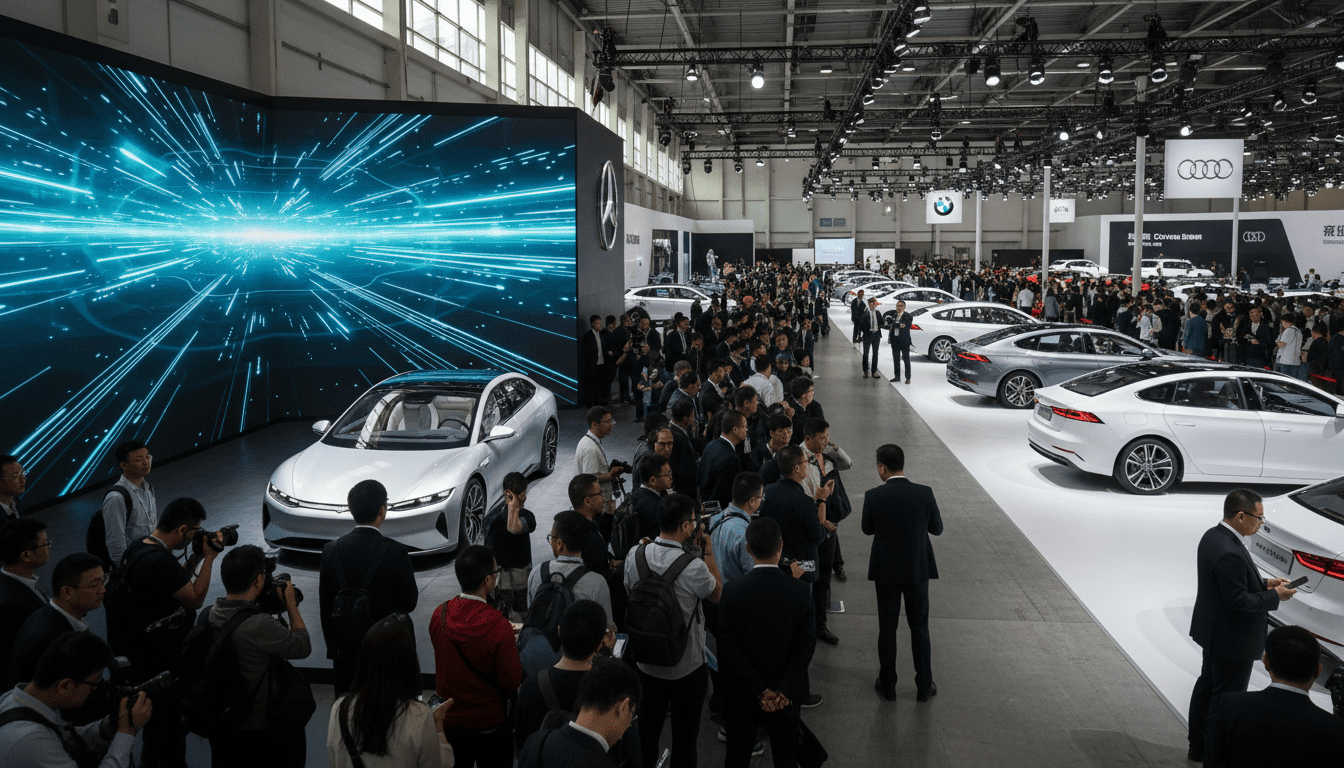
Beijing Auto Show Underscores China’s Auto Power with Giant EVs, Huawei and CATL Dominating
Beijing Auto Show spans 17 halls with 180 new models and nearly 1,500 vehicles, showcasing giant EVs, Huawei and CATL’s clout and a rising Chinese export surge.
The Beijing Auto Show opened as an exhibition of scale and ambition, stretching across 17 halls and requiring visitors at least two days to see the full offering. Organizers count roughly 180 new models—20 more than last year—and almost 1,500 vehicles on display, a sign that China now sets benchmarks for the global auto industry. Attendees reported walking distances exceeding ten kilometres inside the complex, underlining how the event has grown into a week-long industry statement.
Massive new models dominate the floors
A clear visual trend at the show was the size of the new electric and hybrid vehicles on display, many exceeding five metres in length. Exhibits favored three-row SUVs and MPVs—vehicles that blend van-like space with luxury appointments aimed at family and executive buyers. Manufacturers showcased second-row seats with armrests, recline and massage functions, large entertainment screens for rear passengers and onboard refrigeration, signaling a premium interior focus even at midrange prices.
Affordability challenges Western assumptions about luxury
The scale and equipment levels also challenged assumptions that Chinese consumers would not buy luxury vehicles domestically. Many of the high-spec models appear on lists under 400,000 renminbi—around €50,000—undercutting Western luxury brands on price. Established names like Hongqi, used by senior officials, and the Maextro, which Huawei helped design, sit alongside higher-end offerings and can be priced from about €90,000, illustrating a widening domestic market for both value and status.
Huawei and CATL emerge as industrial pillars
Beyond vehicle design, two suppliers stood out as strategic gatekeepers: Huawei and CATL. Huawei’s software, autonomous-driving components and in-car entertainment systems are becoming near-ubiquitous, making the company a de facto platform provider for many manufacturers. CATL, meanwhile, presented battery technologies with claimed ranges that stretch industry norms and drew visible deference from auto executives at a large industry event. Both firms are capturing growing shares of value and shaping how cars are engineered and sold.
Competition spurs rapid copying and limited consolidation
Exhibitors displayed product lines that increasingly resemble one another, a symptom of intense domestic rivalry and quick imitation when a configuration proves successful. That dynamic has so far prevented broad market consolidation, keeping many brands in play despite thinning margins. Instead of culling capacity, competition has accelerated efforts to expand abroad, with firms betting on export growth to absorb excess production.
Export push flips industry focus outward
Manufacturers at the show emphasized foreign markets as the next growth frontier, a response to a softer domestic market earlier this year. Organizers and industry sources forecast at least seven million Chinese-built vehicles leaving for overseas markets this year, and the four biggest exporters—Chery, BYD, SAIC and Geely—reported that first-quarter shipments abroad more than doubled. To court buyers and regulators, several companies invited international press and influencers to Beijing in a bid to manage perception and build brand recognition.
Foreign brands face strategic and cultural headwinds
International automakers adopted varied strategies on the Beijing floor, from nostalgia to tech-first postures. Porsche staged a heritage-focused presentation and its CEO, Michael Leiters, framed the brand’s approach as “Value over Volume,” a line that signals a willingness to accept niche status in China. Porsche’s highest-tier models carry price tags above 1.1 million renminbi—roughly €140,000—while other German marques experienced mixed reactions over interior design and China-specific tastes. Volkswagen, by contrast, has gone all-in on local integration, building extensive operations in Hefei and releasing new China-developed models at a brisk cadence.
The interplay of aggressive local suppliers, dozens of domestic brands and calibrated foreign entries has produced a marketplace that is both creative and unforgiving. Executives newly exposed to global scrutiny show caution in public remarks and often prefer controlled press formats as they navigate geopolitical sensitivities alongside commercial ambitions.
China’s national auto fair therefore delivered a twofold message: the country’s manufacturers and suppliers are now standard-setters in vehicle design and systems, and they are increasingly prepared to take that competitive edge abroad. As the industry accelerates product launches and export plans, next year’s Shanghai show is shaping up to be a decisive moment for foreign automakers seeking to prove their long-term viability in the Chinese-dominated landscape.
