
AfD expels Alexander Eichwald after Hitler-style speech at youth event
AfD expels Alexander Eichwald after a Hitler-style speech at the Generation Deutschland founding in Gießen in Nov.; party upholds suspension and says he may appeal.
Alexander Eichwald has been expelled from the Alternative for Germany (AfD) by the party’s North Rhine-Westphalia regional arbitration court after delivering a speech described as evoking Adolf Hitler at the founding event of the new youth group Generation Deutschland. The decision, announced by the Landesschiedsgericht, also preserves an earlier withdrawal of Eichwald’s membership rights, and he retains the option to appeal to the AfD’s federal arbitration court. Party officials said Eichwald was not present at the regional hearing.
AfD regional court orders expulsion
The AfD’s Landesschiedsgericht in North Rhine-Westphalia concluded that Eichwald’s conduct at the Gießen event amounted to serious damage to the party and warranted full expulsion. The ruling confirms a prior measure by the state executive that had already suspended Eichwald’s membership rights pending further proceedings. Party spokespeople emphasized that the regional court’s decision can be challenged before the AfD’s Bundesschiedsgericht.
The regional tribunal’s determination means Eichwald is no longer a member of the AfD at the state level unless a higher tribunal overturns the ruling. Party sources noted that the legal route within the party structure remains open, underscoring internal procedural avenues rather than recourse to civil courts.
Hitler-style speech at Generation Deutschland founding in Gießen
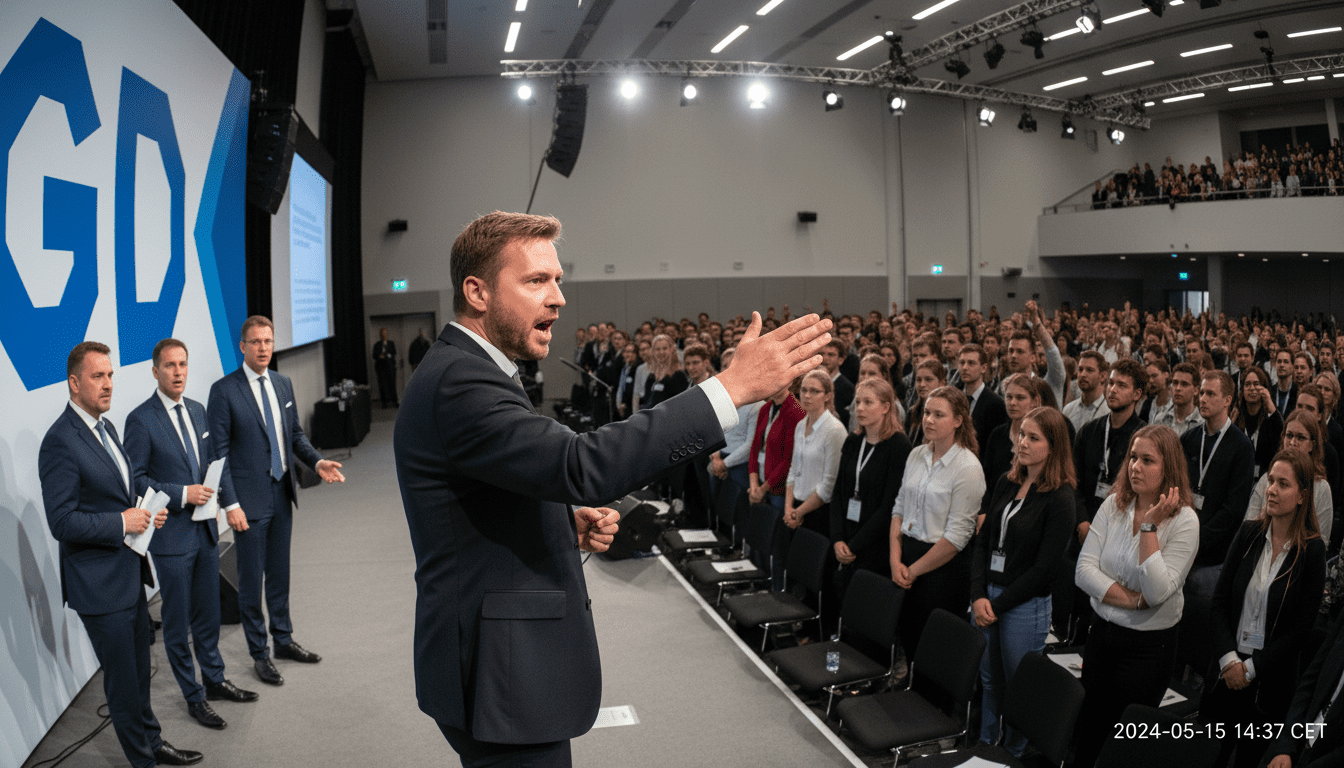
Eichwald drew national attention after a late-November address at the founding meeting of Generation Deutschland in Gießen in which observers said his rhetoric and delivery deliberately echoed Adolf Hitler. The speech took place during the establishment of the AfD’s new youth organisation, where Eichwald intended to stand for a board position. Reports from the event described a performance that party critics and some members judged incompatible with AfD rules and broader democratic norms.
Organizers of Generation Deutschland had presented the gathering as the launch of a fresh youth platform within the party, but the controversy surrounding Eichwald’s remarks quickly overshadowed the event. The incident triggered internal complaints and prompted the Herford district association to take formal action against the speaker.
Local AfD chapter filed expulsion citing party-damaging behavior
The request for Eichwald’s expulsion was formally lodged by the AfD Kreisverband Herford, which charged him with schweres parteischädigendes Verhalten — severe party-damaging behavior. That filing set in motion the disciplinary process that culminated in the regional arbitration court’s decision. Officials in Herford cited the need to defend the party’s statutes and public standing when they brought the complaint.
AfD federal co-leader Tino Chrupalla publicly reacted to the speech at the time, saying he was convinced Eichwald would not remain a party member after the incident. The leadership’s statements signalled a willingness among senior figures to distance the party from rhetoric widely criticised as extremist.
Procedure preserved suspension and outlined appeal rights
With the Landesschiedsgericht’s ruling, the preexisting withdrawal of Eichwald’s membership rights by the North Rhine-Westphalia state executive remains in force. That administrative measure had restricted his participation in party activities while the disciplinary case was ongoing. Party spokespeople reiterated that disciplinary processes within the AfD include internal appellate mechanisms and that Eichwald could bring his case before the national arbitration body.
Eichwald’s absence from the hearing was confirmed by party officials, who said he did not attend the regional arbitration proceedings. The lack of a personal defence before the tribunal did not block the court from reaching a decision based on submitted evidence and the complaint from the Herford chapter.
Potential impact on Generation Deutschland and party image
The expulsion raises immediate questions about the nascent youth organisation’s direction and vetting processes for candidates. Generation Deutschland’s founding was intended to build a younger base for the AfD, but the controversy surrounding Eichwald has drawn scrutiny to how the organisation manages membership standards and public messaging. Analysts within and outside the party are likely to watch whether the group distances itself from the rhetoric that prompted the disciplinary action.
For the AfD at large, the incident is a test of internal discipline and public relations, as leadership seeks to balance party unity with managing reputational risks. The swift move by a district association to pursue expulsion and the state court’s confirmation of that step suggest a determination among some elements of the party to address conduct they regard as damaging.
The Landesschiedsgericht’s decision marks a significant disciplinary outcome within the AfD’s internal justice system, but it does not necessarily end the matter. Alexander Eichwald retains the right to pursue an internal appeal, and the federal arbitration court will have the authority to review and potentially reverse the regional ruling. The case is likely to remain a focal point for debates within the AfD about acceptable rhetoric, organisational culture, and the governance of new party initiatives.
