
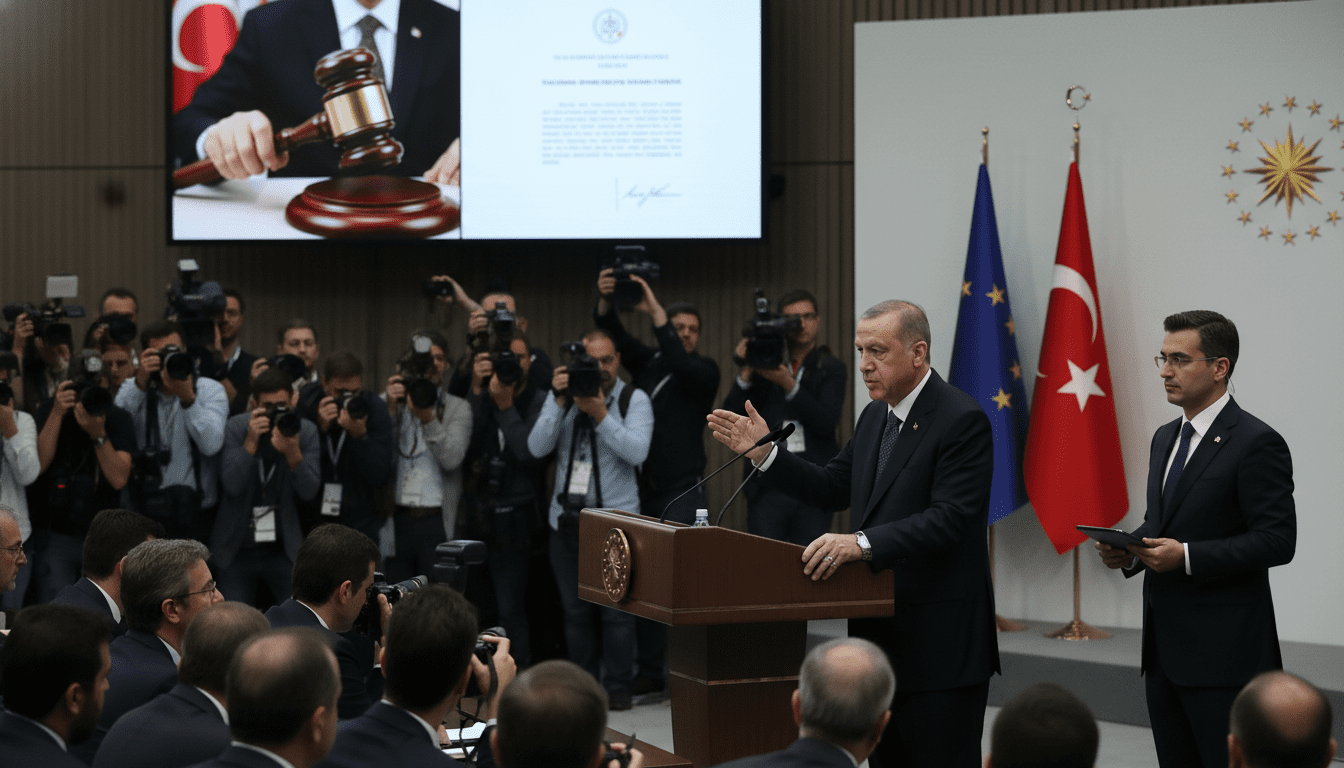
Turkey-Israel rift deepens after Istanbul prosecutions and escalating public attacks
Rising Turkey-Israel rift follows Istanbul charges against Israeli leaders and sharp public attacks, raising risks for energy, air routes and regional alliances.
The diplomatic rupture between Turkey and Israel has widened after prosecutors in Istanbul filed charges this month against dozens of people, including Israel’s prime minister, over last year’s confrontation with the Global Sumud flotilla in international waters. The Istanbul Chief Public Prosecutor’s move, and the political reactions it provoked, have turned a legal action into a flashpoint in already strained relations. Political leaders in both capitals have traded incendiary accusations that analysts say could have concrete economic and security consequences beyond rhetoric.
Prosecution in Istanbul Raises Tensions
The Istanbul Chief Public Prosecutor’s office brought charges against 35 individuals for their alleged roles in the flotilla incident, seeking lengthy sentences for some defendants. That legal step has been interpreted in Jerusalem as a deliberate escalation, prompting a wave of official responses and public commentary.
Legal experts say prosecutions in foreign courts rarely resolve diplomatic disputes, but they can harden domestic political positions and narrow officials’ room for compromise. In this case, prosecutors’ actions appear to have intersected with an election calendar in Israel, magnifying the domestic political stakes.
Netanyahu and Bennett Turn Rhetoric Into Political Tool
Prime Minister Benjamin Netanyahu responded with pointed online accusations directed at President Recep Tayyip Erdoğan, framing the dispute in stark moral terms. Former prime minister Naftali Bennett also entered the public fray, using sharp rhetoric that compared Turkey to regional adversaries and hinted at tougher measures.
Observers note that incendiary language serves dual audiences: domestic voters and international partners, and it can constrain leaders from stepping back without appearing weak. The interplay of courtroom developments and election politics has therefore transformed a legal case into a broader diplomatic confrontation.
Energy and Oil Vulnerabilities
Analysts have warned that Ankara could leverage regional energy routes to apply pressure, including the potential to disrupt flows through pipelines such as the Baku–Tbilisi–Ceyhan corridor. While that pipeline carries Azerbaijani crude that has formed an important part of Israel’s imports, alternative supplies remain available on global markets.
Any Turkish move to curtail pipeline throughput would likely cause short-term market disruption and force importers to seek alternative logistics, but it is uncertain how long such a tactic could be sustained without broader regional fallout. Traders have already used complex arrangements and third-party operators to keep flows moving since Turkey imposed a trade embargo; a new escalation would complicate those workarounds.
Airspace and Flight Disruptions
One tangible sanction Ankara could impose is the closure of Turkish airspace to Israeli flights, a move that would lengthen routes and raise operating costs for carriers. Airlines would face higher fuel bills, longer crew duty times, and schedule changes that could translate into higher fares for passengers and reduced connectivity for Israeli carriers.
However, commercial airlines and states have shown adaptability in recent years by opening alternate corridors, including routes over the Black Sea and recently liberalized passages across parts of the Gulf and Arabian Peninsula. Those alternatives would reduce the strategic impact of a Turkish airspace ban, though some destinations—especially in the Caucasus and parts of Eurasia—would become less convenient.
Trade, Tourism and the Lost EastMed Project
Bilateral trade between Turkey and Israel has already dropped sharply since diplomatic ties soured, and a Turkish embargo in place since May 2024 has redirected much commerce through third countries. Tourism flows have been resilient in pockets, but they are not decisive enough to force major policy shifts in either capital.
A longer-term source of potential cooperation, the EastMed gas export concept that once envisioned pipeline links through the region, has been set back by the deepening political rift. With that project effectively dormant, economic interdependence that might have moderated political disputes has been diminished.
Turkey’s Diplomatic Balancing and Regional Alignments
Ankara appears to be pursuing a multi-vector strategy to insulate itself from escalation: strengthening ties with NATO partners, cultivating relationships across the Middle East, and maintaining unique links to both Moscow and Kyiv. Turkish officials seem to calculate that a broad set of international relationships will limit the chances of a severe confrontation with Israel.
At the same time, Turkey’s outreach to countries such as Saudi Arabia, Egypt and Pakistan is intended to expand its diplomatic options and signal that Ankara can marshal regional support if pressured. Whether that strategy will deter further deterioration or simply institutionalize rivalry remains an open question.
The current sequence of prosecutions and political exchanges has raised the prospect of a sustained diplomatic freeze and limited punitive measures, but experts caution that a full rupture would carry costs for both capitals. Markets, aviation planners and regional partners are watching closely, aware that tactical steps now could harden into longer-term separation. The ultimate trajectory will depend on whether legal actions and campaign politics give way to back-channel diplomacy or whether public saber-rattling continues to drive both sides toward more consequential measures.
