
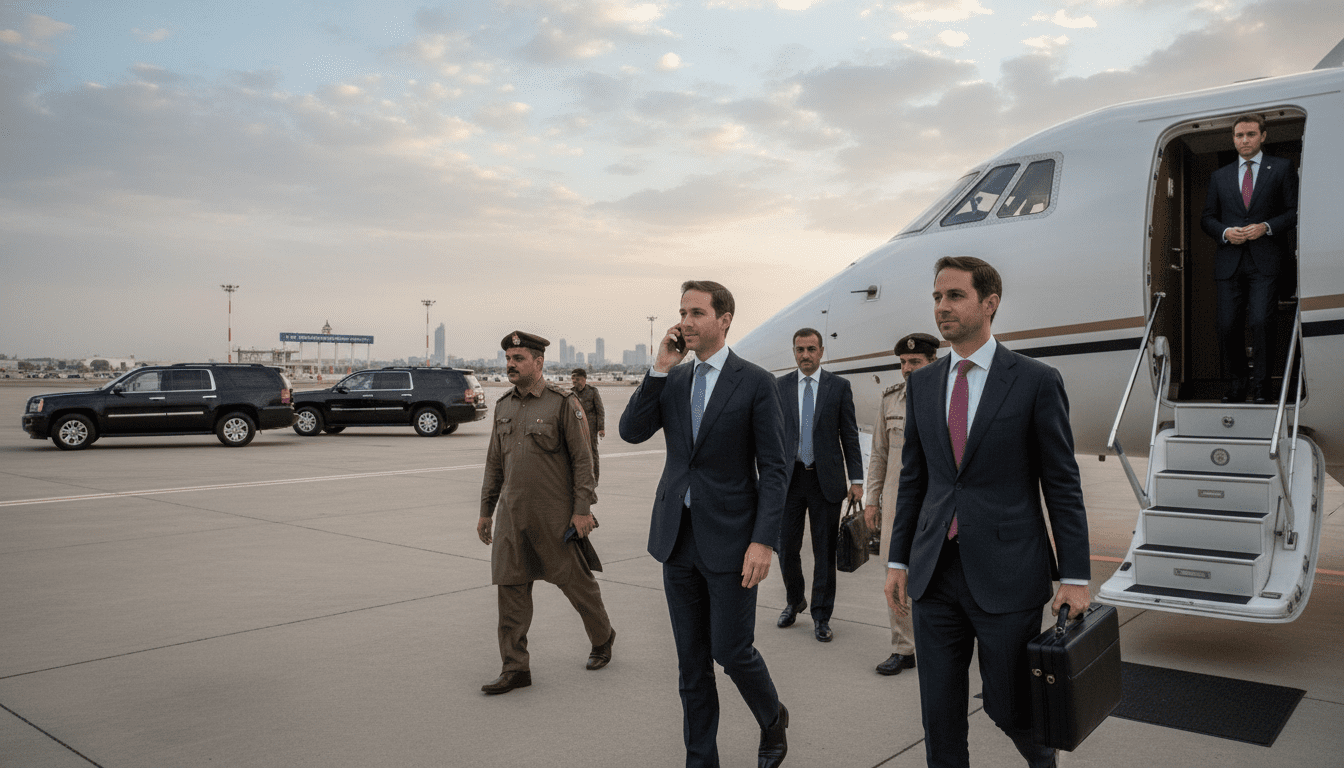
Trump negotiators Jared Kushner and Steve Witkoff to travel to Pakistan without J.D. Vance
White House says Trump negotiators Jared Kushner and Steve Witkoff will fly to Islamabad on Saturday, April 25, 2026, to hear Iranian positions; J.D. Vance will not join.
White House Announces Envoys to Pakistan
The White House announced on Friday, April 24, 2026, that two Trump negotiators — Jared Kushner and Steve Witkoff — would travel to Islamabad on Saturday, April 25, 2026. Press secretary Karoline Leavitt told reporters the duo would go “to hear the Iranians’ positions,” framing the trip as a listening mission. Officials said the president, the vice president and the secretary of state would remain in the United States to receive updates.
The announcement was presented as a targeted diplomatic step rather than a broad negotiation effort, and it came without detail on venues or which Iranian interlocutors might participate. The White House withheld an itinerary and further briefing notes pending the envoys’ departure.
Delegation Composition and Notable Absence
The two-member delegation comprises Jared Kushner, a senior advisor with a long record in Middle East outreach, and Steve Witkoff, a private-sector figure whose role the White House did not fully explain. The announcement explicitly noted that Senator J.D. Vance, previously reported as part of potential outreach, will not accompany the trip.
Leavitt said the choice of delegates reflected the administration’s immediate diplomatic priorities and did not signal a permanent negotiating team. The limited composition and Vance’s absence leave questions about how the delegation will coordinate policy and what authority it carries.
Stated Mission: Listening to Iranian Positions
According to the press secretary’s remarks, the primary objective is to listen to Iranian positions rather than to announce new U.S. demands or concessions. That description positions the visit as fact-finding and message-gathering, aimed at understanding Tehran’s public or private stances. The administration framed the mission as preparatory, with any substantive U.S. response to be determined after the envoys report back.
Officials did not specify whether the envoys would meet Iranian government representatives directly, engage through intermediaries, or meet Iranian-linked third parties in Pakistan. The White House statement emphasized the importance of hearing perspectives before shaping next steps.
Domestic Political Calculations and Responses
The decision to send private-sector and advisory figures instead of senior cabinet officials could reflect a desire to separate sensitive outreach from formal diplomacy. It also reduces the need for immediate congressional notification tied to official State Department missions. Critics may see the composition as politically calculated, while supporters could argue it allows for flexible, back-channel communications.
Domestically, the administration’s approach will likely draw attention from lawmakers and commentators seeking clarity on mandate, reporting lines and strategic objectives. The presence of high-profile advisers rather than career diplomats raises questions about how any information gathered will influence formal U.S. policy.
Regional Diplomatic Context and Pakistan’s Role
Pakistan has historically been a venue for third-party diplomacy involving Iran and other regional actors, and the choice of Islamabad underscores its continued role as a convening ground. Islamabad’s geographic and political position often makes it a more acceptable location for discreet discussions among parties that avoid direct bilateral meetings. Observers will watch whether Pakistani authorities act as hosts, intermediaries, or simply provide logistical support.
The move also arrives amid broader regional tensions that make any contact between U.S.-aligned envoys and Iranian interlocutors sensitive. The administration’s public description of the visit as listening suggests an attempt to downplay the optics of formal negotiations while retaining an avenue for information exchange.
Next Steps and Signals to Monitor
The White House said the president, vice president and secretary of state would await news from the envoys in Washington, setting expectations that any significant developments would be announced through official channels after the delegation’s return. Key items to watch include whether the envoys meet Iranian government officials directly, how Islamabad facilitates the trip, and whether follow-up meetings are scheduled with career diplomats or lawmakers.
Observers will also track whether the trip leads to concrete proposals, a timetable for further contacts, or merely a report that informs policy decisions. The administration’s handling of communications about the mission — including how transparent it is with Congress and allies — will shape perceptions of its credibility and intent.
The travel announcement establishes a modest diplomatic step that could either open a channel for further talks or remain a one-off information-gathering mission, depending on what the envoys report back.
