
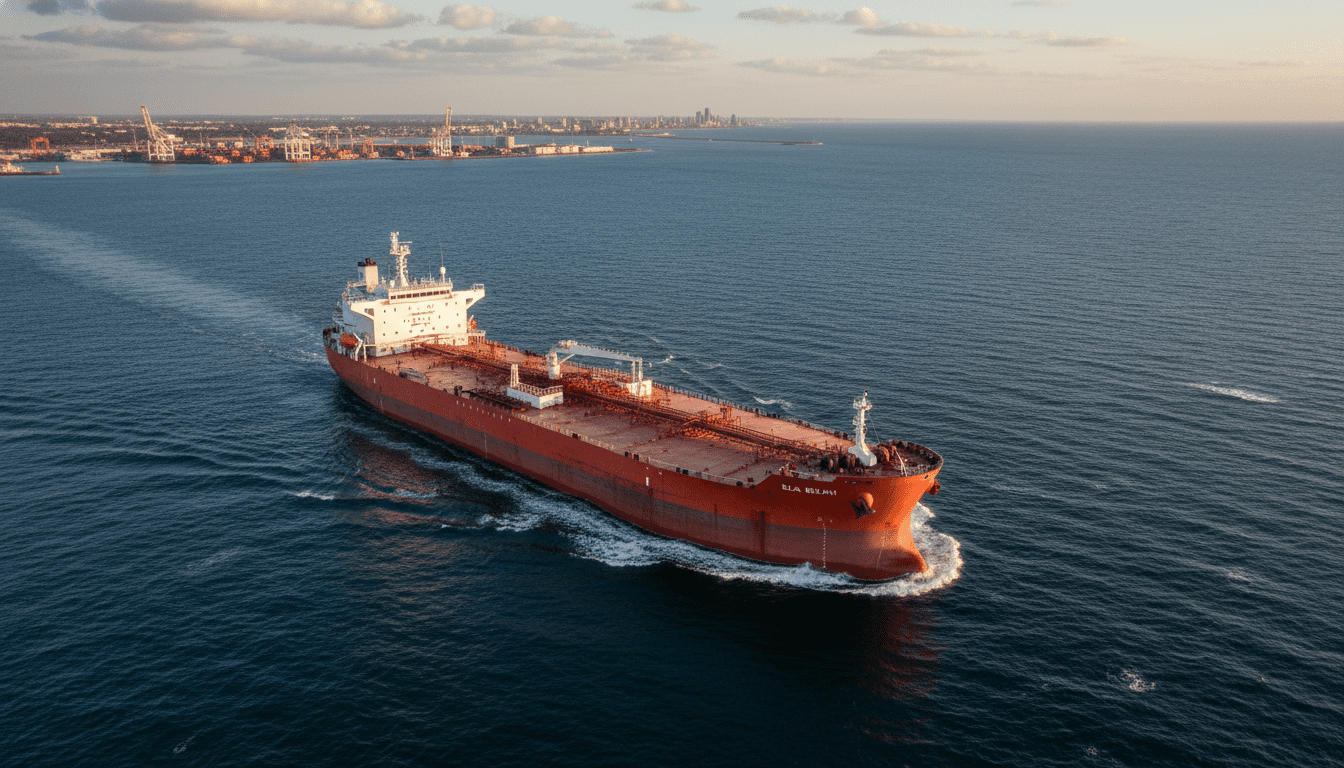
US diesel shipments diverted to Durban after higher bids, leaving Amsterdam deliveries short
US diesel shipments bound for Amsterdam were diverted to Durban in April after higher bids; tankers including Elka Delphi and Minerva Vaso changed course, reducing expected European cargoes.
The Elka Delphi left a Mississippi quay on March 5 loaded with roughly 55 million litres of diesel destined for Amsterdam, but the vessel never reached its scheduled European port. Instead, the tanker — and at least five other ships carrying diesel from US refineries — altered course in mid‑April and delivered their cargoes to Durban after buyers there offered higher prices. The rerouting of these US diesel shipments has raised questions about commercial practice, market arbitrage and short‑term supply implications for fuel hubs in northwest Europe.
Tanker course changes and timeline
The Elka Delphi sailed from the Gulf Coast on March 5, transited past New Orleans into the Gulf of Mexico and began Atlantic passage toward northern Europe. Sometime during the voyage the ship turned southward, a maneuver mirrored by the Minerva Vaso, Aiai, Proteus Bohemia, Hafria Egret and Grand Ace6.
By mid‑April those tankers had offloaded in Durban rather than Amsterdam, according to vessel tracking and port arrival data reviewed by industry observers. The decision to divert occurred well after departure, indicating commercial decisions made en route rather than pre‑voyage changes.
Cargo details and origins
The Elka Delphi carried an estimated 55 million litres of diesel refined on the US Gulf Coast, a common export cargo for transatlantic contracts. The other vessels involved were similarly loaded with diesel produced at American refineries and contracted for delivery to European buyers.
These shipments would normally feed Amsterdam‑Rotterdam‑Antwerp (ARA) inventories, a major price and supply hub for diesel in northwest Europe. The sudden absence of several large cargoes reduced the expected volume arriving at that market in April.
Commercial incentives that prompted rerouting
Industry sources say buyers in Durban outbid European purchasers, creating an economic incentive for shipowners and traders to divert cargoes. Diesel prices, freight rates and timing can combine to make alternative discharge points more profitable, and shippers routinely optimize for the best commercial outcome within contractual limits.
Traders commonly execute such arbitrage when local demand and price differentials exceed the additional costs of a longer route. In this instance the premium offered at Durban appears to have outweighed the value of delivering to Amsterdam.
Market and supply impacts in Europe
The loss of multiple US cargoes to South Africa tightened immediate supply expectations for ARA, the benchmark hub that sets regional diesel availability and pricing. Short‑term market participants reported upward pressure on diesel prompt spreads as traders sought alternate cargoes to cover European needs.
Analysts cautioned that while a handful of diverted voyages can move spot prices, the broader European diesel supply picture depends on refinery output, inland stocks and shipments from other regions. Still, the episode underscores how a few commercial decisions can ripple through short‑term pricing and physical availability.
Ship operators, traders and regulatory considerations
Shipowners and charterers say commercial rerouting is lawful when contractual terms permit a change of discharge location or when cargo sales change hands during transit. Operators have noted that bills of lading and contractual assignments can be updated to reflect new buyers, and insurers typically monitor such changes for risk implications.
Regulators and port authorities in Europe and South Africa were not reported to have blocked the deliveries, and the transfers took place within normal port procedures. Nevertheless, the incident has prompted market participants to review contractual clauses and oversight practices governing destination changes on long‑haul fuel voyages.
Wider supply chain and environmental consequences
Extended voyages to alternate discharge ports increase voyage costs, emissions and voyage time, and they can strain scheduling for subsequent cargoes and tanker availability. For refiners and traders, the choice to redirect cargoes reflects both immediate profit opportunities and longer‑term supply chain complexity.
The episode also highlights growing demand in African fuel markets and the willingness of some buyers to pay premiums for available product. That dynamic, together with volatile freight and fuel differentials, is likely to produce more such adjustments as traders chase margins across global routes.
The rerouting of these US diesel shipments from Amsterdam to Durban is a reminder of how responsive and interconnected global fuel markets have become; commercial incentives can swiftly redirect large physical flows and affect regional availability. Market participants and authorities will be watching freight, refine‑run schedules and contract language closely in coming weeks to assess whether this diversion is an isolated occurrence or the start of a broader pattern.
