
Pope Leo XIV Visits Equatorial Guinea Prison, Urges Dignity and Reconciliation
Pope Leo XIV visited a prison in Equatorial Guinea on April 23, 2026, addressing some 600 detainees in heavy rain and sharply criticizing the conditions he found. The pontiff used his final day in Africa to speak about human dignity, reconciliation and the need for humane treatment of prisoners, drawing international attention to the nation’s penal system.
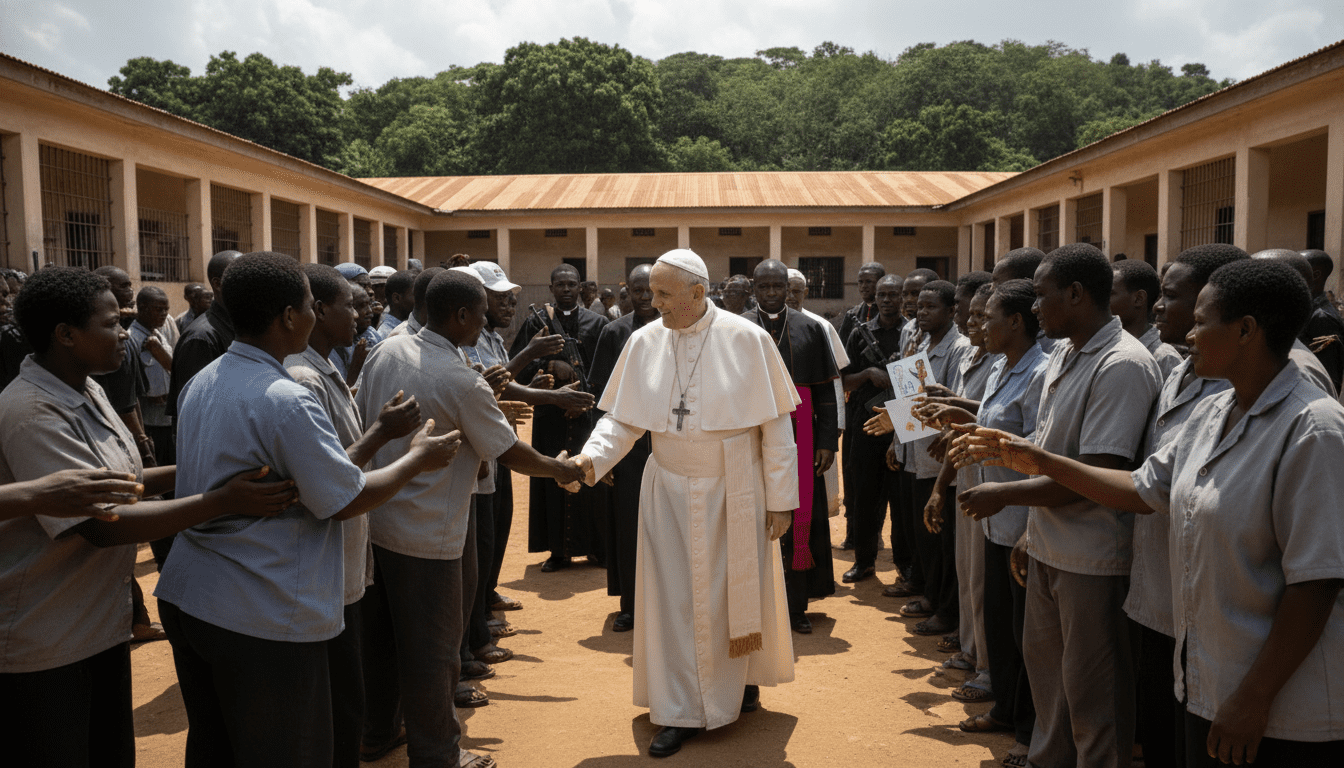
Dramatic scene as pope speaks to 600 detainees in pouring rain
The pontiff approached the prison compound amid persistent rain, standing before a crowd of roughly 600 inmates who had gathered to hear him. Witnesses described the atmosphere as solemn, with the pope delivering a brief but pointed appeal on human dignity despite the adverse weather.
His remarks, given under umbrellas and amid wet conditions, focused on reconciliation and the worth of every person, regardless of past mistakes. The visual of the pope speaking in the rain underscored the pastoral and moral urgency of his message.
Vatican criticism of prison conditions preceded the visit
Earlier in his trip, the Vatican had signalled concern over detention conditions in the country, prompting the visit to the facility on the tour’s final day. Church representatives said the pope’s decision to enter the prison reflected a deliberate effort to bring attention to environments where detainees may be vulnerable.
Officials from the Holy See have increasingly linked pastoral outreach with calls for institutional reform, framing visits like this as both spiritual ministry and public witness. The intervention was positioned as part of broader Vatican efforts to press for humane treatment in detention centers worldwide.
Papal message stressed dignity, reconciliation and rehabilitation
In his talk, Pope Leo XIV emphasized that dignity must be preserved even in punishment, urging reconciliation between inmates, victims and communities. He framed rehabilitation as essential to both personal redemption and social stability, advocating for programs that support reintegration.
The pope also appealed to local leaders to consider humane policies that respect basic rights and foster restorative justice. His language refrained from naming specific officials but carried clear moral pressure for systemic improvements.
Visit highlights wider human rights concerns in Equatorial Guinea
Human rights observers have long pointed to prisons as a barometer of a country’s rule of law, and the papal visit amplified scrutiny of detention practices. By choosing the prison as a public stop, the pope drew attention to issues that are often overlooked and signalled the international community’s interest in treatment of detainees.
Analysts said the visit may prompt renewed reporting and calls for transparency around conditions, access to legal counsel, and healthcare for those behind bars. The moral authority of a pope’s intervention can elevate local concerns to diplomatic conversations, increasing pressure on authorities to respond.
Final day of Africa tour carries diplomatic and pastoral weight
The prison visit came on April 23, 2026, as the concluding act of Pope Leo XIV’s Africa tour, a trip that blended pastoral outreach with diplomatic meetings. The stop underscored the pope’s inclination to engage directly with vulnerable populations rather than limit his itinerary to formal receptions.
Observers noted the combination of spiritual symbolism and political resonance in the choice to end the tour with a prison visit. For many in the local Catholic community, the gesture reinforced the church’s commitment to marginalized groups and to speaking out on social justice matters.
The pope’s intervention in Equatorial Guinea is likely to remain a focal point of discussion in the days ahead, as NGOs, church leaders and government officials assess the implications of his remarks for policy and practice.
The rain-soaked encounter on April 23 provided a striking image of pastoral commitment and renewed the spotlight on the treatment of detainees, returning the issue to the center of public and diplomatic debate.
