
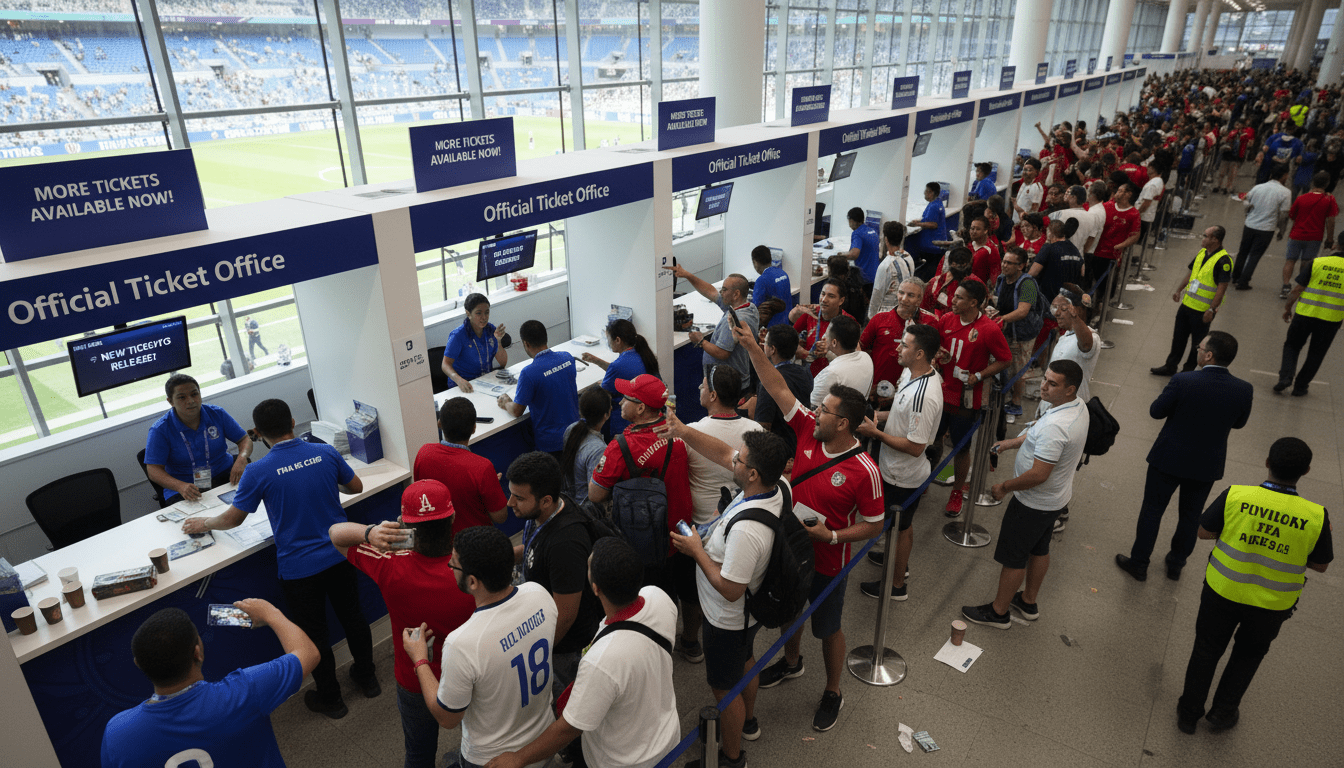
FIFA Releases More World Cup Tickets After Fan Outcry Over Premium ‘Front’ Category
FIFA releases additional World Cup tickets after fan backlash over a new premium “front” pricing tier; sales for some matches lag and organisers are reassessing allocations.
The International Federation of Association Football (FIFA) said it will put more World Cup tickets on sale after public complaints over newly introduced premium pricing, confirming a fresh allocation for all 104 tournament matches. FIFA scheduled the release for 11 a.m. EDT (15:00 GMT) on Wednesday and said the additional availability covers Categories 1, 2 and 3 in addition to the recently added “front category,” a move that prompted fan anger and online criticism. Organisers and local partners are now balancing pricing tiers, seat assignments and slower-than-expected demand for certain fixtures as the tournament approaches in June.
FIFA’s Wednesday ticket release and timing
FIFA announced the new release on a Tuesday and set the sale to begin the following morning at 11 a.m. EDT, a time intended to synchronize availability across global markets. The allocation applies to all 104 matches and returns seats previously withheld or reclassified under the new structure, according to the federation’s statement. That timing aligns with FIFA’s attempt to clear remaining inventory while preserving reserved premium blocks introduced earlier this month.
Fan outrage over the new ‘front category’
Supporters said the introduction of a higher-priced “front category” this month left many feeling misled because seats they believed to be among the better allocations were suddenly reclassified. Social media posts and direct complaints described buyers discovering less favorable locations after the new tier appeared, prompting accusations that superior seats had been withheld to create premium inventory. The backlash pushed FIFA to increase publicly available tickets, but it has not quelled concerns about transparency in how seat categories were assigned.
Price shifts since initial December sale
Ticket prices first posted in December ranged broadly, with Category 3 seats for the early rounds starting as low as $140 and the final ticketed at $8,680 under the initial schedule. When sales reopened on April 1, FIFA raised prices for some categories, with certain top-end seats peaking at $10,990. These changes — and the sudden insertion of an even more expensive “front” level — intensified scrutiny from fans and consumer advocates who said the shifts altered expectations set by the earlier pricing round.
Local sales figures and reported shortfalls
Documents shared with local organising committees point to uneven demand across venues, with particular attention on the United States opener. A document dated April 10 distributed to event organisers indicated that 40,934 tickets had been sold for the U.S. match against Paraguay at SoFi Stadium, while another internal update dated April 15 showed 50,661 sales for Iran versus New Zealand. Those totals fall short of the Los Angeles venue’s current estimate of about 69,650 capacity, a figure FIFA has said may be adjusted, and have prompted closer monitoring of ticket distribution strategies.
Impact on marquee matches and pricing by match
The price tags attached to specific fixtures appear to be influencing local buyer behavior, according to the sales snapshot. FIFA’s December price matrix listed U.S.-Paraguay tickets in mid-to-upper price bands at $1,120, $1,940 and $2,735 for different categories, while Iran-New Zealand seats in the same initial sale were priced at $140, $380 and $450. The disparity in base prices, combined with the later creation of the “front” premium tier, seems to have depressed demand for some higher-priced matches while keeping lower-tier inventory moving more slowly in certain markets.
FIFA communications and responses
FIFA did not provide an immediate public comment on inquiries related to the addition of the premium category and its effect on seat assignments, and a request for comment dated April 9 received no reply by the reported release. The federation’s decision to reopen sales and make additional tickets available reflects a tactical response to public reaction and to internal sales data shared with local organisers. Industry observers note that large sporting bodies commonly adjust allocations and pricing to manage stadium fill and secondary-market pressures, but they add that communication with fans is critical when tiers are altered mid-sale.
The renewed ticket availability will be watched closely by supporters and market analysts to see whether the broader release eases tensions and boosts sales, particularly for matches showing lower uptake in preliminary reports. FIFA’s handling of categorization, pricing transparency and the allocation process in the coming days will likely shape fan sentiment and the final attendance picture as kick-off approaches.
