
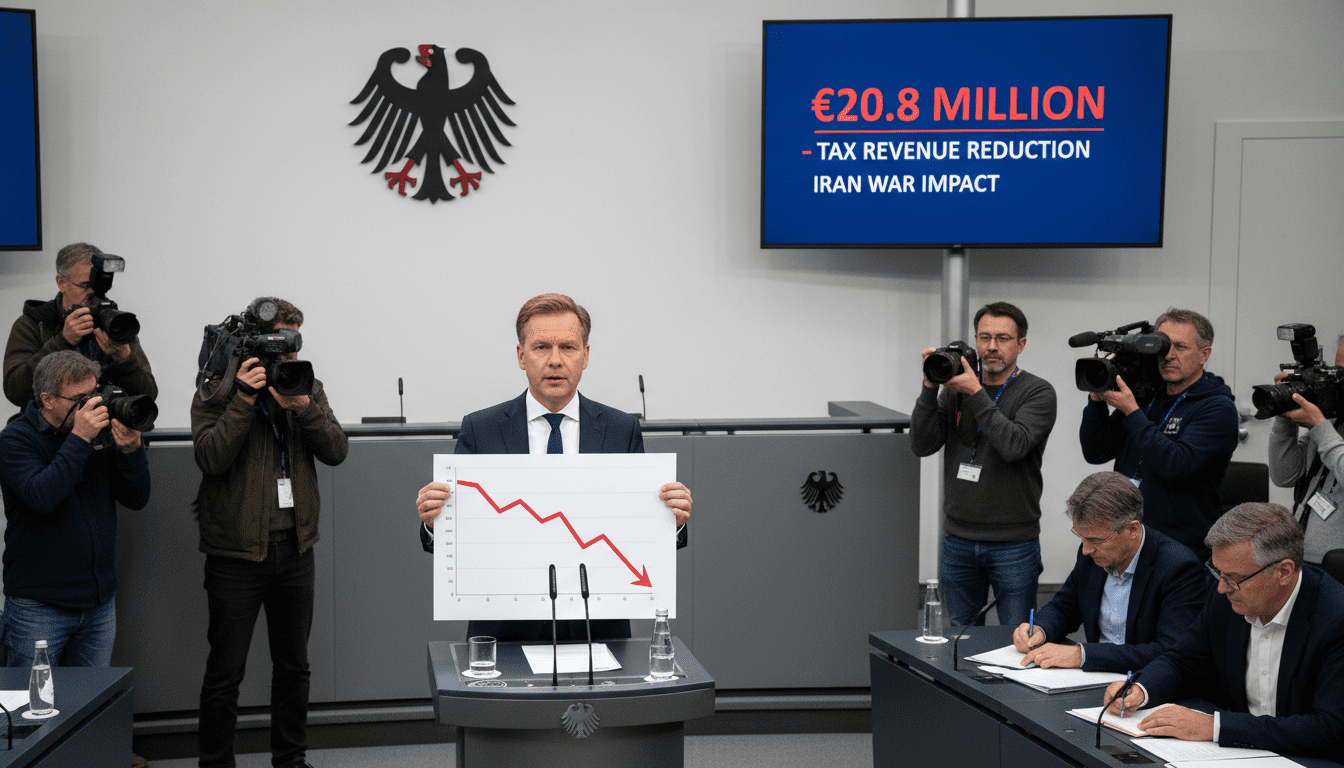
Germany’s fuel tax revenue falls short as higher pump prices leave federal budget with a net loss, ministry model shows
Model by Germany’s finance ministry indicates VAT gains are outweighed by lost energy tax and relief costs, leaving the federal budget worse off.
Germany’s fuel tax revenue came under pressure in the wake of higher pump prices linked to the Middle East conflict, according to a modelling exercise published in the Bundesfinanzministerium’s latest monthly report. The ministry’s scenario — developed by experts working with Lars Klingbeil — finds that rising retail fuel prices increase VAT receipts but reduce energy tax income because consumers cut back on consumption. The combination leaves the federal government with a small net shortfall in the month analysed.
Ministry model and key consumption assumptions
The ministry’s model assumes March fuel consumption of 3.1 million cubic meters of diesel and 1.95 million cubic meters of petrol. Analysts start from average retail prices of €1.76 per liter for diesel and €1.85 for petrol at the beginning of the month and project price increases of €0.40 and €0.23 per liter respectively.
A critical input is the share of private consumption, set at about 40 percent for diesel and 95 percent for petrol in the scenario. That split matters because businesses can reclaim input VAT, meaning only private purchases generally translate into net VAT revenue for the treasury.
Why higher pump prices raise VAT but cut energy tax
In the model, rising prices boost VAT receipts on the higher nominal value of fuel sales even as volumes fall. The ministry estimates an overall increase in VAT receipts of €115.6 million tied to the price rise, though only €61.2 million of that would accrue to federal coffers after share-outs.
By contrast, the energy tax is a per-volume levy, so it does not rise with the pump price; instead, it falls when consumption declines. The ministry calculates an €82 million shortfall in energy tax revenue driven by the assumed 3 percent reduction in fuel consumption.
Net fiscal effect and why the federal government bears the brunt
When the VAT gain and the energy tax loss are combined, the Bundesfinanzministerium’s scenario produces a net revenue decline for the federal budget of €20.8 million for the month modelled. The asymmetry stems from the fact that energy tax proceeds are a pure federal revenue stream, while VAT is shared between federal and subnational budgets.
The report also cautions that the model captures only direct, short-term effects on fuel-related taxes. Broader macroeconomic impacts — for example, weaker consumption elsewhere in the economy that would reduce VAT receipts — could further change the outcome.
Relief measures widen the budget gap
The ministry warns that announced relief measures will substantially worsen the fiscal picture. A planned temporary fuel tax cut of 17 cents per liter for two months — the so-called tankrabatt — is estimated to cost the federal government about €1.6 billion.
Separately, a tax-free and contribution-free relief premium of €1,000 per citizen, originally budgeted for a shorter period, has had its payout window extended to the end of June 2027. That extension increases the ministry’s cost estimate for the premium to roughly €2.8 billion.
Financing options face legal and political hurdles
To offset the cost of relief measures, the ministry has proposed introducing an overprofit or windfall tax on companies that benefit from elevated energy prices. Officials say achieving such a levy through EU-level channels remains uncertain, and domestic cartel or profit-clawback measures may be difficult to implement or defend legally.
The report also notes that because many companies pay the relief premium as a wage-type bonus and then deduct it for corporate tax purposes, the initial private-sector burden can translate into lower tax revenue down the line. That dynamic means the fiscal cost of relief measures may be amplified beyond the direct headline figures.
Data limitations and what the statistics cannot resolve
The ministry underscores that monthly cash statistics have limits: tax receipts reported for a given month largely reflect earlier consumption and invoicing, which complicates near-real-time attribution. For example, the slight rise in overall tax receipts reported for March reflects consumption patterns from January rather than the more recent spike in pump prices.
Because the statistics do not break receipts down by individual goods, they cannot definitively answer whether the state is directly “profiting” from a crisis-driven price spike in specific commodities. The ministry’s modelling therefore provides a scenario-based estimate rather than a conclusive accounting of winners and losers.
Germany’s fuel tax revenue outlook will hinge on how consumption, retail prices and policy responses evolve. Policymakers face the twin challenge of limiting consumer pain at the pumps while protecting public finances, and the ministry’s figures illustrate that relief measures may come at a substantial fiscal cost.
