
Siemens Joins Vulcan in Oberrheingraben Lithium Lionheart Project
Siemens signs framework with Vulcan Energy to back the Oberrheingraben Lionheart lithium project, supplying automation tech and up to €67M equity by 2035.
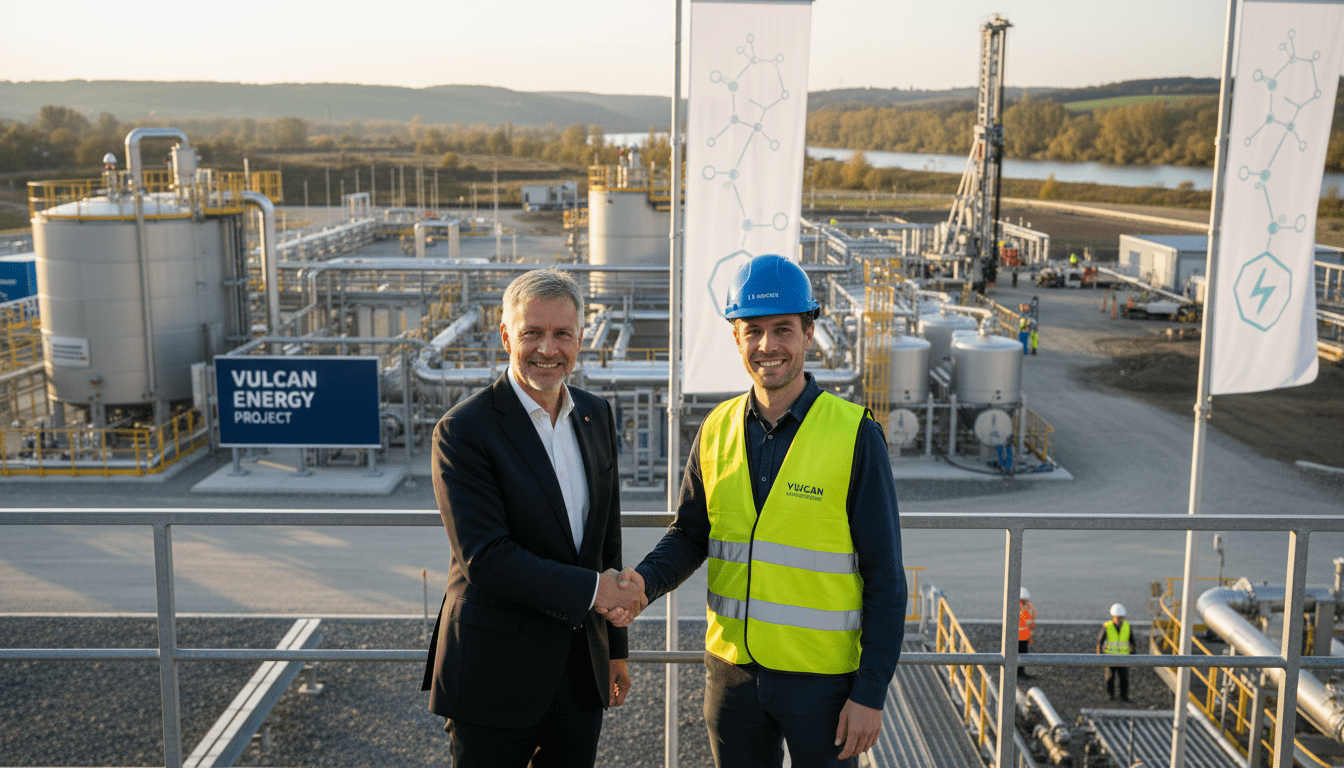
Siemens announced on Monday that it will participate in the Oberrheingraben lithium project run by Vulcan Energy, joining as a strategic investor and preferred technology supplier. The framework agreement covers the Lionheart phase of Vulcan’s plan to extract lithium from geothermal brine in the Upper Rhine Graben and positions Siemens as a long-term partner through 2035. Company executives said Siemens will deliver automation, digitalization and building solutions aimed at accelerating commercial production.
Siemens and Vulcan sign framework for Lionheart phase
Siemens will take a minority investment role through Siemens Financial Services and enter a technology supply relationship with Vulcan Energy for the Lionheart phase. The agreement names Siemens as the preferred supplier of automation and digitalization technology for the project through 2035, extending potentially across future phases. Roland Busch, Siemens’ CEO, described the tie-up as strategic for securing a local European lithium source needed for the energy transition.
Scope of technology partnership and delivery timeline
Under the deal Siemens will supply modern automation systems, digital control platforms and smart building solutions intended to fast-track plant commissioning and optimize operations. The preference applies beyond the initial Lionheart stage, with Siemens positioned to support subsequent expansions and processing facilities. Both parties emphasized that the technology scope is designed to integrate geothermal heat recovery and brine handling with industrial-scale battery raw material production.
Geothermal extraction process and logistics
Vulcan is extracting lithium-rich brine from geothermal wells drilled in the South Palatinate, pumping hot thermal water from depths of around four kilometers. Lithium is first recovered in a chloride form near Landau and then transported by tanker to a processing plant in the Frankfurt-Höchst industrial park for conversion into lithium hydroxide monohydrate. The operation also produces district heat as a byproduct, which Vulcan intends to channel to nearby communities in the Pfalz region.
Financing package and Siemens’ equity contribution
The Lionheart project is backed by a comprehensive €2.2 billion financing package combining equity and debt, with Siemens Financial Services joining a consortium of strategic investors. Total equity in the package is approximately €1 billion, of which Siemens has committed up to €67 million, according to company statements. Debt financing accounts for the remainder, with the European Investment Bank named as a significant lender providing €250 million, while Siemens and partners plan to offer €100 million in loans via SFS.
Production targets, contracts and local investment
Vulcan is targeting a first-phase annual production capacity of 24,000 tonnes of lithium hydroxide monohydrate, a volume Siemens says would be sufficient for batteries for roughly 500,000 electric vehicles. The company plans up to 28 wells for the full program, with commercial production scheduled to start in 2028. Vulcan has reported preliminary off-take agreements with automakers and battery suppliers, including named firms in Europe and Asia, although the company maintains that project economics are subject to ongoing development and scaling.
Political and industrial significance for Europe
German federal and regional authorities have already supported the effort with public funding earmarked for decarbonization and production buildout, underscoring the project’s strategic weight for European supply chains. The federal government contributed funds from a national raw materials facility and regional governments in Rhineland-Palatinate and Hesse have provided additional support for local energy projects and manufacturing readiness. Analysts from institutions such as the International Energy Agency and Fraunhofer institutes forecast rising lithium demand as EV adoption and battery production scale across Europe.
The Siemens-Vulcan arrangement reflects a broader push to reduce European reliance on overseas lithium imports and to develop domestic processing capacity for battery chemicals. Project partners stress environmental safeguards tied to geothermal extraction and low-carbon processing as differentiators from traditional hard-rock or salar operations. As drilling proceeds amid vineyard landscapes in the region, Vulcan and Siemens will need to navigate permitting, community engagement and technical commissioning to meet the 2028 production target.
The agreement between Siemens and Vulcan marks a notable step toward establishing a local, sustainable lithium supply chain in the Upper Rhine Graben and integrates industrial digitalization with raw-material production to support Europe’s energy transition.
