
PFAS Exposure Highest in Firefighters; Health Care Workers Show Distinct Elevations, Arizona Study Finds
Arizona study finds elevated PFAS exposure in firefighters and health care workers; researchers call for investigation of occupational sources and protections.
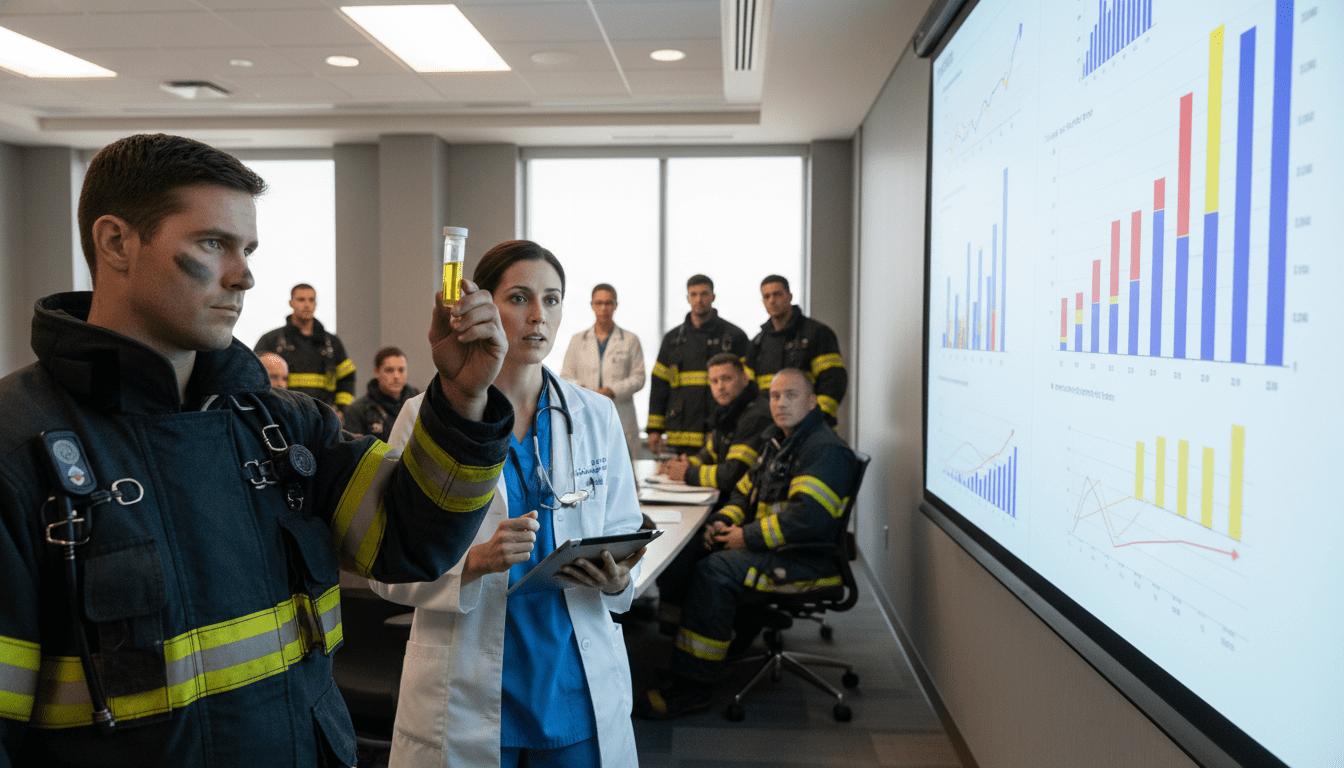
A University of Arizona Health Sciences study published in the Journal of Exposure Science & Environmental Epidemiology reports elevated PFAS exposure among frontline workers, with firefighters showing the highest blood concentrations and health care workers demonstrating distinct increases in several compounds. The analysis, which examined serum samples collected from July 2020 through April 2023, found statistically significant differences by occupation and identified PFAS compounds that were more common in specific worker groups. Researchers say the findings highlight the need to identify workplace exposure pathways and strengthen protections for employees who face recurring contact with PFAS-containing materials.
Firefighters show highest PFAS concentrations
Firefighters in the study had the largest measured concentrations of several PFAS chemicals, including PFHxS, Sm-PFOS, n-PFOS and PFHpS. The pattern is consistent with earlier research linking firefighting activities—such as use of aqueous film-forming foams and exposure to treated gear—to elevated PFAS body burdens. Study co-author Jeff Burgess, MD, MPH, emphasized that the firefighting occupation has long been associated with repeated contact with PFAS-containing products and materials.
The investigators note these elevated concentrations suggest persistent occupational sources remain in Arizona despite growing regulation and phase-outs of some PFAS-containing supplies. The presence of multiple PFAS species at higher levels among firefighters points to a combination of exposure routes, including contaminated protective equipment and firefighting foams used at emergency scenes and training exercises.
Health care workers show distinct PFAS signals
Health care workers in the cohort exhibited moderate elevations in PFHpS and PFUnA and had higher odds of detectable Sb-PFOA and PFDoA compared with other essential workers. This finding marks one of the first large-scale assessments to report distinct PFAS patterns among people working in clinical settings. Senior author Kate Ellingson, PhD, said the results suggest health care settings may include underappreciated sources of PFAS exposure that deserve further scrutiny.
The study team proposed several potential materials that could contribute to PFAS in health care environments, such as certain single-use surgical masks, disposable gowns and diagnostic films, though they stopped short of identifying definitive sources. The researchers call for targeted investigations to map which clinical supplies and processes are most likely to transfer PFAS to workers.
Study scope, sample size and methods
The analysis drew on data from the Arizona Healthcare, Emergency Response, and Other Essential Worker Surveillance Study (AZ HEROES) run by University of Arizona Health Sciences. PFAS serum measurements were available for 1,960 participants, including 280 firefighters, 787 health care workers and 734 other essential workers. Samples were collected between July 2020 and April 2023, enabling researchers to examine compound-specific trends over a roughly three-year period.
The paper reports both concentration levels and odds of detection for multiple PFAS species, allowing comparisons across occupational groups while controlling for demographic and temporal factors. Publication in a peer-reviewed environmental epidemiology journal followed standard review and reporting procedures, and the lead authors included academic researchers and public health collaborators from state and federal agencies.
Trends among other essential workers
Workers classified as other essential personnel showed declines in serum PFAS concentrations over the study period, with reported decreases ranging from about 6% to 17% per year for some compounds. Despite this downward trend, the researchers note that detectable levels persisted in many participants, indicating that general population and occupational exposures remain widespread. The declines may reflect regulatory changes, product phase-outs or shifts in consumer and institutional purchasing, but the study did not attribute causation to a single factor.
The continued presence of PFAS in these workers underscores that reductions in exposure are uneven across occupations and compounds. The authors caution that aggregate declines do not eliminate risk for individuals with repeated or intense contact with PFAS-containing materials.
Potential sources and health implications
PFAS are a diverse class of synthetic chemicals prized for stain-, water- and flame-resistant properties, and they are used across industrial, consumer and medical products. Their environmental persistence and resistance to degradation have raised concerns about bioaccumulation and long-term health effects. Co-author Jeff Burgess highlighted previously reported associations between PFAS exposure and higher rates of certain cancers, elevated cholesterol, reduced antibody responses to some immunizations, and adverse reproductive outcomes.
The study recommends more detailed exposure assessment in workplaces, including product testing, material-use inventories and air or surface monitoring, to identify the most relevant pathways. For workers in firefighting and health care, the researchers say interventions could include changes in procurement, enhanced personal protective equipment protocols, decontamination practices, and routine biomonitoring to track outcomes over time.
Funding, authorship and next research steps
The research was supported by the Centers for Disease Control and Prevention’s National Center for Immunization and Respiratory Diseases and the National Institute of Environmental Health Sciences, with award numbers listed in the published paper. The author team combined University of Arizona Health Sciences investigators with public health researchers from state and federal agencies. First author Cedar Mitchell, PhD, and other contributors are identified in the journal article as collaborators on the AZ HEROES surveillance effort.
Researchers called for follow-up studies to more precisely link specific workplace products and activities to the PFAS compounds found in blood, and for longitudinal work to evaluate whether changes in procurement and protective practices reduce exposure. They also urged that occupational health programs consider PFAS as part of routine hazard assessments for frontline workers.
The study’s results add to a growing evidence base that occupational settings can contribute meaningfully to PFAS body burdens, and they reinforce calls for targeted prevention strategies to protect workers who face repeated contact with PFAS-containing materials.
