
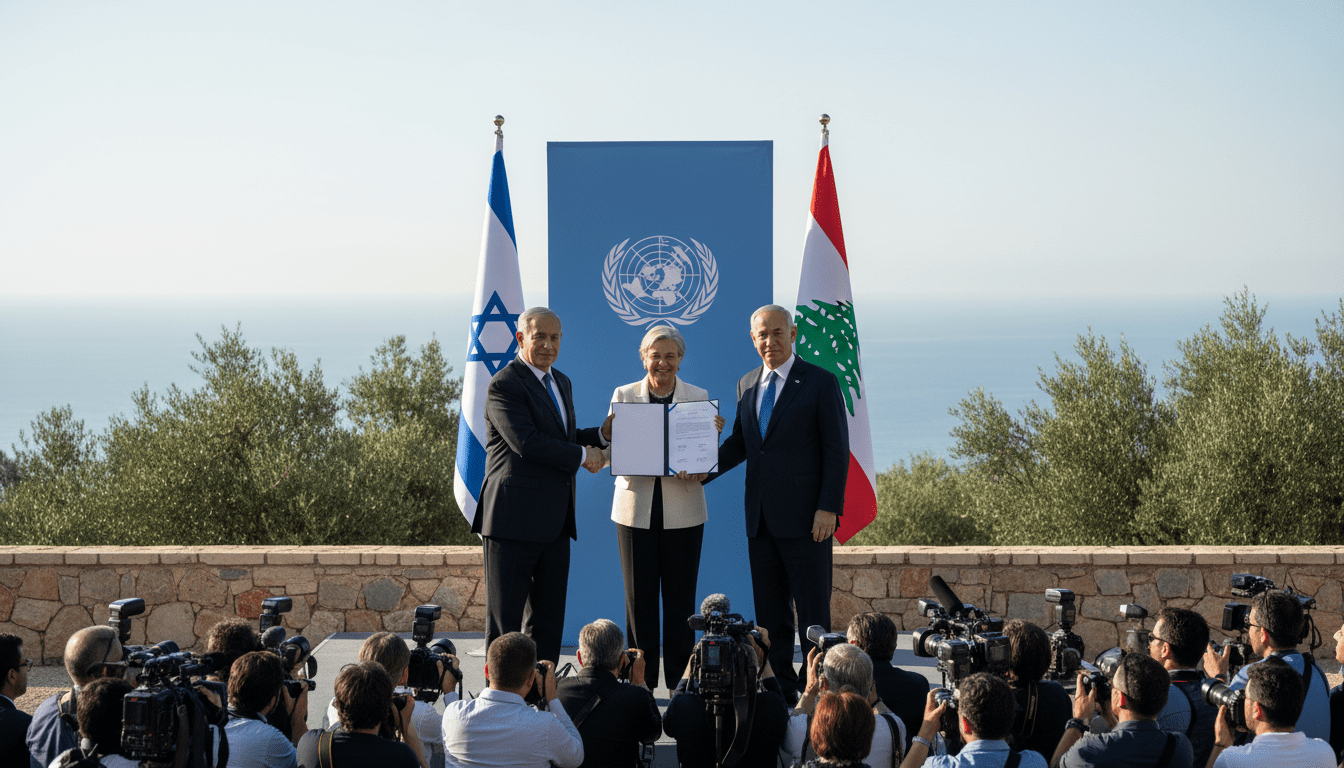
Israel-Lebanon ceasefire: US-announced 10-day truce starts as talks aim for a longer deal
US-announced 10-day Israel-Lebanon ceasefire begins as negotiators seek a lasting deal amid reported violations, mass displacement and sharp regional tensions.
The United States on Thursday announced a 10-day Israel-Lebanon ceasefire aimed at creating space for negotiations toward a more durable security arrangement, with the truce coming into effect at 21:00 GMT. The Israel-Lebanon ceasefire, declared publicly by President Donald Trump, was intended to halt offensive operations while allowing both sides and international actors to pursue broader agreements. The immediate announcement prompted relief in some communities and scepticism in others as reports of violations emerged within hours.
Ceasefire declared and start time
The truce was announced by the US administration and took effect late Thursday evening, marking a pause in six weeks of intense cross-border fighting. Officials framed the pause as an opportunity to move from battlefield dynamics to diplomatic talks that could address long-standing security and border disputes. Demonstrations of public hope were visible in parts of Beirut, where celebratory gunfire was reported as the ceasefire began.
Terms emphasise Israeli right to self-defence
US and Israeli statements made clear the agreement preserves Israel’s right to defend itself, while asking it to refrain from offensive operations during the ten-day window. The State Department’s description allowed Israel to act against “planned, imminent, or ongoing attacks,” a clause that Israeli leaders said would permit limited strikes if they believed Hezbollah threats persisted. Critics argue that such language can create loopholes that undermine the temporary halt in hostilities.
Hezbollah responds with caution and conditions
Hezbollah was not directly represented in Washington negotiations and publicly expressed reservations about the talks and the resulting truce. A Hezbollah politician warned the group would approach the pause with “caution and vigilance,” saying any Israeli targeting of Lebanese positions would constitute a violation. Observers note that excluding Hezbollah from formal negotiations complicates enforcement and raises the risk that local commanders could interpret terms differently on the ground.
Israel’s political leadership divided over the deal
Israeli Prime Minister Benjamin Netanyahu welcomed the pause as a potential opening for historic agreements with Beirut but emphasised an extensive Israeli security presence would remain in southern Lebanon. Opposition figures and some regional council leaders reacted negatively, insisting any settlement must guarantee Hezbollah’s disarmament and absolute security for northern communities. Political commentators in Israel said frustration remains high among northern residents who feel their safety has been compromised and who doubt that short-term agreements will deliver the promised long-term security.
Humanitarian impact and reported violations in Lebanon
The fighting preceding the truce inflicted heavy civilian tolls and large-scale displacement in Lebanon, prompting urgent humanitarian concerns as the pause unfolded. Reporting attributed at least 2,196 deaths and more than one million displaced to recent Israeli operations, while other tallies cited higher casualties during earlier phases of the conflict. Lebanon’s army and local media reported several alleged ceasefire breaches on the morning after the truce took effect, including strikes against southern villages and an ambulance crew, prompting authorities to urge residents to remain cautious about returning home.
Northern Israel communities and security anxieties
Communities in northern Israel greeted the truce with mixed emotions, relieved by a temporary silence yet uneasy about the terms that allow Israeli forces to maintain positions in Lebanon. Council leaders from the most affected areas criticised proposals for a security zone that would extend toward the Litani River, saying such arrangements risk perpetuating instability rather than resolving it. Sirens remained largely silent across Israel on the first morning of the pause, but local officials warned that the situation could change rapidly if either side deems the other to have violated the truce.
Regional context and US-Iran diplomatic links
Analysts and officials framed the Israel-Lebanon ceasefire within broader regional diplomacy, noting Tehran’s influence over Hezbollah and ongoing US-Iran negotiations. US officials signalled the truce could clear a path for separate but related talks between Washington and Tehran, and Iranian state commentary welcomed the local pause as part of a wider de-escalation. Observers cautioned that tying bilateral Israel-Lebanon issues to broader US-Iran negotiations could both facilitate progress and complicate a purely local settlement if regional actors prioritise different objectives.
The truce is scheduled to last ten days but faces immediate tests on the ground: ambiguous enforcement language, exclusion of a principal combatant from direct talks, and deep mistrust among civilians and political leaders. Whether the pause will translate into sustained reductions in violence or evolve into a framework for disarmament and border arrangements depends on rapid, concrete steps by negotiators and credible mechanisms to monitor compliance.
