
Orbital compute moves from concept to reality as Kepler and Sophia begin multi‑GPU in‑orbit test
Kepler and Sophia begin the first multi‑GPU orbital compute test aboard a live satellite cluster, validating in‑orbit inference and passive cooling designs.
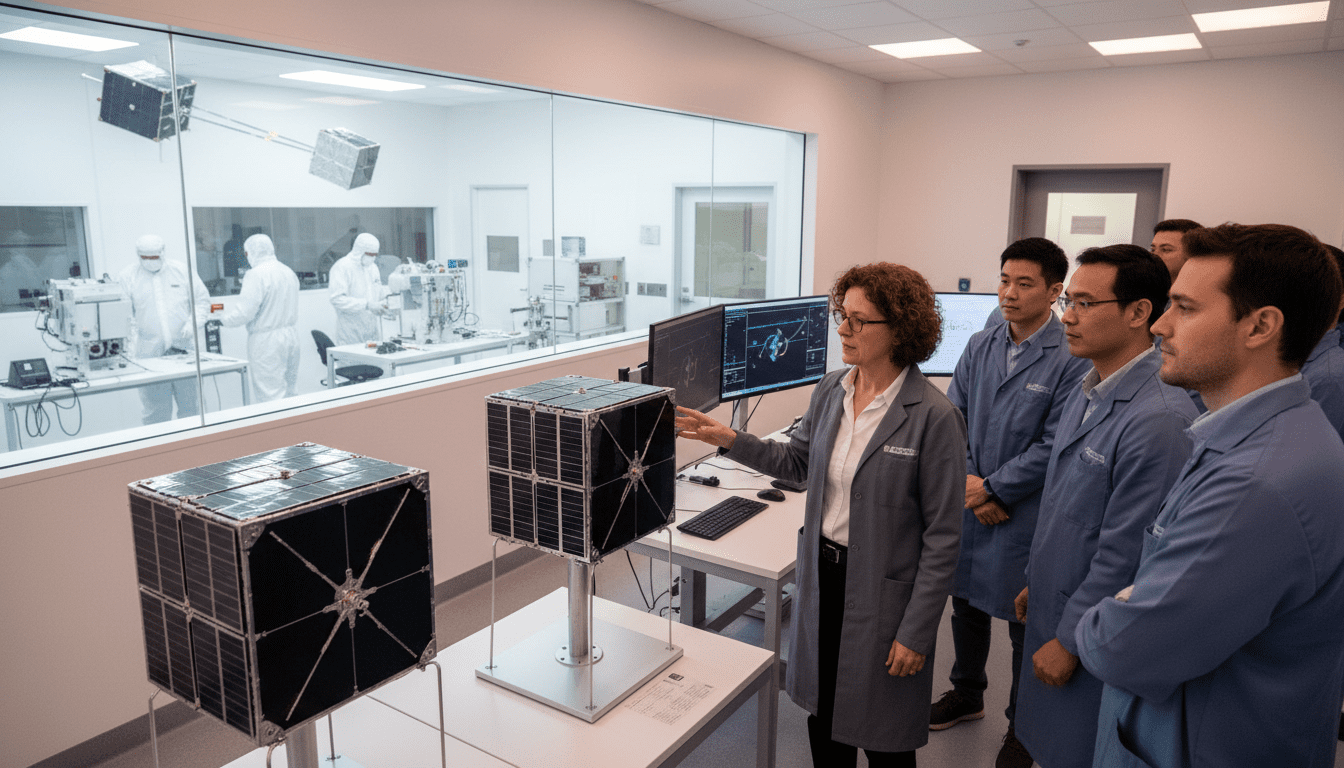
The commercial experiment marks a move from theoretical plans for space data centers to operational orbital compute tests that process data where it is collected. Kepler Communications in January deployed what it calls the largest compute cluster now in orbit, and the company has invited Sophia Space to load and run its operating system across multiple GPUs onboard. The trial will evaluate whether distributed, passively cooled GPUs can perform continuous inference workloads in the space environment.
Kepler’s in‑orbit compute cluster and customer base
Kepler’s cluster launched in January and currently operates roughly 10 satellites equipped with about 40 Nvidia Orin edge processors linked by laser communications. The constellation functions as a networked compute layer that carries and processes data both uplinked from the ground and generated by hosted payloads aboard its satellites. Kepler reports an expanding customer roster and views the cluster as infrastructure for other orbital and airborne systems rather than a standalone data center provider.
The company positions the network to support computing tasks for third‑party spacecraft and aerial platforms, enabling those platforms to offload intensive processing. By routing sensor data into nearby compute nodes, operators can reduce latency and bandwidth costs compared with downlinking raw data to ground facilities for analysis.
Sophia’s passively cooled computer will run a live trial
Sophia Space will upload its proprietary operating system to one of Kepler’s satellites and attempt to configure it across six GPUs distributed on two spacecraft. The exercise is intended to demonstrate software deployment, orchestration, and runtime stability in the orbital environment—functions that are routine in terrestrial data centers but unproven in space. Success will be an important de‑risking step ahead of Sophia’s first dedicated satellite launch, currently planned for late 2027.
Sophia’s hardware approach emphasizes passive cooling to avoid the mass, complexity, and power penalties of active thermal control in orbit. If the trial shows the passively cooled architecture can sustain inference workloads without overheating, it would address a central technical barrier to deploying denser compute capacity in space.
First in‑orbit multi‑GPU software deployment and its significance
Configuring software across multiple GPUs on different spacecraft is the first time such an orchestration has been attempted in orbit. The test will cover remote installation, distributed resource allocation, and sustained inference processing across geographically proximate nodes in low Earth orbit. Demonstrating these capabilities would validate a building block for edge‑oriented orbital compute services that can act on sensor data immediately after collection.
For companies developing spaceborne sensors—especially power‑hungry systems such as synthetic aperture radar—local processing can deliver faster insights and reduced downlink requirements. That operational advantage is central to the near‑term business case for orbital compute, which industry players say will initially focus on inference and time‑sensitive processing rather than large‑scale model training.
Defense and sensor operators driving early demand
Government customers, including defense organizations, are a key market for early orbital compute services because they need rapid detection and tracking for applications like missile defense. Kepler has previously demonstrated space‑to‑air laser communications in a government demo, underscoring interest in networking and compute services that extend beyond conventional telemetry. The ability to process sensor data in orbit can shorten response times and preserve bandwidth for prioritized transmissions.
Commercial customers with fleets of observation platforms also see value in offloading processing to nearby compute nodes to reduce latency and operational costs. As satellite makers plan future missions, some are designing payloads and operations around networked processing rather than relying solely on ground segmentation.
Kepler’s network approach versus large‑scale space data center projects
Kepler frames itself not as a space data center operator but as an infrastructure layer offering networking and compute services for other spacecraft and airborne systems. That differentiates the company from ventures that target monolithic orbital data centers outfitted with conventional data center processors. Industry observers expect full‑scale space data centers to remain years away, likely in the 2030s, because of challenges around power, thermal management, and launch economics.
Instead, the immediate commercial opportunity lies with distributed edge compute in space: many smaller GPU nodes performing inference where data is produced. Kepler’s model is to maintain high utilization across many moderate‑power GPUs rather than a small number of high‑power processors that would sit idle much of the time.
Implications for the future of space infrastructure
If the Kepler‑Sophia trial proves robust, it could accelerate a shift in satellite architecture toward modular compute and networking layers that support third‑party payloads. That would enable a broader ecosystem in which sensors, analytics providers, and network operators interoperate in orbit to deliver responsive services. Policy and local restrictions on terrestrial data center construction may also increase commercial interest in offloading certain workloads to space, though regulatory, cost, and environmental considerations will remain significant.
Market momentum is likely to produce incremental experiments and partnerships before any large, data center‑style deployments are attempted. The focus for the coming years will be on proving software reliability, thermal strategies, and business models that justify the added expense of lifting compute hardware into orbit.
Kepler and Sophia’s multi‑GPU trial will be a key milestone in that progression, testing both the technical feasibility and the operational value of orbital compute for real customers.
