
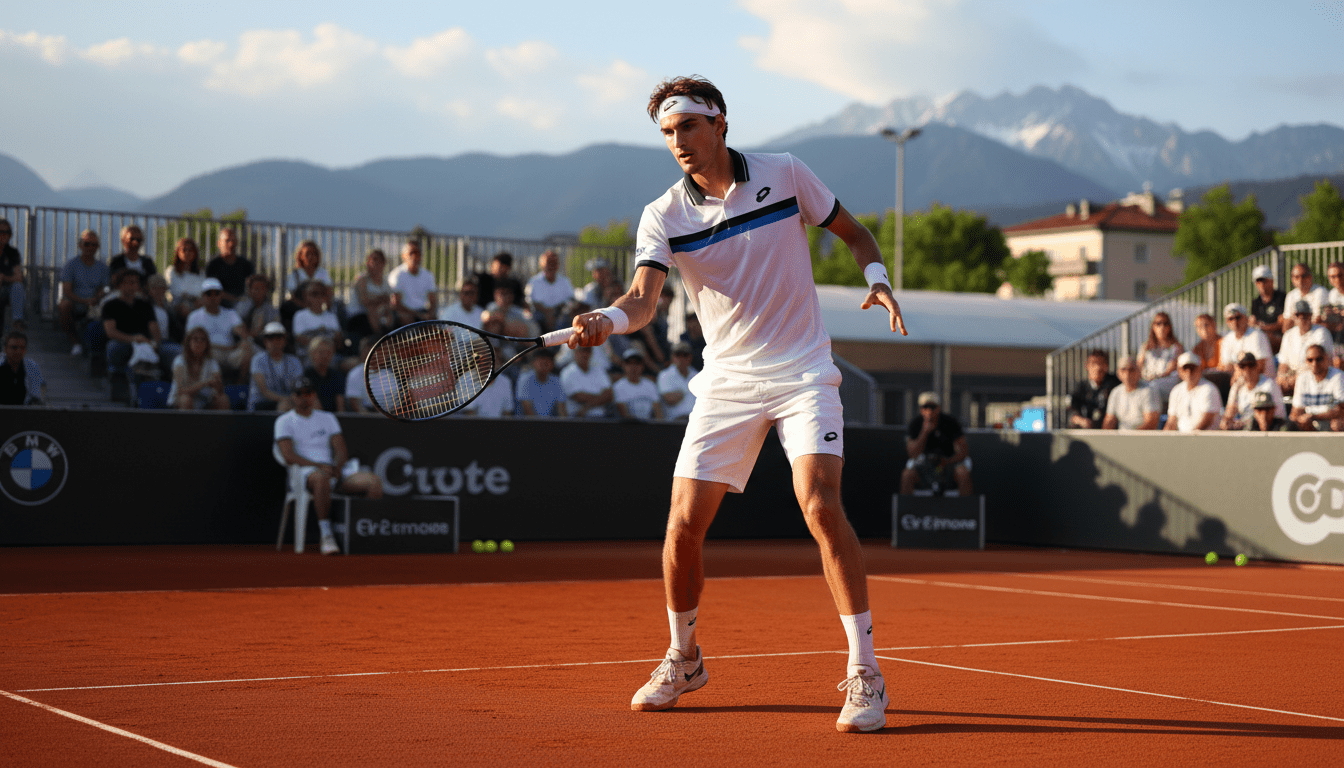
Alexander Zverev Returns to BMW Open in Munich After Monte-Carlo Setback
Alexander Zverev arrives at the upgraded BMW Open in Munich as defending champion after Monte-Carlo defeat, outlines tactical shifts and Grand Slam hopes.
Alexander Zverev returned to the MTTC Iphitos lawn courts in Munich on Monday as the defending champion of the BMW Open, his arrival coming days after a semi-final loss in Monte‑Carlo. Zverev, who remains a leading figure on the ATP Tour, faces renewed pressure and scrutiny as he seeks to translate recent form into the one major title that has eluded him. The tournament’s promotion to an ATP 500 event has added stakes, and Zverev’s preparations — both on and off court — highlight his drive to close the gap on the top two rivals in men’s tennis.
Sinner’s Monte‑Carlo victory and the shifting world order
Jannik Sinner’s victory in Monte‑Carlo, where he defeated Carlos Alcaraz in the final, reshaped the ATP hierarchy and handed Sinner the world No. 1 ranking. Zverev’s semi‑final loss to Sinner marked another chapter in a rivalry that has proven difficult for the German to navigate. The Monte‑Carlo result matters not only for rankings but for momentum as the clay‑season calendar progresses toward bigger targets.
Zverev acknowledged the challenge posed by Sinner and Alcaraz as the Tour’s current leading pair, but he has framed their dominance as a benchmark rather than a deterrent. The German’s response in Munich is being watched as an early barometer of whether he can sustain the improvements he has shown in recent hard‑court swings.
Training, routines and the Munich setting
Back at MTTC Iphitos, Zverev’s week began with a practice session alongside former tour player Matthias Bachinger, who again serves as his hitting partner during the event. The media operations for this year’s tournament have been relocated offsite to the nearby Max‑Planck‑Institut, a small logistical change that underlines the event’s growing profile after moving up to ATP 500 status.
Zverev’s presence at the club was noted by his composed demeanor and a visible security detail as he moved from the clubhouse to practice courts. Organizers and staff have emphasized the mix of local tradition and heightened international attention that comes with an elevated ranking of tournament.
Tactical shift: aggression, net play and shorter points
Over the past months Zverev has altered his on‑court approach, intentionally seeking more aggressive exchanges and quicker point construction. Coaches and peers have long encouraged the 1.98‑meter player to take command earlier in rallies, and Zverev has implemented those changes by stepping into his forehand more often and adding variations such as two‑handed backhand drop shots and occasional forays to the net.
Those adjustments contributed to deeper runs in Indian Wells, Miami and Monte‑Carlo. While they have not yet produced a Grand Slam title, the shift has made Zverev a more uncomfortable opponent across surfaces and has given him confidence that tactical refinement can close narrow margins in high‑pressure matches.
Results and rivals: the pressure points
Despite tactical gains, Zverev’s recent record against Sinner has been a recurring issue; his loss in Monte‑Carlo represented multiple consecutive defeats to the Italian. He also recalled a February upset by Miomir Kecmanovic in Acapulco, a reminder that the margins on tour remain fine and that lower‑seeded opponents can still pose threats on any given day.
Zverev has publicly described himself as part of an evolving top tier in men’s tennis, often referring to himself as the “lurking third” behind Sinner and Alcaraz. That self‑characterization underscores both realism about current dynamics and an implicit promise to close the gap.
Draw, schedule and Monday’s first look in Munich
As the defending champion at the BMW Open, Zverev will open his campaign against Miomir Kecmanovic on Tuesday, a match that carries added narrative weight given their earlier meeting in Acapulco. Tournament organizers list Zverev among the marquee attractions, and the upgrade to an ATP 500 event means the winner will collect 500 ranking points — a material prize as players jockey for position ahead of Roland‑Garros.
Beyond the opening match, the Munich draw presents a typical mix of established names and rising talents, ensuring that Zverev will need to maintain consistency and tactical discipline across successive days to retain his title.
Grand Slam goal and the long view
At 28, Zverev has made no secret of his principal career objective: winning a Grand Slam. He has spoken openly about needing to balance aggressive instincts with defensive stability, and he has indicated that his recent changes to court positioning and shot selection are specifically targeted at converting deep runs into a major championship.
Zverev’s public posture in Munich was measured but optimistic; he emphasized the value of process and preparation rather than dwelling solely on results. For a player who has reached the upper echelons of the sport, the next months will test whether tactical evolution and mental resilience can finally deliver the sport’s biggest prize.
Alexander Zverev’s week in Munich will test both his adjustments on court and his capacity to withstand the twin pressures of elevated tournament status and stern rivals. As the BMW Open unfolds, his opening match and subsequent performances will offer a clear signal of whether the changes he has embraced are translating into the outcomes he and his team seek.
