
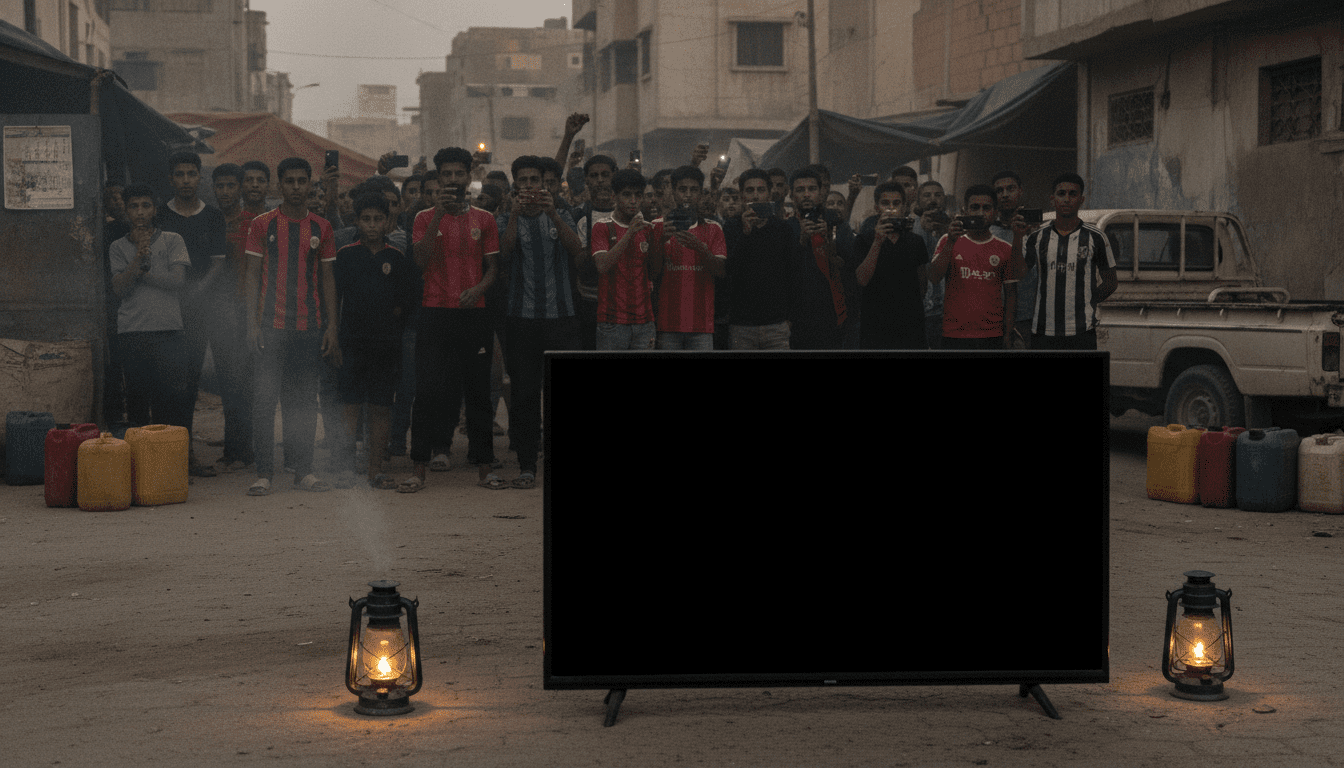
World Cup 2026: Fans in Mukalla Gather at Public Screens as Power Cuts and Fuel Shortages Bite
World Cup 2026 in Mukalla is transforming living rooms into darkened spaces as fans cope with regular power cuts, fuel shortages and rising costs by flocking to public screenings and cafes.
Adel Mohsen, a 56-year-old fan who has followed every World Cup since 1982, sat on a wooden bench in a courtyard in eastern Yemen and watched the opening matches on a projector powered by a generator. The World Cup 2026 matches have pushed many residents to choose communal venues because they cannot afford backup batteries or internet vouchers to stream games at home.
Fans Reclaim Public Spaces as Power Fails
In several neighborhoods of Mukalla, the hum of portable generators marks kickoff time as screens flicker to life in courtyards and small stadiums. Frequent outages and the high cost of replacement batteries mean private viewing is often impossible for long stretches, so public gatherings have become the default.
These makeshift screenings attract a mix of older fans and younger viewers who bring chairs, qat and a readiness to tolerate heat and humidity for the chance to watch live football. Attendance varies by matchup, with bigger games drawing larger crowds while less popular fixtures see only a handful of spectators.
Longtime Supporter Traces Four Decades of World Cups
Adel recalled watching his first tournament in 1982, when television was newly arrived in his region and matches were often recorded and sent by bus for delayed broadcast. He said those early tournaments shaped his understanding of the sport and provided communal experiences with family and neighbors.
Over the years he moved from playing in local amateur clubs to becoming a devoted spectator and informal analyst, studying tactics and noting player performances. Even now, despite economic strain and repeated service disruptions, he insists on following World Cup 2026 as a continuation of a ritual more than 40 years old.
Economic Strain and Fuel Shortages Limit Access
Rising prices and limited incomes have forced many fans to weigh essentials against the cost of watching matches. The $200 price tag for a reliable backup battery, along with the cost of fuel for motorbikes and generators or internet data for streaming, is out of reach for numerous households.
Local fuel shortages have further constrained mobility and access to communal venues, making it harder for some supporters to reach stadium courtyards or cafes. For many, the choice to attend a public screening involves balancing scarce resources against a deep desire to follow the tournament.
Community Screens Run on Generators and Small Businesses
Small businesses and community organizers have stepped in to fill the gap, running projectors from generators and selling cold drinks to keep gatherings going through evening matches. Projectors and screens are often patched together and started at the last minute, with audio and image quality that can vary from match to match.
Operators say they face unpredictable expenses for fuel and equipment maintenance, yet they continue because there is steady demand and because these venues serve as social hubs. For some attendees, the communal experience — the banter, shared analysis and the few hours away from daily hardships — is as important as the match itself.
Football as Refuge Amid War and Hardship
In a city that has avoided some of the worst frontline fighting but still endures years of conflict-driven decline, football offers a rare, orderly pleasure. Fans like Adel describe the sport as a necessary emotional outlet that temporarily displaces the stress of insecurity, power cuts and economic uncertainty.
Critics argue that public attention on sport distracts from pressing crises, but supporters counter that small respites are essential for mental wellbeing. For many residents, the World Cup 2026 screenings are modest acts of resilience — predictable rituals that provide continuity amid upheaval.
Adel’s prediction for the tournament’s winner — France — was delivered with the same calm confidence he uses to analyze matches, as the projector’s light faded and the generator prepared for the next fixture.
