
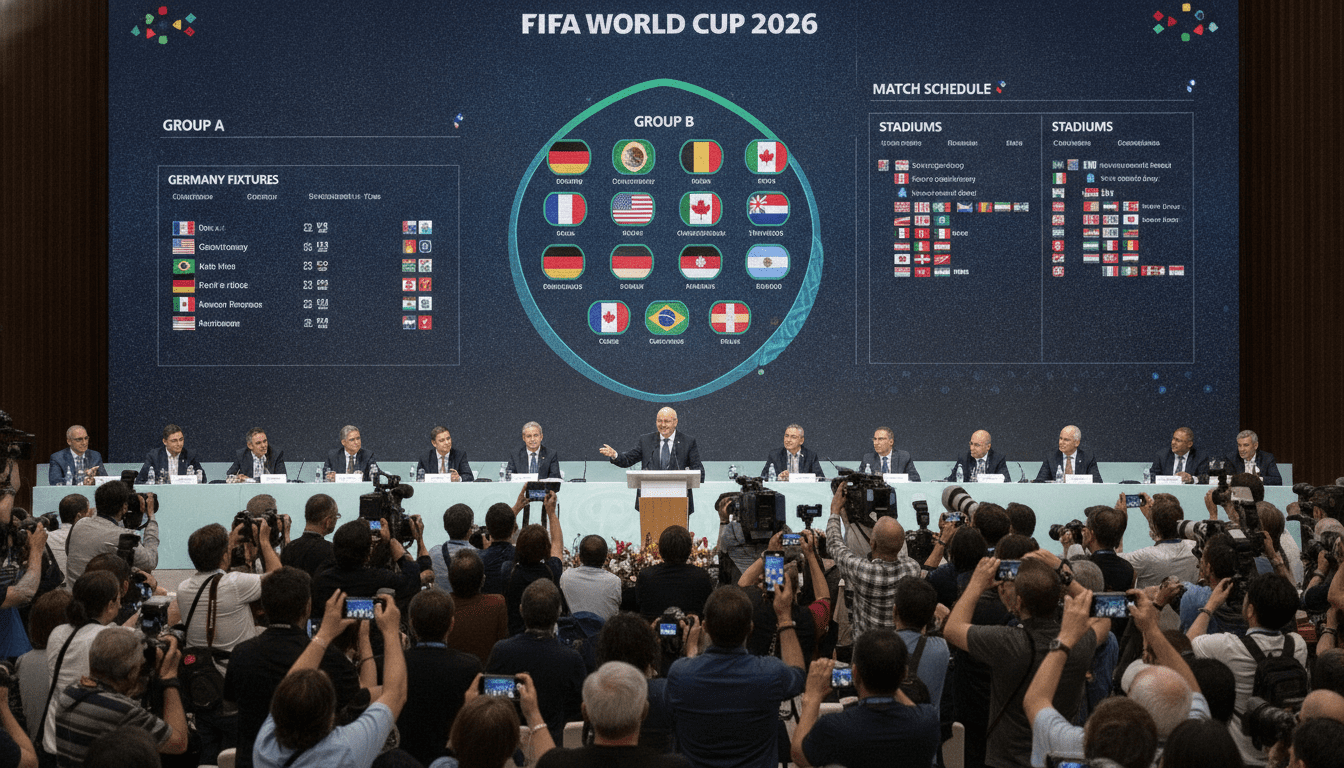
World Cup 2026: Groups, venues and full match schedule for the expanded FIFA tournament
All you need to know about World Cup 2026 groups, Germany’s fixtures, match dates and venues across Mexico, the United States and Canada.
Tournament at a glance
The FIFA World Cup 2026 runs from June 11 to July 19, 2026, and will be staged across three host nations in North America. For the first time the finals expand to 48 teams, producing a record 104 matches spread across 16 venues in Mexico, the United States and Canada. The format increases the number of groups and introduces a new round of 16 that includes the eight best third-placed teams.
Fans should expect a heavier match rhythm and significant travel between cities, with time differences of six to nine hours relative to Central European Summer Time. Tournament organizers scheduled kickoff times in CEST for European viewers, reflecting the wide geographic footprint of the competition.
Groups and headline matchups
Twelve groups of four teams set the scene for the group phase, with a mix of traditional powers, surprise qualifiers and debutants. Group compositions range from marquee pairings such as Brazil, Morocco and Scotland in Group C, to heavyweight clashes in Group I featuring France and Norway. Spain leads Group H while England and Croatia meet in Group L.
Group E contains Germany alongside Ecuador, Ivory Coast and debutant Curaçao, a draw that presents both opportunity and pitfalls for the German national team. The expanded group list creates more potential late finishes and narrower margins for advancement than in past tournaments.
Germany’s fixtures and immediate prospects
Germany opens its World Cup 2026 campaign on June 14 in Houston against Curaçao, with the match scheduled at 19:00 CEST and broadcast on ARD. The second group game is set for June 20 in Toronto at 22:00 CEST against the Ivory Coast and will air on ZDF. Germany concludes the group stage on June 25 in New York against Ecuador at 22:00 CEST, with that match also on ARD.
Under coach Julian Nagelsmann, Germany qualified after a challenging qualifying phase and will need consistent results in a compact schedule to secure a top-two finish. A group win would give a direct path into the second knockout round, while a second- or third-place finish opens different bracket scenarios that could pair Germany with strong opponents from other groups.
Match schedule and knockout format
The group stage features three matchdays per group, with kickoff times keyed to European summer time to aid international audiences. After the group phase the tournament advances to a new Sechzehntelfinale — a preliminary knockout round that admits the eight best third-placed teams alongside the 24 group winners and runners-up. That round begins on June 28 and continues through the first days of July.
The tournament bracket then progresses through the round of 16, quarterfinals, semifinals and the third-place match in Miami on July 18. The final is scheduled for July 19 in New York at 21:00 CEST. Tie-breaking in the groups follows standard FIFA criteria: goal difference, goals scored, head-to-head results and, if required, fair-play points.
Venues across Mexico, the United States and Canada
Sixteen stadiums will host World Cup 2026 matches: eleven venues in the United States, three in Mexico and two in Canada. Stadium capacities range from roughly 45,000 in Toronto to nearly 94,000 in Arlington (Dallas area), accommodating different matchday atmospheres and logistical profiles. Notable venues include the Azteca in Mexico City, the New York–New Jersey stadium in East Rutherford and the Los Angeles stadium in Inglewood.
Organizers assigned group and knockout games across those sites to balance travel and regional representation, but teams and supporters should anticipate significant transit between matches. Time-zone differences were factored into kickoff scheduling to maintain evening windows for European broadcasts while respecting local matchday conditions.
Broadcasting and viewing arrangements
Public-service broadcasters in Germany will show a substantial portion of matches: ARD and ZDF are set to televise 60 of the 104 games between them. A pay option will carry the full slate, with a dedicated streaming service offering every match for subscribers. Both public and commercial streams will make live coverage available through their respective apps and on-demand platforms.
Viewers should check national schedules for specific broadcast windows and regional blackouts. With matches running across multiple time zones, European audiences will see many fixtures in evening and late-night slots; broadcasters will publish matchtime conversions and program guides for the duration of the tournament.
As the global tournament approaches, national teams and broadcasters finalize preparations for a World Cup that significantly enlarges the field and presents new scheduling, travel and broadcasting challenges. The expanded format promises more matches and new matchups, while the calendar and venue map provide a clear route from group-stage action to the final in New York on July 19, 2026.
