
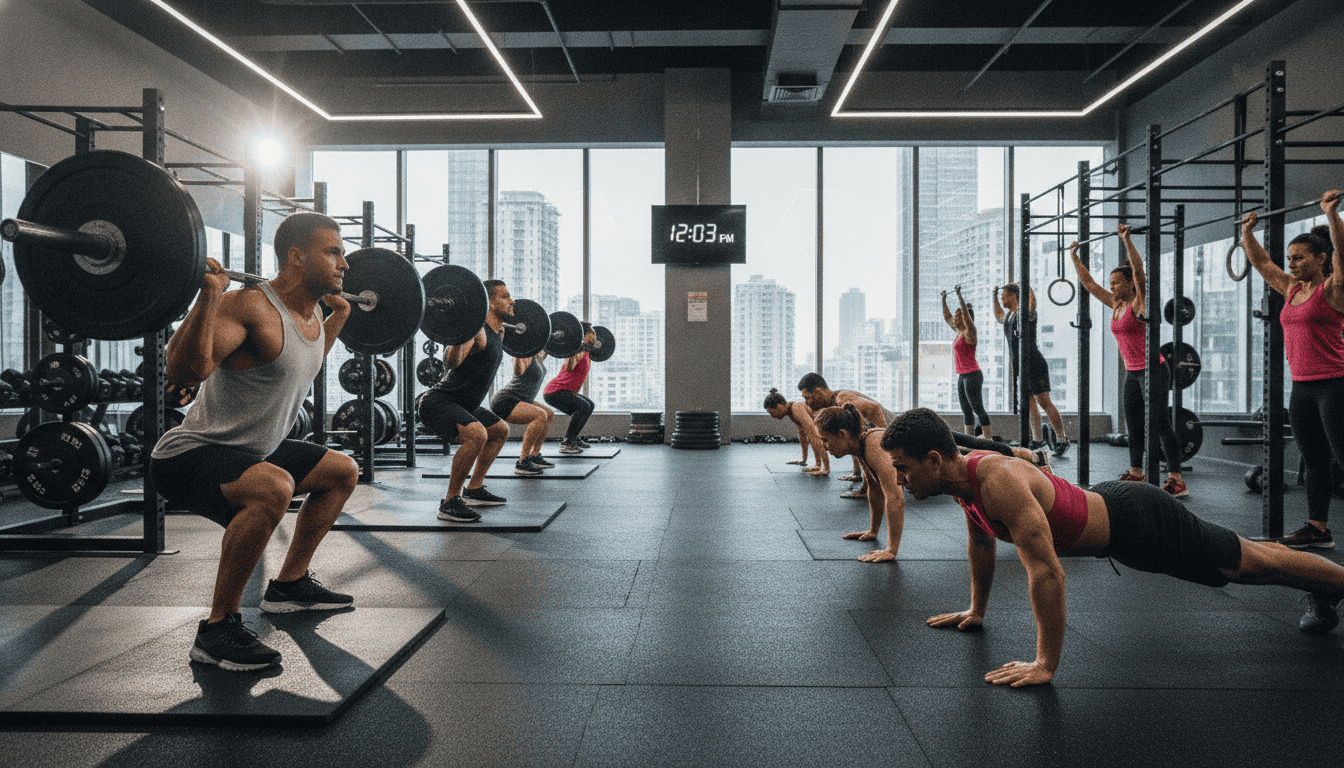
Bodyweight Exercises vs Weightlifting: Experts Outline Strength, Safety and Practical Trade-offs
Bodyweight exercises vs weightlifting is a common debate among fitness seekers, and experts say the right choice depends on goals, experience and access to equipment. Recent consensus in the fitness community highlights that weightlifting typically enables faster measurable strength and muscle gains because it allows progressive increases in resistance. At the same time, bodyweight training provides functional benefits — balance, coordination and convenience — that support everyday movement and adherence for many people.
Weightlifting Drives Progressive Overload and Muscle Growth
Weightlifting makes it straightforward to apply progressive overload, the principal mechanism behind muscle hypertrophy and long-term strength gains. By adding plates, increasing sets or adjusting rep ranges, lifters can systematically raise the stimulus on muscle fibers and track improvements with precision. For those aiming to prioritize maximum size and strength, free weights and machines offer a clearer path to measurable progress.
Weightlifting also enables targeted loading of specific muscle groups and movement patterns that are harder to isolate with bodyweight work. Exercises such as squats, deadlifts and bench presses produce high mechanical tension and metabolic stress when appropriately programmed, which accelerates adaptation for experienced trainees.
Bodyweight Training and Functional Strength for Daily Life
Bodyweight exercises often engage multiple muscle groups at once, teaching the body to move efficiently as a unit rather than in isolation. Push-ups, squats, lunges and variations on pulling movements improve coordination, core stability and joint control — attributes that translate directly to everyday tasks like lifting groceries or climbing stairs.
The demand for balance and neuromuscular control during bodyweight movements develops proprioception and posture, which can reduce fall risk and support long-term mobility, particularly for older adults or those returning from injury.
Convenience and Adherence: Where Bodyweight Wins
One of the clearest advantages of bodyweight training is accessibility. It requires little to no equipment, can be performed at home or outdoors, and fits into travel schedules or busy workdays. That convenience often improves consistency, and adherence is a primary driver of fitness outcomes over months and years.
For people with limited space, budget or time, a progressive bodyweight program — adding repetitions, tempo changes, lever modifications or isometric holds — can produce meaningful strength and conditioning benefits without a gym membership.
Safety, Progression and Injury Risk in Both Methods
Beginners frequently find bodyweight exercises easier to modify and safer to start with, because external loads are absent and movements can be scaled to ability. That reduces the likelihood of overloading the body too quickly and allows a focus on mastering technique.
Conversely, weightlifting carries low injury risk when it is taught and progressed correctly; most preventable injuries stem from excessive load or poor form. Proper coaching, gradual progression and attention to recovery make weight training a safe and effective method for building strength at scale.
How Combining Both Approaches Produces Balanced Fitness
Many trainers recommend a hybrid approach: use bodyweight work to develop movement quality, balance and endurance, and employ weightlifting to drive increases in maximal strength and muscle mass. Integrating both methods allows athletes and casual exercisers to capitalize on the functional gains of calisthenics while targeting hypertrophy with weighted sets.
Periodizing a program — alternating mesocycles focused on skill, strength and metabolic conditioning — helps maintain progress and reduces plateaus. A combined plan also spreads stress across tissues and movement patterns, which can lower overuse risk.
Program Design Recommendations for Different Goals
For beginners, start with bodyweight basics to build stability and confidence, then introduce light resistance or machines as form and strength allow. Those seeking hypertrophy should prioritize progressive loading with compound lifts and structured rep ranges, while athletes or commuters who need functional capacity may favor mixed programming with gym sessions and bodyweight circuits.
Older adults or individuals rehabbing from injury should emphasize balance, controlled progressions and exercises that improve daily function; clinicians and certified trainers can tailor load and movement choice to medical history and mobility constraints.
Long-term consistency, not a single mode of exercise, determines most outcomes. Choosing the method that fits a person’s lifestyle, addresses their primary goal and can be performed safely over months is more important than committing exclusively to one modality.
In practice, many people will benefit from a pragmatic combination: use bodyweight training to establish movement competency and daily resilience, and add structured weightlifting to drive measurable gains in strength and size as capacity increases.
