
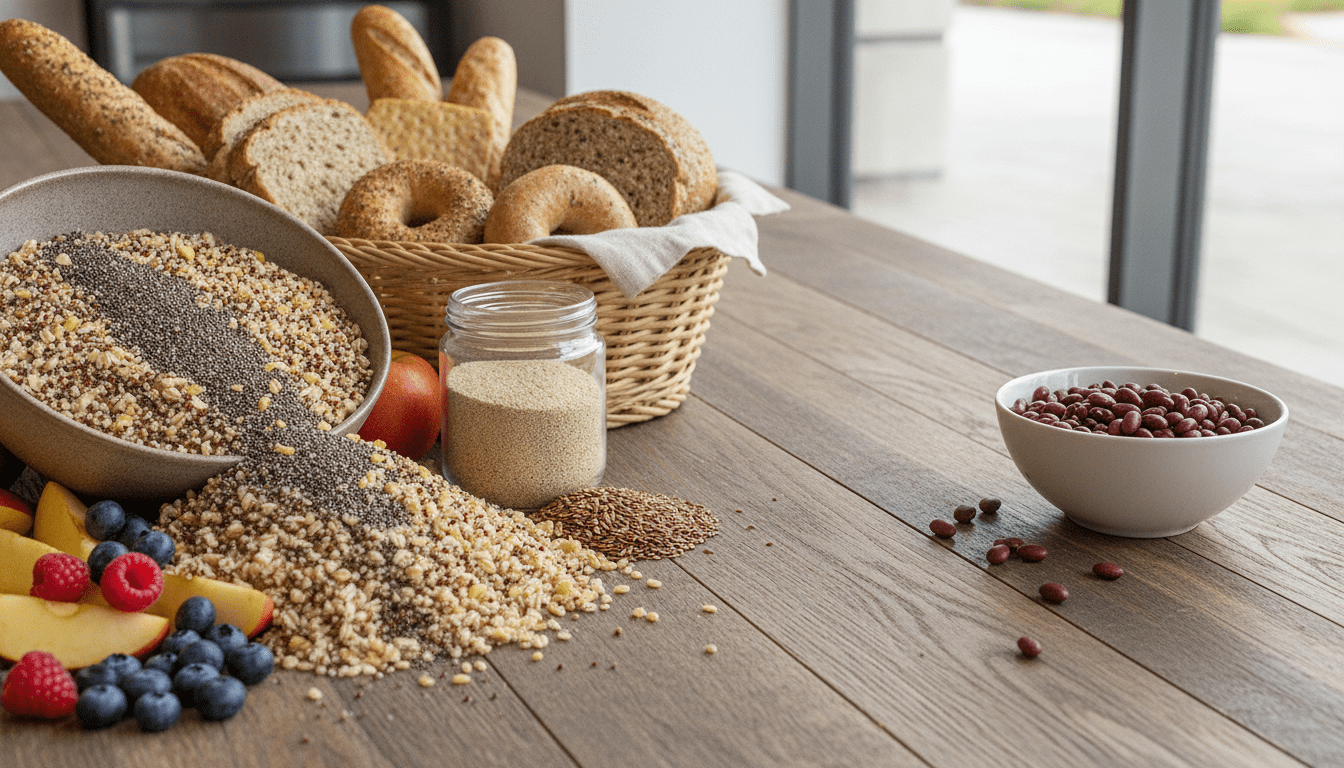
Top High-Fiber Foods to Help You Reach the Daily 28g Goal
Top high-fiber foods: whole grains, chia, flax, avocado, raspberries and artichokes – what to eat and how to safely reach 28g of fiber per day for adults.
Eating enough fiber is a common nutritional challenge, and this roundup identifies the high-fiber foods that can most efficiently help adults meet the recommended 28 grams per day. High-fiber foods such as whole grains, seeds, fruits, vegetables and legumes provide bulk for digestion, support metabolic health and supply important vitamins and minerals. Across these categories, single servings can supply a substantial share — sometimes more than the full daily target — making it easier to plan balanced, fiber-rich meals.
Whole Grains Deliver the Most Fiber Per Serving
A single cooked cup of certain whole-grain meals can surpass the daily fiber recommendation. Hulled barley, for example, contains about 31.8 grams of fiber per cup, roughly 114% of the daily value, while a cup of hard white wheat supplies about 23.4 grams, near 94% of the DV. Oat bran is another strong option, offering around 14.5 grams per cup, which covers more than 60% of the daily target.
Whole-grain breads, cereals and minimally processed grain products can also add meaningful fiber without requiring large portion sizes. Choosing whole-grain labels and preparing grains as the base of soups, salads or breakfast bowls are practical ways to increase intake.
Chia and Flax: Tiny Seeds, Big Fiber and Nutrients
Chia seeds pack nearly 9.8 grams of fiber in a one-ounce (about two-tablespoon) serving, providing roughly 35% of the DV in a very small portion. Most of that fiber is insoluble — estimates place insoluble fiber at about 85–93% of chia’s total — which helps add bulk and speed intestinal transit. Chia also contributes omega fatty acids, protein and minerals.
Ground flaxseed is another efficient source, with about 5.6 grams of fiber per ounce (two tablespoons), along with manganese, magnesium and healthy fats. Because whole seeds can pass through the gut intact, grinding both flax and chia — or soaking chia to form a gel — improves digestibility and nutrient availability.
Avocado and Raspberries: Fruits That Pack Surprising Fiber
Some fruits are notable for their fiber density. One avocado (flesh only) contains about 9.3 grams of fiber, roughly 33% of the daily value, and delivers additional nutrients such as folate, vitamin K and potassium. Clinical research has also linked replacing other carbohydrate calories with avocado to modest improvements in insulin sensitivity and LDL cholesterol in short-term trials.
Raspberries are another fruit high in fiber: a single cup provides about 8 grams, or roughly 32% of the DV, alongside vitamin C and polyphenols. Their low glycemic effect and nutrient profile make them a favorable choice for blood-sugar management and antioxidant support.
Artichokes and Beans: Vegetables and Legumes with Gut Benefits
Artichokes rank among vegetables highest in fiber, with a medium cooked artichoke delivering about 6.8 grams (about 24% of the DV). They are particularly rich in inulin, a prebiotic fiber that can promote gut microbiome diversity and help regulate blood glucose. However, artichokes contain FODMAPs and may trigger digestive symptoms in people with sensitive intestines, such as those with irritable bowel syndrome.
Beans remain a dependable source of fiber and plant-based protein. Depending on the variety, a half-cup cooked serving typically provides 4–8 grams of fiber, supplying roughly 14–29% of the daily value. Including a variety of legumes in soups, salads and side dishes spreads fiber sources across meals and supports satiety.
Serving Size Examples and How They Add Up
Practical portion examples show how a single item can contribute a large share of needs: one cup of hulled barley can meet and exceed daily fiber requirements, two tablespoons of chia supply nearly a third of the DV, and a single avocado or a cup of raspberries each furnish about one-third of the recommended 28 grams. Combining items — for example, a breakfast of oat bran topped with chia and raspberries, plus a lunch salad with avocado and a side of beans — can quickly bring total intake to target levels.
Varying sources not only spreads nutritional benefits but also lowers the likelihood of digestive discomfort from relying on a single fiber type. Whole grains supply a mix of soluble and insoluble fibers, seeds offer mostly insoluble fiber plus healthy fats, and artichokes supply prebiotic inulin.
Practical Steps to Increase Fiber Intake Safely
Increasing fiber too quickly can cause bloating, gas or constipation, so aim for gradual change over days to weeks. Add fiber in small increments, drink plenty of water to help fiber move through the digestive tract, and balance insoluble and soluble sources to ease adaptation. When buying packaged foods, prioritize products labeled “whole-grain” and check serving sizes to ensure you’re getting real fiber content rather than added sugars.
People with gastrointestinal conditions such as IBS, Crohn’s disease or intestinal obstruction should consult a healthcare professional or registered dietitian before substantially changing fiber intake. Tailored guidance can help manage symptoms while improving nutrition.
Shifting the daily menu toward high-fiber foods — whole grains, chia and flax seeds, fiber-rich fruits like avocado and raspberries, artichokes and legumes — offers a practical path to meet the 28-gram recommendation while gaining vitamins, minerals and other health benefits.
