
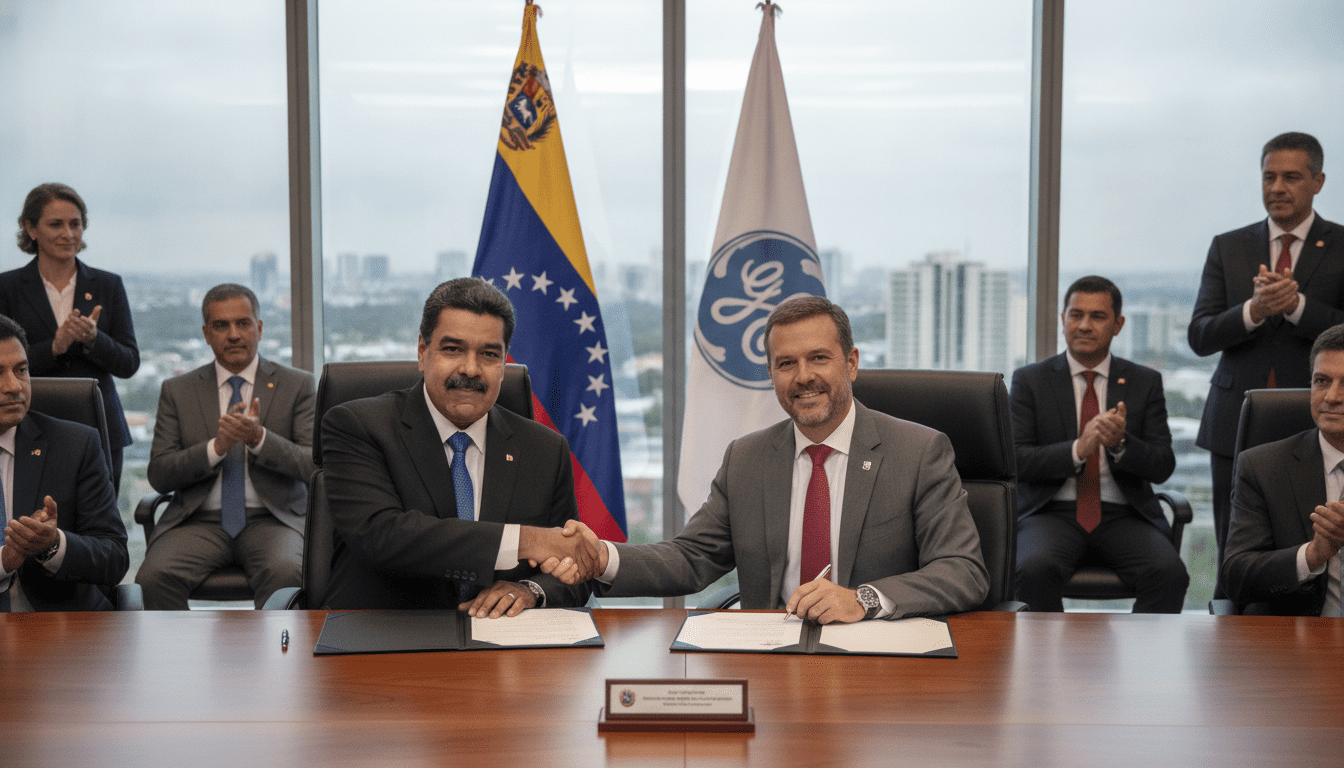
Venezuela-GE Vernova Deal to Add 5 GW in Four Years to Tackle Chronic Power Outages
Venezuela signs agreement with GE Vernova to boost electricity generation by 5 GW over four years, aiming to stabilise a power system beset by long-term outages.
Venezuela on 16 June 2026 signed an agreement with General Electric Vernova to expand the country’s electricity generation capacity by up to 5 gigawatts over the next four years. The Venezuela-GE Vernova deal is intended to accelerate repairs and add new generation amid a power system that has suffered repeated blackouts and chronic underinvestment. Officials from both sides described the pact as a major step toward restoring reliability for industry and households.
Agreement Details and Capacity Target
Under the terms announced by Venezuelan authorities and GE Vernova, the memorandum sets a four-year horizon during which incremental capacity additions could reach roughly 5 GW. The agreement covers a mix of refurbishments to existing thermal plants and delivery of new gas- and steam-turbine units to increase dispatchable generation. Both parties framed the figure as a maximum potential increase rather than an immediate guaranteed output.
The agreement includes provisions for feasibility studies, procurement schedules and performance guarantees, according to officials familiar with the announcement. The aim is to move rapidly from assessment to delivery while coordinating with the national grid operator on integration and dispatch planning.
Timeline and Implementation
The four-year timetable establishes phased deliveries and refurbishment milestones, with initial works expected to prioritise plants that can return to service quickly. Early phases will focus on replacing or overhauling critical turbine components and upgrading control systems to reduce forced outages. Officials said commissioning windows will be set by plant condition and spare-parts availability.
Longer-term deliveries of new generating units will follow, timed to grid reinforcements and fuel supply arrangements. The agreement signals a programmatic approach: short-term reliability fixes to relieve immediate pressure, followed by larger capacity additions aimed at medium-term resilience.
Technical Scope and Equipment
GE Vernova’s role will encompass supplying gas and steam turbines, balance-of-plant equipment, and digital control systems designed to improve operational flexibility. The technical package also envisages modernization of plant auxiliaries and remote monitoring to reduce downtime and speed fault diagnosis. That mix is intended to provide both quick returns on reliability and a foundation for more efficient operation.
Wherever refurbishment is chosen over outright replacement, GE engineers will perform inspections, repairs and retrofits to bring older units closer to modern performance standards. The technical work will also include training for local operators and integration of condition-based maintenance tools to lower future outage risk.
Government and GE Vernova Statements
Venezuelan officials described the pact as a priority component of a broader recovery plan for national infrastructure, stressing that improved electricity supply is critical to industry, hospitals and households. Government spokespeople framed the arrangement as a step toward reversing years of decline in generation output and service quality.
GE Vernova characterized the deal as a commercial partnership that leverages its global experience in power-generation equipment and services. The company emphasized project execution, parts logistics and local workforce support as central to delivering reliable, on-time results under the agreement.
Challenges Facing Venezuela’s Grid
Venezuela’s power system has been weakened by years of underinvestment, maintenance backlogs and operational fragmentation, conditions that have produced recurring widespread outages. Restoring capacity alone will not eliminate vulnerabilities, officials and analysts caution, because network stability also depends on transmission upgrades and consistent fuel supplies for thermal stations.
Logistics pose a near-term challenge: transporting heavy turbine components, securing spare parts and coordinating complex overhauls in facilities that have seen limited recent investment requires tight project management. Political and regulatory uncertainty may also affect schedules and financing arrangements.
Economic and Political Implications
If implemented on schedule, the Venezuela-GE Vernova deal could relieve one of the most immediate constraints on economic activity by reducing unplanned blackouts that disrupt manufacturing, services and public hospitals. Reliable power would lower operating costs for businesses and could encourage renewed investment in energy-intensive sectors.
The agreement also carries political weight domestically and internationally, as successful delivery would signal the government’s capacity to attract and manage large-scale infrastructure contracts. Conversely, delays or underperformance could compound public frustration over essential services and raise questions about project oversight.
The Venezuela-GE Vernova deal sets a clear technical and temporal ambition: up to 5 GW of added generation within four years, beginning with rapid refurbishment and followed by staged delivery of new units. Execution will hinge on logistics, fuel availability and grid upgrades, while the outcome will have tangible effects on daily life and economic recovery across Venezuela.
