
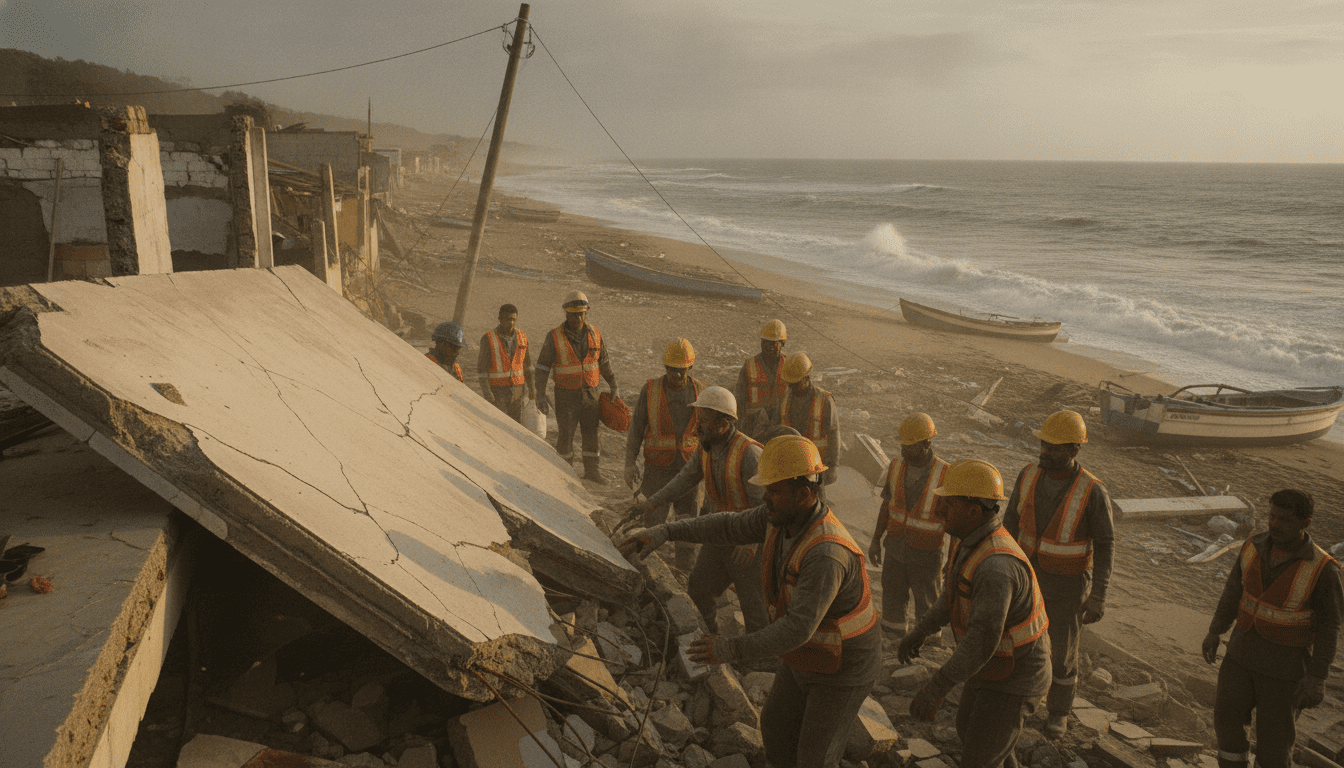
Aftershock Jolts Venezuela as Rescue Teams Race to Find Survivors of Devastating Earthquakes
Rescue operations intensify after Venezuela earthquakes leave nearly 1,500 confirmed dead and tens of thousands missing; international aid pours in amid mounting humanitarian needs.
A strong aftershock struck north of Caraballeda as search-and-rescue teams continued to comb rubble following the Venezuela earthquakes that devastated the northwestern coast last week. The tremor — recorded at magnitude 4.6 and shallow depth — renewed fear among survivors and briefly halted some recovery operations along the Caribbean shoreline. Authorities warned that aftershocks complicate already perilous work to find people trapped beneath collapsed buildings.
Aftershock Strikes Near Caraballeda
The United States Geological Survey reported the Monday aftershock at magnitude 4.6 and a depth of roughly 10 kilometres, with the epicentre located off the coast near Caraballeda. Residents in Caracas and nearby municipalities said they felt the jolt and evacuated damaged apartment blocks, adding to the swelling number of displaced people. Government officials said there were no immediate reports of major new structural collapses, but warned of continuing instability along fault lines.
Emergency teams said the shallow depth of the event increased the shaking felt on land, prompting renewed caution among rescue crews working in partially collapsed structures. Local officials urged residents to stay in open spaces and follow directions from emergency services to reduce the risk of injury during subsequent tremors. The aftershock underscored how volatile the situation remains as responders work amid unstable buildings and damaged infrastructure.
Confirmed Fatalities and Thousands Unaccounted For
Officials have confirmed nearly 1,500 deaths linked to the back-to-back 7.2 and 7.5 magnitude quakes that struck last Wednesday, with many more people still unaccounted for. Tens of thousands of residents are believed missing, according to authorities coordinating the search, reflecting the scale of destruction in coastal towns and suburbs. Entire blocks were reduced to rubble in hard-hit areas, leaving families waiting anxiously for word about loved ones.
The critical 72-hour survival window for many trapped victims passed over the weekend, but crews reported several rescues after that period, offering fleeting hope that more survivors could be found. Authorities cautioned, however, that the chance of finding people alive falls sharply with time unless they have access to food, water and air in voids beneath debris. Teams continued intensive searches in neighborhoods where buildings pancaked and where residents marked the locations of relatives believed to be underneath.
Search-and-Rescue Operations and Challenges
Venezuelan rescue forces mobilized quickly, with officials reporting roughly 30,000 national rescuers deployed alongside foreign specialists. International teams numbering about 2,700 personnel have joined the effort, bringing technical equipment and trained search dogs to locate survivors in unstable ruins. Authorities said there are around 86 canine teams in the field, which have been instrumental in identifying likely void spaces in collapsed buildings.
Operations are hampered by aftershocks, poor road access and the sheer volume of wreckage, forcing crews to rely on specialized cutting and lifting equipment to reach pockets where survivors might be trapped. Heavy machinery work risks further collapses, so responders balance speed with safety as they shore up rubble and create access points. Officials have stressed that sustained effort and coordination are essential as the operation moves from immediate rescues to recovery and debris clearance.
International Aid and Logistical Support
Venezuelan authorities reported support from two dozen countries, with more than 500 tonnes of humanitarian supplies arriving in the first days after the quakes. Foreign contributions included medical equipment, search-and-rescue kits, food, water and logistical assistance to support ground teams and temporary shelters. Several governments and international organizations also dispatched specialized personnel to help with search operations and to provide emergency medical care.
Transport and distribution remain major hurdles as damaged ports, roads and power outages slow delivery of aid to isolated communities. Local officials said coordination centers have been set up to triage incoming donations and prioritize deliveries to La Guaira and other severely affected zones. Donors and relief agencies urged continued contributions, warning that immediate needs for clean water, shelter and medical attention would rise sharply in the coming days.
Conditions in La Guaira and Community Response
La Guaira, a northern port city, remains the epicentre of human suffering with widespread destruction of housing and infrastructure. Residents described scenes of collapsed buildings, makeshift encampments and families marking the locations of missing relatives, waiting for teams to reach them. Aid distribution reached parts of the city only after several days, leaving many survivors exposed to heat, rain and limited sanitation.
Local volunteers and community groups have supplemented formal emergency services, organizing food distribution and temporary shelters on improvised platforms. Survivors interviewed by reporters said they continue to sleep outdoors for fear of returning to structurally compromised homes. Humanitarian workers emphasized the urgent need to expand medical services, potable water supplies and psychological support for those who witnessed or survived the quake.
Political Context and Coordination Hurdles
The response is unfolding amid a complex political backdrop that has strained logistics and international relations, according to observers and local sources. Government leaders have publicly welcomed foreign assistance while stressing the need for coordinated command structures to ensure supplies reach the hardest-hit areas. Officials also acknowledged the reputational and operational pressures associated with managing a large-scale disaster amid ongoing domestic challenges.
Coordination centers are attempting to integrate national agencies, foreign teams and non-governmental organizations to avoid duplication and to target needs efficiently. Authorities said clearing damaged roadways and restoring basic utilities remain priorities to accelerate aid flow and to enable sustained recovery operations. The scale of destruction will require months of reconstruction planning and significant resources beyond the immediate relief phase.
Rescue teams reported isolated successes in recovering survivors even as they temper expectations about further finds, and authorities called for continued international support to sustain operations and meet urgent humanitarian needs. The coming days will be crucial for both search efforts and for establishing safe conditions for recovery and rebuilding.
