
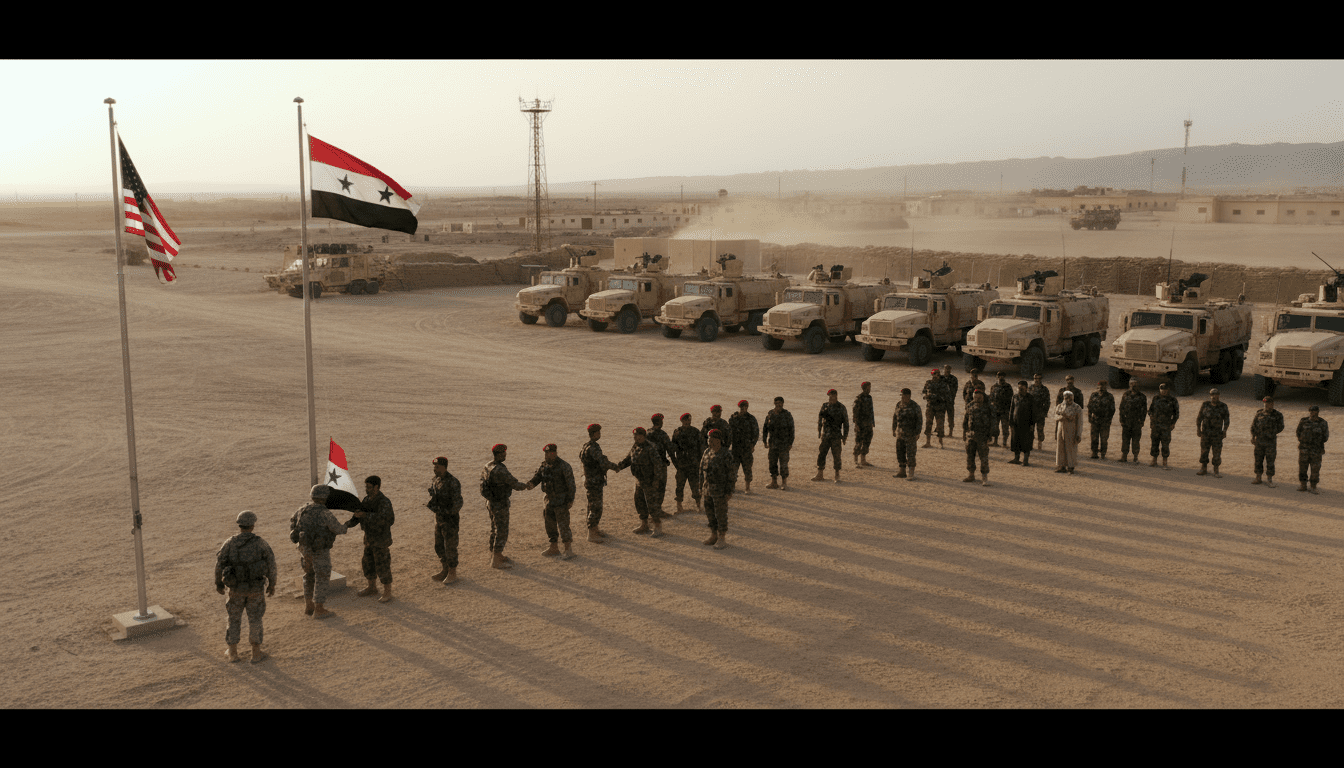
US troop withdrawal from Syria: U.S. hands major bases to Damascus
U.S. troop withdrawal from Syria confirmed as Centcom says major bases transferred to the Syrian government; Washington says counterterrorism support will continue.
The United States has confirmed the transfer of its major bases in Syria to the control of the Syrian government, marking a notable shift in U.S. posture in the northeast of the country. Centcom, the U.S. regional command, told news agencies that the facilities were handed over while stressing that partner-led counterterrorism activities backed by U.S. forces would continue. Syrian authorities said the handovers were complete and reported the deployment of Syrian troops to formerly U.S.-held sites.
U.S. command statement on base transfers
Centcom confirmed in response to media inquiries that U.S. forces have relinquished control of multiple major installations across eastern Syria. The statement framed the moves as handovers of physical positions while reiterating that the United States would continue to support partner-led measures aimed at preventing a resurgence of extremist groups. U.S. officials did not immediately provide a comprehensive list of all facilities transferred or a detailed timeline for the withdrawals.
Kasrak airbase returned to Syrian control
Syrian state and defense ministry sources said the airbase at Kasrak in Hassakeh province, a Kurdish-majority region in the northeast, was formally transferred to Damascus on Thursday. According to Syrian statements, Syrian armed forces have taken up positions at the base after U.S. troops began withdrawing from Kasrak at the end of February. The return of Kasrak is significant because it has been among the more prominent U.S. positions near areas long dominated by Kurdish-led forces.
Counterterrorism operations to be partner-led
U.S. officials emphasized that, despite the handovers, Washington will continue to enable and support partner-led counterterrorism operations in Syria and the broader region. Those operations have primarily involved training, intelligence sharing, and limited logistical assistance to local forces who fought the Islamic State. The U.S. maintains that preventing the reconstitution of the Islamic State remains a policy priority even as its footprint on the ground is reduced.
Kurdish-led forces and the aftermath
For years U.S. forces operated alongside a Kurdish-led coalition that played a central role in the campaign against the Islamic State, which the U.S. and its partners have assessed to be militarily defeated since 2019. The transfers raise immediate questions about the security and political position of Kurdish authorities and their local forces, who have relied on U.S. presence as a deterrent against hostile actors. Kurdish political figures and commanders were not quoted directly in official notices cited by Damascus, but observers say the lack of a clear security framework could heighten local tensions.
Damascus and disputed claims about regional strikes
Syria’s foreign ministry and state-funded outlets framed the handovers as a restoration of sovereignty over bases previously occupied by foreign troops. Syrian authorities also asserted that the transfers came amid a U.S. redeployment of military capacities in the broader region, and Syrian reports referenced incidents of strikes involving other states on February 28. Those latter claims were described in Syrian statements and have not been independently corroborated in the notices relayed by U.S. and international correspondents cited in the initial reporting.
Implications for regional dynamics and U.S. policy
The handover of bases in Syria occurs against a backdrop of shifting U.S. strategic priorities in the Middle East, where Washington has balanced counterterrorism objectives with broader concerns about Iran and other regional actors. Analysts say the reduced U.S. footprint could alter deterrence dynamics and create openings for rival state and non-state actors to expand influence in eastern Syria. At the same time, continued U.S. support for partner forces suggests Washington seeks to maintain influence without the same level of on-the-ground exposure.
The transfer is likely to prompt diplomatic and security consultations among regional and international stakeholders, including Turkey, Russia, Iran, and the Kurdish administrations, each of which has competing interests in Syrian territory and governance. How Damascus intends to integrate reclaimed sites into its command-and-control structures and what guarantees, if any, will be extended to local communities around former U.S. bases remain open questions.
This development will be closely watched by international monitors and humanitarian actors who monitor stability and the humanitarian situation in northeastern Syria. The evolution of security arrangements and any follow-on agreements between Damascus and local authorities will shape the prospects for reconstruction, the return of displaced populations, and efforts to prevent militant resurgence in the months ahead.
