
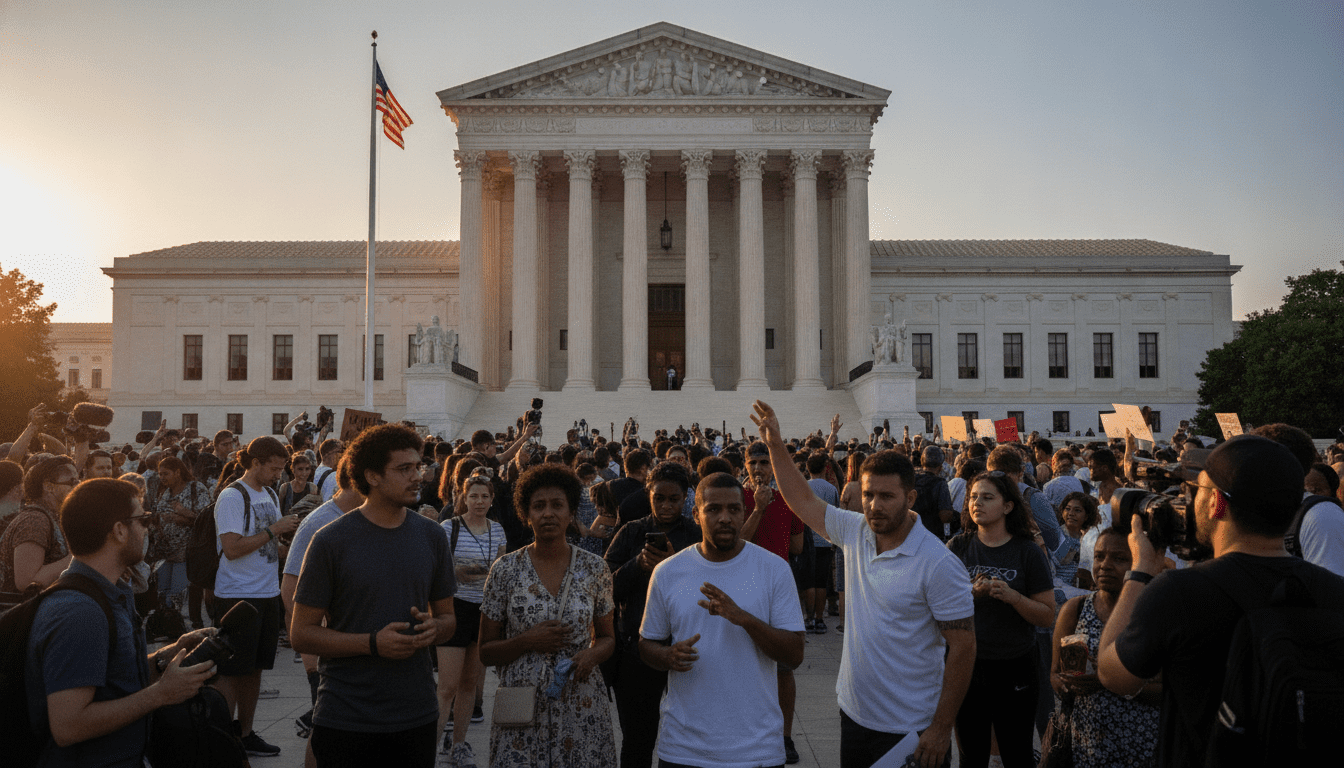
Supreme Court Allows End to TPS for Haitians and Syrians
Supreme Court allows the Trump administration to end TPS for Haitians and Syrians, clearing the way for removal of hundreds of thousands while legal fights continue.
The Supreme Court on Thursday cleared the way for the Trump administration to terminate Temporary Protected Status (TPS) for Haitians and Syrians, allowing the policy changes to take effect even as lower-court litigation continues. The decision will expose hundreds of thousands of people who have lived and worked in the United States under TPS to potential deportation and a sudden loss of authorized work status. (apnews.com)
Ruling lifts lower-court injunctions and lets terminations proceed
The high court’s order removed injunctions issued by federal judges that had temporarily blocked the administration’s moves to end TPS for the two groups. By permitting the terminations to take effect now, the decision ends the immediate legal pause that advocates had secured in multiple district courts. The ruling therefore turns months of judicial limbo into an active policy change with immediate consequences for beneficiaries. (theguardian.com)
Scale of impact: who is affected and where they live
Officials and news reports estimate the move affects roughly 350,000 Haitian nationals and about 6,000 Syrians who held TPS designations, many of whom have lived in the United States for years. Large concentrations of TPS holders live in Florida, New York, Massachusetts and other metropolitan areas where communities and employers rely on their labor and civic participation. Local governments and service organizations have warned that sudden status loss would ripple through schools, workplaces and health systems. (themarshallproject.org)
Majority opinion centered on statutory limits to judicial review
The court’s conservative majority found that federal law restricts courts’ ability to review the government’s determinations to end TPS designations, a technical statutory interpretation that proved decisive. The justices concluded that the procedural barriers in the statute meant judges cannot block the administration’s determinations through the challenges brought in New York and Washington, D.C. Dissenting justices called the interpretation harmful and said it ignores the real-world dangers facing people returned to unstable homelands. (washingtonpost.com)
Political and community reactions followed swiftly
Advocacy groups, immigrant-rights organizations and some local officials condemned the decision, saying it will upend families and local economies and expose people to violence or natural-disaster risks in their countries of origin. The administration defended the action as a lawful adjustment to designations that no longer meet the statutory standard for TPS, arguing the determinations were made according to federal criteria. Elected officials on both sides framed the ruling through sharply different lenses ahead of the November political calendar. (axios.com)
Legal pathways and next steps for TPS holders
Lawyers representing TPS beneficiaries say they will pursue every available legal option, including appeals or separate challenges to the administration’s determinations on constitutional or statutory grounds. Some beneficiaries may seek to change their immigration classification through family- or employer-based petitions where possible, though such pathways are limited and often slow. Meanwhile, nonlegal responses are also expected, with cities and employers considering contingency plans to retain workers and maintain services. (themarshallproject.org)
Historical context of TPS for Haiti and Syria
Haitians were first granted TPS after the 2010 earthquake and subsequent instability, with periodic renewals reflecting continuing humanitarian concerns. Syrians received TPS in 2012 amid civil war and widespread violence, a designation that persisted as conditions in the country evolved over the following decade. TPS has long been used as a temporary humanitarian protection to shield people from deportation when returning home would pose danger because of war, disaster or extraordinary conditions. (theguardian.com)
The Supreme Court order marks an immediate legal turning point for TPS recipients from Haiti and Syria and sets up new policy and legal battles over the status of humanitarian protections in U.S. immigration law.
