
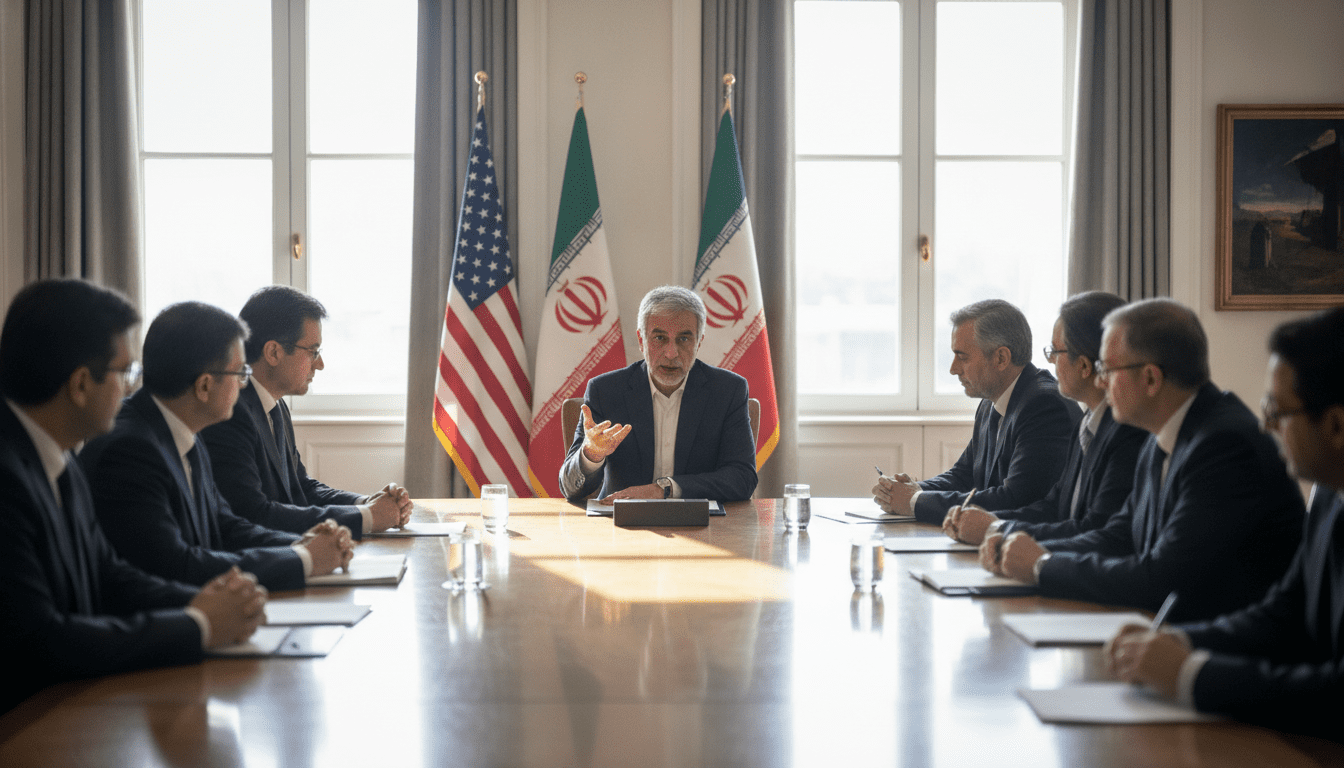
Professor Mahjoub Zweiri: US-Iran talks aim for phased deal, verification and regional de-escalation
Professor Mahjoub Zweiri says the US-Iran talks are designed to achieve phased sanctions relief, tight verification and measured regional de-escalation while testing political ceilings.
Opening summary of the interview
Professor Mahjoub Zweiri told NewsFeed in an exclusive interview on 21 June 2026 that current US-Iran talks center on incremental, verifiable concessions rather than a single comprehensive bargain. He said both capitals appear to be pursuing an approach that balances immediate de-escalation with domestic political limits. The analyst warned the negotiations will likely produce partial, reversible steps before any durable settlement is reached.
Phased sanctions relief and verification mechanics
Zweiri emphasized that sanctions relief is being discussed in carefully sequenced tranches tied to verifiable Iranian actions. He explained that Washington seeks mechanisms that allow it to restore measures if Tehran backtracks, while Tehran wants predictable economic relief to stabilize its economy. According to the professor, negotiators are focusing on clear benchmarks, inspection regimes and step-by-step implementation timetables to reduce the risk of abrupt reversals.
Nuclear constraints and technical verification
The analyst said a core element of the talks remains constraints on nuclear activity paired with robust verification by international inspectors. He noted that both sides understand public trust will hinge on transparent monitoring and enforceable timelines. Zweiri suggested technical provisions will be as politically important as headline concessions, because verification architecture determines whether temporary compromises can withstand future shocks.
Regional tensions and proxy dynamics
Zweiri warned that the talks are not limited to nuclear issues and that regional dynamics will heavily shape outcomes. He pointed to the role of armed groups and regional proxies as potential spoilers that could undermine progress or be used as bargaining chips. The professor argued that any agreement which ignores the security concerns of regional actors will be fragile and that managing ancillary conflicts will be central to durable de-escalation.
Domestic political constraints influence negotiating space
The interview highlighted tight political ceilings facing negotiators in Washington and Tehran, with domestic politics constraining flexibility on both sides. Zweiri said US policymakers must contend with congressional scrutiny and public skepticism, while Iranian leaders face hardline factions wary of concessions. He added that these internal pressures encourage incremental deals that can be presented as reversible wins to domestic audiences.
International actors shaping leverage and incentives
Zweiri described European states, regional powers and multilateral institutions as active players shaping incentives and leverage in the talks. He noted that third-party actors can widen the range of feasible compromises by offering guarantees, economic packages or security assurances. The professor also underscored that competing interests among external players mean any settlement will require careful diplomacy to align incentives and reduce the risk of fragmenting support.
Testing the durability of any agreement
The analyst said negotiators appear prepared to test the practical durability of limited agreements before pursuing broader compromises. He explained that phased steps allow both sides to assess implementation capacity and adjust red lines without committing to irreversible political outcomes. Zweiri cautioned, however, that a series of small accords could generate an unstable equilibrium if parties treat each tranche as a final goal rather than a building block.
Potential short-term outcomes and strategic trade-offs
Zweiri outlined several plausible short-term outcomes, including a narrow deal on enrichment limits tied to significant, but staged, sanctions relief and enhanced inspection access. He suggested alternative results could be temporary confidence-building measures, prisoner exchanges or localized de-escalation pacts that stop short of addressing the full nuclear dossier. The professor stressed that each pathway carries trade-offs between immediacy of relief and long-term verification.
Risks that could derail progress
In the interview, Zweiri identified key risks that could derail talks, including sudden escalations in the region, political shocks in either capital, or tactical miscalculations by proxies. He warned that spoilers could exploit ambiguity to provoke incidents that justify hardline responses. The professor urged negotiators to build contingency plans and credible enforcement tools into any agreement to mitigate these vulnerabilities.
Negotiators, he said, appear focused on striking a balance: securing measurable, reversible steps that reduce immediate tensions while leaving space for deeper talks later. The professor concluded that whether the US-Iran talks produce a stable outcome will depend on the technical rigor of verification, the management of regional flashpoints and the ability of domestic political leaders to sell incremental progress to skeptical publics.
