
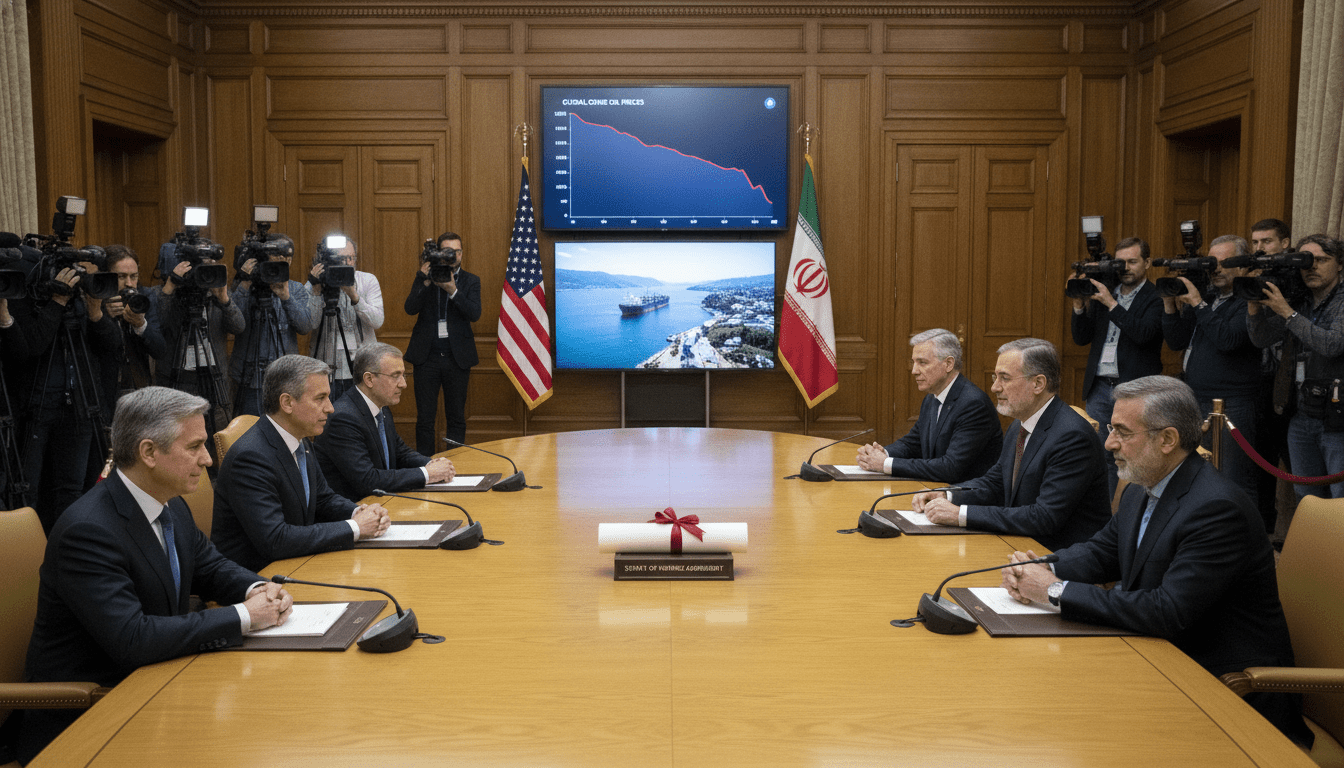
Strait of Hormuz Reopening Drives Oil Prices Down After U.S.-Iran Framework
Oil prices fell after a U.S.-Iran framework to reopen the Strait of Hormuz; Asian markets rallied as officials outlined mine‑clearing and shipping plans.
The United States and Iran announced a first-step framework that could end the current hostilities and reopen the Strait of Hormuz, triggering an immediate drop in global oil prices and a sharp rally in Asian stock markets. Brent crude fell to $83.75 a barrel, down about 4.1 percent, while U.S. WTI dropped to $80.87, off roughly 4.7 percent. The accord, described by officials as a pathway to a broader settlement, would end maritime blockades and resume transits through the Hormuz corridor.
Agreement Details and Officials’ Statements
U.S. President Donald Trump and Iran’s deputy foreign minister Kasem Gharibabadi jointly announced the preliminary deal, saying a framework would be signed on Friday to set the terms for a cessation of hostilities. Iranian statements described a timeline that would see the Strait of Hormuz reopened within 30 days and a temporary 60‑day ceasefire while negotiators pursue a more comprehensive agreement. U.S. officials said the talks will put the Iranian nuclear program at the center of the next phase of negotiations.
Immediate Impact on Global Oil Markets
The prospect of renewed shipping through the Strait of Hormuz — the conduit for roughly one‑fifth of global seaborne oil shipments — removed a key supply shock from traders’ risk calculations. Benchmark Brent lost more than four percent, touching $83.75 per barrel, its lowest level since March, while WTI fell below $81. Traders cited expectations of restored flows and reduced premiums for geopolitical risk. Analysts warned that the full price effect will depend on how quickly mines and other hazards are cleared and on the substance of the follow‑up talks.
Asian Equity Markets Surge on De‑Escalation
Equity markets in Asia reacted strongly to the announcement, with Japan’s Nikkei 225 and South Korea’s Kospi opening sharply higher. Reports indicated the Nikkei rose roughly 4.6 percent within the first half hour of trading, while the Kospi gained about 5.8 percent in the same window, reflecting investor relief at a reduced risk to energy supplies and regional trade. Market participants said the combination of lower oil prices and diminished military risk encouraged broad buying across exporters and financial stocks.
Maritime Clearance and Security Challenges
Both sides stressed that reopening the Strait of Hormuz will require physical safety measures before full traffic resumes, including the removal of mines and other hazards identified by maritime authorities. President Trump said the strait would be reopened “fee‑free” and that the U.S. Navy would lift its blockade of Iranian ports as part of the arrangement, while Iranian officials emphasized phased steps tied to verification. Shipping companies and insurers will watch closely for clear timelines and independent assurances before fully restoring pre‑crisis routing and coverage.
Economic Effects and Policy Responses in Europe
The recent energy price spike had already added pressure on household budgets and national treasuries, prompting emergency measures in several countries. In Germany, for example, the government introduced a fuel discount to ease consumer burdens; that measure is scheduled to expire at the end of June. Economists cautioned that while lower oil prices can ease inflationary pressure and reduce costs for industry, the transient nature of geopolitical settlements means fiscal and monetary authorities will continue to monitor risks to growth and price stability.
Next Steps in Nuclear and Diplomatic Talks
Under the framework, negotiators have signaled they will use the ceasefire period to press forward on wider issues, notably Iran’s nuclear program, which the United States identified as a central focus for subsequent talks. Diplomats on both sides said a broader agreement will require technical verification, sequencing of concessions, and guarantees to international observers. Observers warned that political objections, domestic constituencies, and verification disputes could slow progress, keeping markets sensitive to any signs of backtracking.
The announcement marked a notable de‑escalation in a confrontation that had driven energy markets and investor sentiment for months, but officials cautioned that implementation will be complex and incremental. For now, traders and governments are responding to the immediate prospect of resumed traffic through the Strait of Hormuz and the easing of a key supply risk, even as diplomats work to turn the initial framework into durable arrangements.
