
Iran blockade forces negotiations as Tehran reopens Strait of Hormuz
Iran blockade drives negotiations as Tehran reopens the Strait of Hormuz; analysts warn prolonged economic damage from port closures, strikes and export losses.
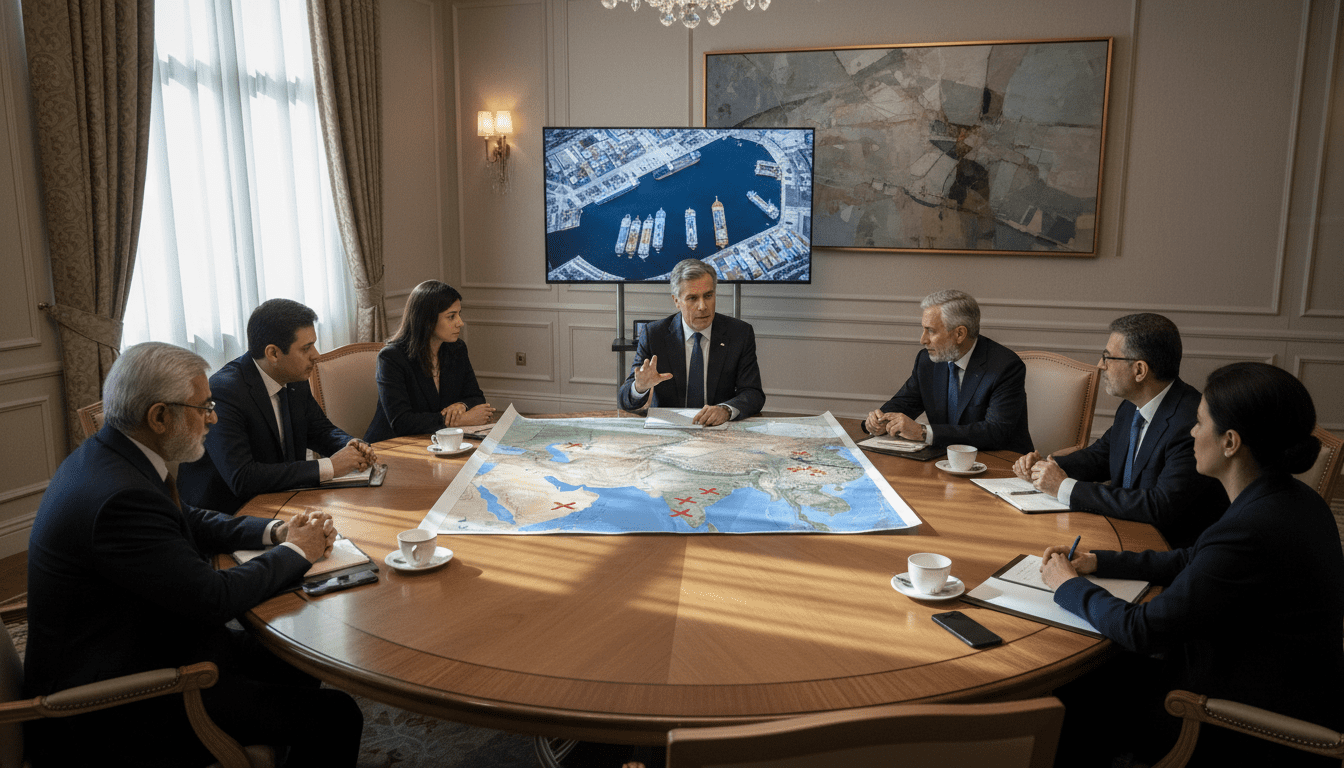
The Iran blockade and recent statements by U.S. and Iranian officials have produced a sudden shift in the standoff, with Tehran announcing the Strait of Hormuz “completely open” following a ceasefire between Israel and Lebanon. President Donald Trump framed the maritime pressure as a core lever, saying the blockade may be “even more effective than bombing” as Washington seeks concessions on Tehran’s nuclear programme. Negotiators in both capitals now face a race between political timetables and mounting economic damage.
U.S. maintains blockade as bargaining tool
President Trump has signaled he will keep American forces in place to enforce the Iran blockade while demanding a return to stricter nuclear limits, according to senior U.S. officials. The blockade is being presented in Washington as a form of nonkinetic pressure intended to squeeze Tehran’s export revenues without escalating to full-scale military strikes. U.S. policymakers argue the tactic shortens the timeline for meaningful concessions that would otherwise take longer under normal sanctions.
Tehran declares maritime routes open amid talks
Iran announced the Strait of Hormuz reopened after negotiators reported progress tied to a ceasefire between Israel and Lebanon, a senior Iranian diplomat said on Friday. Tehran framed the move as conditional and reversible, cautioning that any resumption of hostile activity would prompt a return to disruptive measures. The declaration aims to reduce immediate global market shocks while keeping Iran’s negotiating leverage intact.
Estimated export losses and storage pressures
Analysts estimate the Iran blockade costs the country hundreds of millions in daily export revenues, with one study calculating losses near $276 million per day from halted seaborne trade. Without exports, oil storage could fill “within weeks,” forcing production cuts and long-term infrastructure damage, although other experts project visible supply shortages may take two to three months to materialize. Those differing timelines underscore uncertainty about how quickly economic pain will translate into political concessions.
Targeted strikes compound industrial damage
Recent precision strikes on Iran’s petrochemical hubs and the country’s two largest steel mills have amplified economic strain, officials and industry analysts say. Attacks on facilities in Mahshahr and Asaluyeh, together with damage to Mobarakeh Steel and Khuzestan Steel, removed significant processing and export capacity and wiped out tens of thousands of jobs. The result is an immediate loss of foreign currency earnings from non-oil exports and a longer-term disruption of supply chains for construction, automotive and machinery sectors.
Transport bottlenecks and corporate collapses
Logistics businesses report dramatic declines in throughput at major ports: container volumes from Bandar Abbas, once 3,500–4,000 boxes per day, have fallen to roughly 1,000 daily, largely carrying pre-blockade cargo. The drop has left importers unable to source essential inputs and reexport channels through the United Arab Emirates are under scrutiny amid questions about post-conflict cooperation. Contractors and manufacturers describe unpaid invoices, halted projects and mass layoffs as normal business operations collapse under the combined effects of blockades, strikes and an internet blackout.
Social pressure and international assessments rise
The humanitarian and macroeconomic figures highlight growing domestic strain, with the UN Development Programme warning the conflict could shave 8.8 to 10.4 percentage points off Iran’s economic output and push an additional 3.5 to 4.1 million people below the poverty line. Local economists also point to structural resilience: firms routinely hold months of raw materials, oversea tankers have provided a temporary export buffer, and alternative land and Caspian routes remain options for critical imports. Still, the loss of key industrial capacity and a digital shutdown—estimated by local industry leaders at roughly $40 million in daily IT-sector damage—have deepened immediate hardship.
President Trump and his team face a narrow window to extract concessions ahead of U.S. midterm voting timelines, while Tehran is pressing for terms that preserve core regional capabilities. Iranian officials say the country may tolerate months of pressure, but they also leave open the possibility of renewed harassment of shipping lanes if talks collapse. Past precedent, including Tehran’s 2015 nuclear agreement, demonstrates that economic distress can drive diplomatic breakthroughs, but the current mix of kinetic strikes, financial chokepoints and domestic layoffs complicates any swift resolution.
Long-term recovery will depend on the durability of infrastructure and whether sanctions and commercial ties are restored, both of which will require sustained diplomatic engagement and measurable confidence-building steps. The immediate truce in the Strait of Hormuz reduces the risk of a sharp spike in global energy prices, but analysts warn that the Iran blockade has already inflicted damage that may take years to repair.
Economic levers now sit alongside military threats in a negotiation where timing matters as much as leverage; whether the Iran blockade ultimately forces Tehran to accept a framework agreement or simply reshuffles regional alignments will become clearer only as exports, employment and industrial output reveal the depth of the crisis.
