
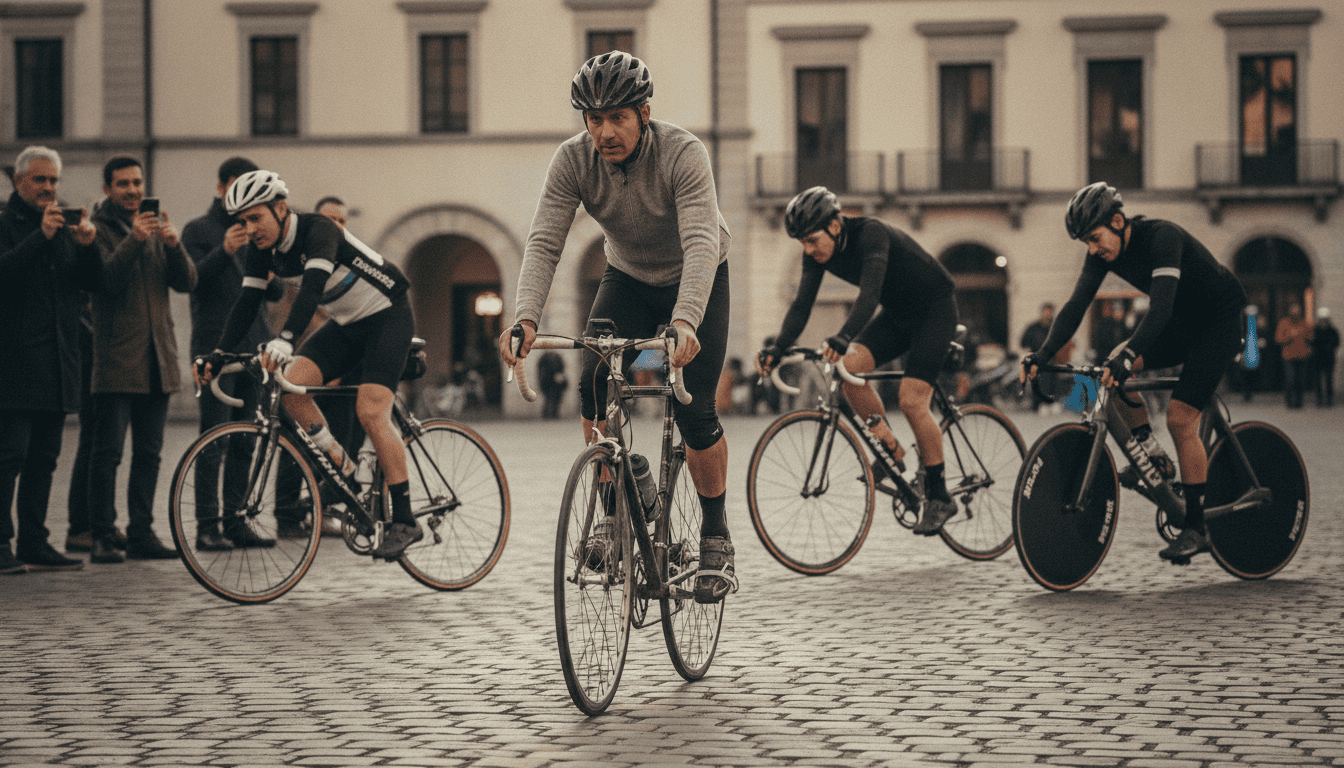
Track Stand: Why This Simple Move Defines Coolness in Road Cycling
The track stand is emerging as the defining gesture of coolness in road cycling — a subtle test of balance and attitude that expensive gear can’t buy anymore.
Road cycling coolness is no longer decided solely by clothing or carbon components; it increasingly shows up in a single moment at a traffic light: the track stand. Riders and observers say the ability to remain motionless while clipped into pedals has become a social signal on urban rides and café stops. The move, simple in appearance, separates those who rely on equipment from those who project confidence through skill.
High-end bikes as rolling status symbols
For many amateur riders the bike itself has become a public declaration of taste and spending power. Modern road bikes are often described as “rolling price tags” because every visible part — wheels, groupset, cockpits and computers — carries a market value that invites appraisal.
Enthusiasts inspect components the way sommeliers scan a wine label, drawing conclusions about the owner’s priorities and budget. That scrutiny has increased demand for boutique parts and limited-run equipment as riders chase an aesthetic of authenticity.
Style, celebrity and the illusion of cool
Popular images of cycling contribute to the confusion between style and substance. When figures like Peter Sagan or Bradley Wiggins appear on broadcasts, their mannerisms and wardrobe become shorthand for “cool” to recreational cyclists. Likewise, the flamboyant styling of former sprinters such as Mario Cipollini sets an aspirational template.
But imitating celebrity attire does not automatically transfer the aura that comes with elite racing experience. The look can feel performative on an ordinary rider, especially when apparel or posture outpaces actual riding technique.
Performance claims and the weight penalty paradox
Manufacturers and riders alike justify expensive upgrades in the name of performance. Lightweight wheels and carbon cranks promise measurable gains, and many hobbyists will happily spend to shave a few hundred grams from a build.
That logic collides with reality when riders obsess over gram savings while carrying everyday habits that undercut their fitness goals. The paradox is familiar: investing thousands to lose weight from a frame while neglecting nutrition or training yields marginal returns, but the purchase still sends a clear social message.
The track stand as a measure of skill and composure
Against that backdrop the track stand has grown in significance. Technically, a track stand requires balance, brake control and a calm center of gravity; socially, it reads as poise under pressure. At a red light, the rider who stays clipped in and motionless communicates mastery rather than mere equipment ownership.
Cyclists who can hold a track stand do so without visual drama: no exaggerated wobble, no hopping, just steady balance. Observers often register it more viscerally than a polished groupset because it signals bodily control rather than financial investment.
Public rituals: cafés, crossroads and informal hierarchies
The urban cycling scene turns ordinary moments into informal rites. A bike leaned against a café wall is a visual resume; a careful inspection of rims and levers is a low-key interview. But the track stand transforms the rider into the subject of conversation, not the machine.
At junctions and stops the track stand can reorder social hierarchies among peers. Drivers, too, notice the contrast between a rider who dismounts and one who stays clipped in; some onlookers report that the latter imparts an impression more memorable than any sticker or logo.
Why coolness in road cycling resists commodification
The central lesson for riders is that certain dimensions of coolness are performative and cannot be purchased. Material upgrades may enhance speed or comfort, but attributes such as balance, timing and quiet confidence are learned through practice, not delivered by a credit card.
That realization shifts how many cyclists allocate their time and money. Rather than pursuing the next component release, some are choosing skills sessions and group rides where subtleties like a clean track stand are honed and recognized.
As the cycling community continues to professionalize its equipment and language, the track stand remains a reminder that personal technique still matters. It is a small gesture with outsized communicative power, and for many riders it has become the most persuasive indicator of road cycling coolness.
