
Tesla expands robotaxi service to Dallas and Houston
Tesla expands its robotaxi service to Dallas and Houston, posting footage of driverless vehicles while deployments remain limited and safety concerns continue.
Tesla robotaxi service debuts in Dallas and Houston
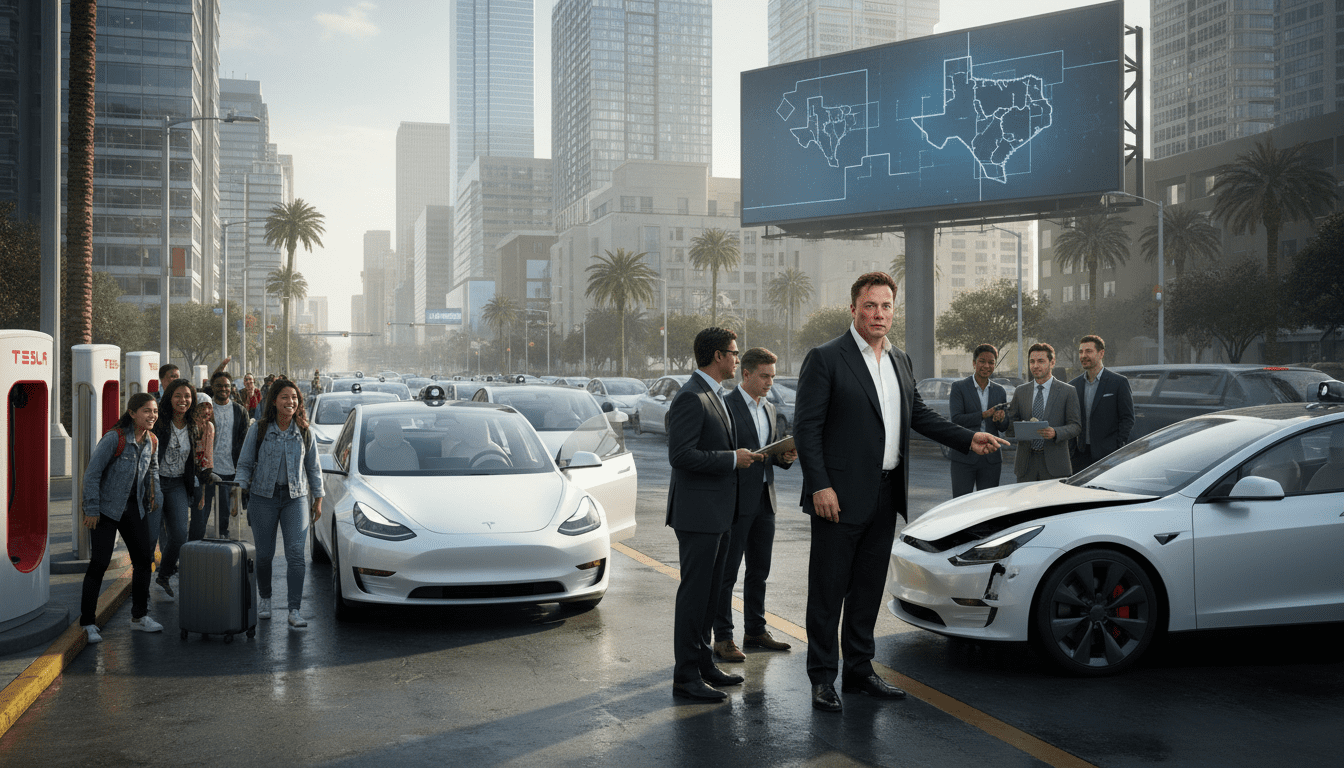
Tesla announced on its social media channel that its robotaxi service is now operating in Dallas and Houston, extending a program first deployed in Austin. The post included a short video clip showing Tesla vehicles operating without human drivers or safety monitors in the front seats. The company did not provide detailed rollout numbers in the announcement, leaving questions about the scale of the initial deployments.
Company posts short video of driverless operations
The social media clip accompanying Tesla’s announcement depicts several vehicles navigating urban streets with no person visibly occupying the driver’s seat. Observers noted the footage is brief and does not include contextual information about routing, passenger presence, or how the vehicles were supervised remotely. Tesla’s post served primarily as a notice of expansion rather than a comprehensive operational update.
Limited fleet presence recorded by trackers
Independent trackers and crowdsourced datasets show only a small number of Tesla robotaxis active in each new market. Publicly available logs registered a single active vehicle in Dallas and a single active vehicle in Houston, compared with dozens reported in Austin. Those counts suggest the initial rollout is tightly controlled and may consist of test or pilot vehicles rather than full commercial fleets.
Austin operations and safety incidents under scrutiny
Tesla’s Austin robotaxi program, which preceded the Dallas and Houston launches, has drawn scrutiny after company filings and public reports linked the service to multiple collisions. Regulatory filings indicate the Austin fleet was involved in a number of crashes since its introduction, prompting questions about system reliability and incident response protocols. Safety advocates and local authorities have called for clearer transparency on the causes, severity, and outcomes of those events.
San Francisco area service remains human-operated
Separately from the driverless robotaxi trials, Tesla continues to operate a limited ride-hail offering in the San Francisco Bay Area that uses human drivers. That service contrasts with the fully driverless deployments in Texas and appears designed to test customer demand while maintaining a human safety layer. The dual approach highlights Tesla’s staged strategy of testing autonomous capabilities in different regulatory environments.
Regulatory and public safety implications for expansion
The expansion into Dallas and Houston places the company squarely in regulatory and public attention as cities consider how to oversee autonomous ride services. Municipal and state agencies face decisions about permitting, data reporting, and insurance requirements specific to driverless operations. Industry analysts say regulators will likely demand regular reporting on incidents and system performance as part of any long-term approval framework.
Operational limits and rider expectations
Tesla has not published fares, availability windows, or precise coverage zones for the Dallas and Houston services, leaving potential riders with little official guidance. The limited number of active cars logged by external trackers suggests availability may be confined to selected neighborhoods or specific test corridors. Early adopters who do find service may encounter variability in wait times and vehicle presence as Tesla calibrates routing and demand.
Industry reaction and competitor context
Other companies developing autonomous ride services have taken more incremental or regulatory-focused approaches, often deploying vehicles with on-board safety operators during initial trials. Tesla’s move to operate without visible drivers in some markets sets it apart and intensifies comparison across the sector. Market observers say the pace of Tesla’s rollouts will be watched closely for signs of broader commercial viability and for how regulators respond to driverless operations in populated urban areas.
What this means for passengers and cities
For passengers, the expansion offers a potential preview of wider access to driverless rides, but the current picture is provisional and uneven across cities. For municipal leaders, the news raises practical issues around curb access, data sharing, and emergency response coordination with a new class of autonomous vehicles. Both groups are likely to press for clearer operational details and incident reporting as deployments continue.
Tesla’s path forward in Texas
With the announcement of Dallas and Houston additions to its robotaxi footprint, Tesla appears committed to scaling its autonomous ride offerings while balancing operational caution. The company will need to address safety oversight, transparency about incidents, and how it measures service quality as it moves beyond initial test markets. Whether the limited vehicle counts expand rapidly or remain small-scale will be a key indicator of the program’s next phase.
The coming weeks should clarify how many vehicles Tesla deploys in Dallas and Houston, how regulators react, and whether the company provides more detailed information about safety performance and service plans.
