
Tesla to produce battery cells at Grünheide with 18 GWh target
Tesla battery cell production in Grünheide will aim for up to 18 GWh capacity and more than €1 billion in investment, reshaping Europe’s battery landscape.
Tesla’s decision to establish battery cell production at its Grünheide, Germany, plant marks a significant development for the European electric-vehicle supply chain. The company said it will equip the site to produce up to 18 gigawatt-hours (GWh) of cells per year and raise total investment in cell and battery manufacturing to more than €1 billion. The move follows a string of stalled European cell projects and positions Tesla as a potential catalyst for renewed industrial momentum.
Investment and factory footprint
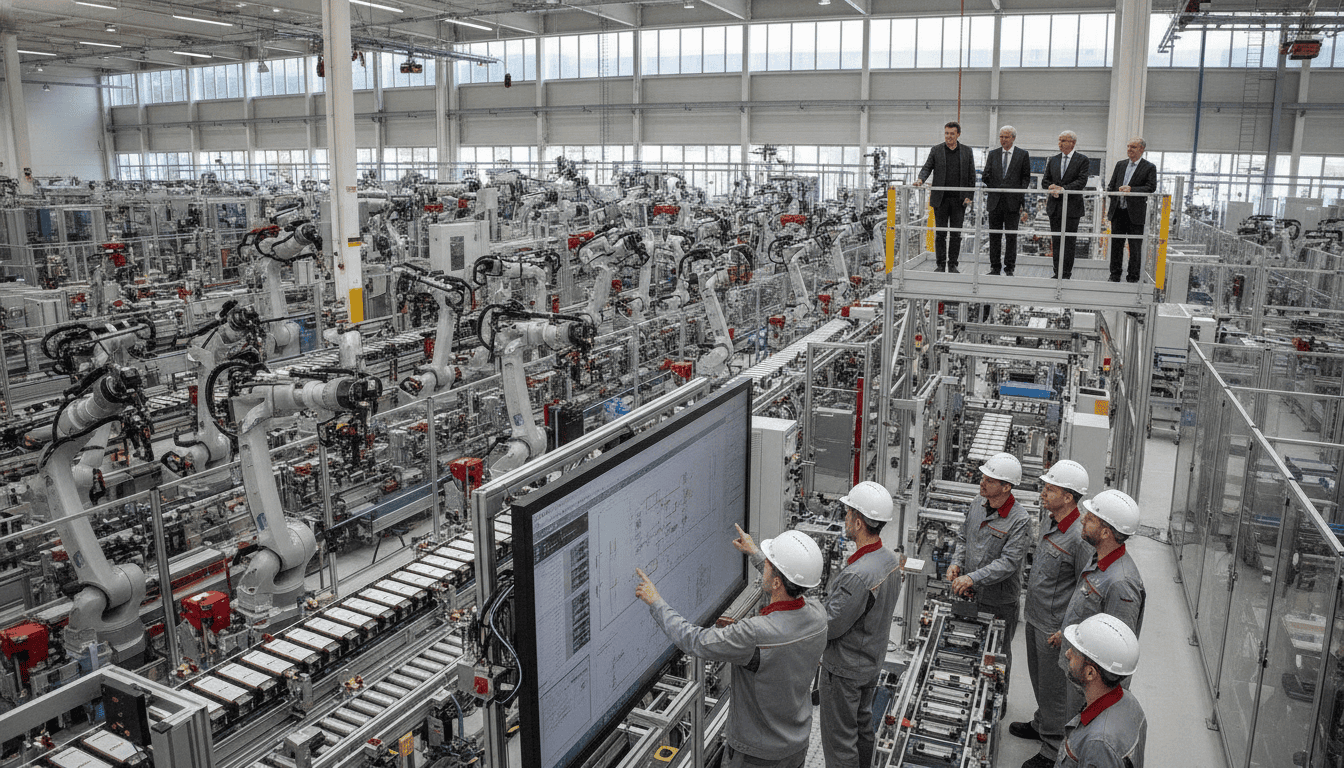
Tesla plans to increase capital spending at Grünheide by several hundred million euros and to direct more than €1 billion toward cell and battery capacity at the site. Company representatives have pointed to new production lines and marked installations inside cleanrooms as visible signs of the investment. A Tesla manager noted that much of the funding is earmarked for plant equipment, with factory floor markings already indicating locations for major machinery.
The expanded facility will include cell winding and electrode-processing areas and will rely on proprietary equipment designs developed or adapted by Tesla and its recently acquired German engineering capabilities. Tesla says that increasing in-house production at Grünheide will reduce dependence on imported cells and support regional supply integration.
Technology: dry electrode process at the core
Central to Tesla’s strategy in Grünheide is adoption of a dry electrode coating process that replaces conventional solvent-based methods. The dry-coating approach eliminates the need for long drying ovens and the energy and solvent-recovery systems associated with wet coating. Analysts and company engineers describe the technology as a major cost and footprint reducer for cell manufacture.
Experts attribute the decision to scale the dry process in part to Tesla’s prior work and acquisitions in the field, as well as recent scale-up of dry-electrode lines in other Tesla plants. Tesla managers and materials scientists say the method lowers energy consumption and cuts both capital and operational costs, altering location economics that previously put European sites at a disadvantage versus China and the United States.
Production targets and industrial implications
The Grünheide cell lines are being configured with an annual target of roughly 18 GWh, a level comparable to other European projects in early stages of expansion. Tesla has tied that capacity to potential vehicle output, estimating the cell volume would support thousands of Model Y units per week at full rate. Company officials have also flagged plans to lift vehicle output at the same site, reinforcing a vertically integrated manufacturing model.
Industry observers say a successful ramp at Grünheide could change calculations for European automakers and suppliers. The depth of Tesla’s planned manufacturing scope — from cell fabrication to module assembly alongside vehicle lines — may encourage new investments by machine builders and upstream material processors that have so far hesitated amid past project failures.
Impact on Europe’s battery ecosystem
Tesla’s move comes after a series of cancelled or downsized cell projects across Germany and Europe, and it has prompted renewed discussion of cluster effects in the region. Local officials and industry executives have welcomed the potential for knock-on investments, citing opportunities for local machine builders, recycling firms and chemical suppliers to secure long-term contracts.
Companies planning upstream processing and recycling projects near Grünheide and other German sites have stressed the importance of regional cell production to develop a resilient supply chain. Proponents argue that building manufacturing competence locally is critical to reduce reliance on distant suppliers and to create recycling loops that keep valuable battery materials in Europe.
Environmental and community concerns
Plans to produce cells in a sensitive area have drawn scrutiny from local groups and environmental advocates concerned about groundwater and chemical risks. Critics argue that even with dry-coating technology, cell manufacturing involves substances and processes that must be tightly controlled to prevent contamination. Local activists and civic organizations have called for stringent monitoring and, in some cases, temporary halts to certain construction steps until safeguards are validated.
Tesla and regional regulators emphasize containment measures, including impermeable foundations beneath hazardous-material zones and comprehensive water monitoring. Company leaders also maintain that the chosen production techniques will reduce water and solvent use compared with conventional factories, a point that regulators have referenced in permitting documents.
Workforce and skills development
Expanding cell operations at Grünheide will require the recruitment of a substantial workforce, with Tesla seeking technicians, mechatronics specialists, automation engineers and electricians among other roles. Company managers have said that direct experience in cell production will not be a strict hiring prerequisite, signaling a broader skills-training effort to build local competence.
Universities, trade schools and industry training centers in the region may see increased demand as Tesla and suppliers scale recruitment. Educators and industry analysts note that the availability of trained personnel will be a pivotal factor in how quickly and efficiently Grünheide’s cell lines can be ramped to target volumes.
Tesla’s plan to embed cell production at Grünheide thus combines technological change, significant capital investment and complex community and policy considerations. If the company can deliver on performance and environmental safeguards while building a local workforce and supplier base, the project could alter the competitive dynamics of battery cell manufacturing in Europe.
