
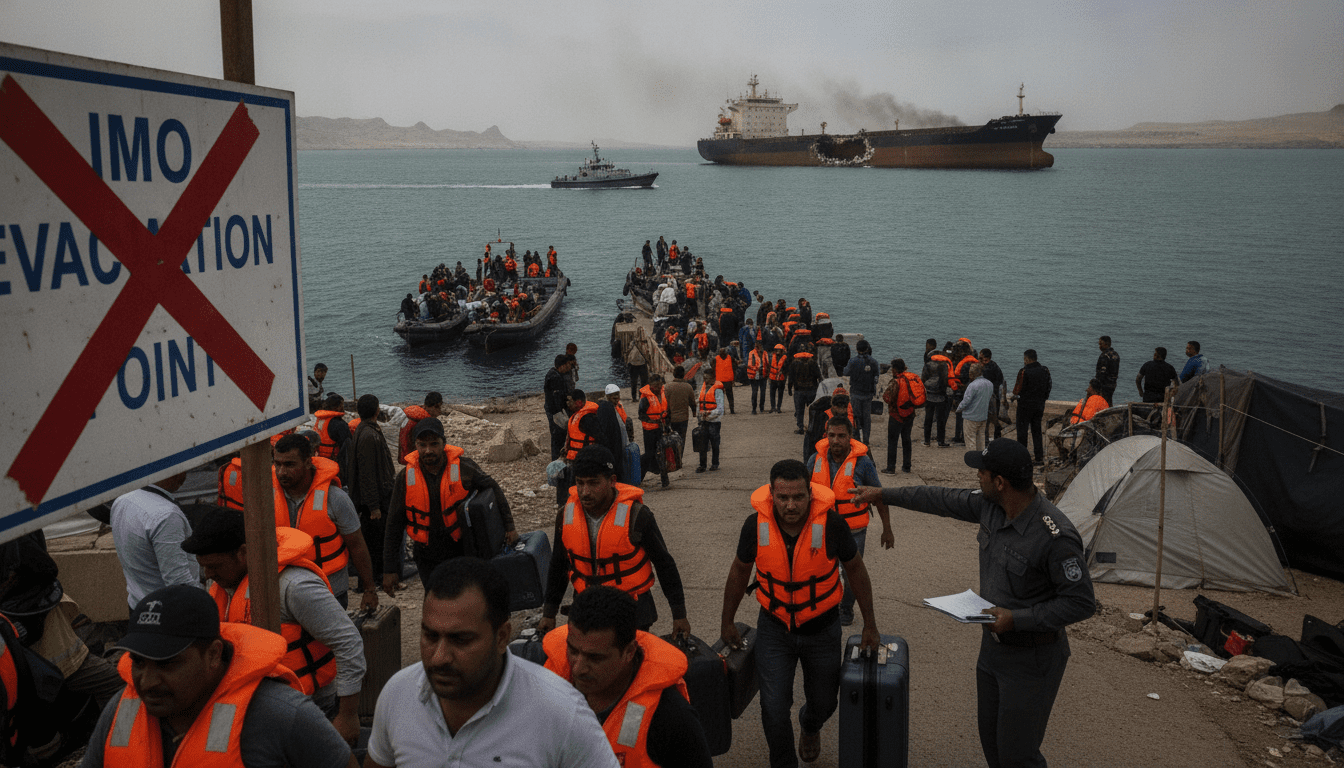
IMO Pauses Strait of Hormuz Evacuation After Ship Struck in Gulf of Oman
IMO halts Strait of Hormuz evacuation on June 25, 2026 after a vessel was struck in the Gulf of Oman, drawing Iranian warnings and suspending ship movements.
The International Maritime Organization announced on June 25, 2026 that it has temporarily paused the Strait of Hormuz evacuation after a vessel was reportedly struck in the Gulf of Oman. The pause affects an operation that sought to move roughly 600 ships and about 11,000 mariners stranded since the start of the war on February 28, 2026. The decision follows a reported hit on a vessel that had transited the strait, prompting fresh safety concerns for commercial navigation in the region.
IMO suspends evacuation after reported strike
IMO Secretary-General Arsenio Dominguez said the agency would halt the evacuation to reconfirm that safety guarantees remain valid for ships already listed for removal. The evacuation had been launched earlier this week to open two exit corridors — one routed through Iranian waters and another via Omani waters under U.S. oversight — after months of de facto closure. Dominguez said the suspension was driven by information about an attack on a ship that had passed through the strait, and that the pause would be temporary while conditions are reassessed.
Details of the reported incident
British maritime authorities said a cargo vessel reported being struck on its starboard side about 14 kilometres southeast of Oman’s port of Dahit. Separate maritime security reporting identified the ship as the Singapore-flagged container vessel Ever Lovely, though sources said the vessel was not operating under the IMO evacuation framework. One security source told reporters the strike was likely caused by a drone, but investigators have not publicly confirmed the weapon or the party responsible.
Iran issues route warnings and enforces designated lanes
Iranian authorities moved swiftly after the strike, warning vessels to sail only on Tehran-approved routes through the strait. The Persian Gulf Strait Authority, created by Iran to manage transit through the choke point, posted that passage outside its designated routes “will not be covered by the guarantee of safe passage.” The authority also said owners, operators and vessel masters would bear responsibility for any consequences arising from transit through unauthorised lanes, increasing the legal and commercial risks for ship operators.
Maritime traffic remains reduced and cautious
Ship-tracking data shows traffic has not returned to pre-war volumes, with maritime monitoring firms reporting far fewer verified crossings than before February 28, 2026. MarineTraffic recorded 70 verified crossings on Wednesday and 31 on Tuesday, compared with roughly 120 vessels per day prior to the conflict. Industry analysts said operators are moving cautiously and preferring controlled, phased transits rather than an immediate large-scale resumption of traffic.
Regional and international responses to the security shift
Oman’s Defence Ministry warned the evacuation would be phased and flagged an elevated collision risk that requires gradual, controlled movements of ships. Denmark has announced plans to join an international maritime mission led by France and the United Kingdom to support reopening the waterway. Maritime security firms and naval authorities are coordinating navigational advisories, but the sudden halt to the IMO plan has complicated those efforts and introduced uncertainty for insurers and charterers.
Operational impact on stranded vessels and ports
The suspension of the evacuation affects hundreds of commercial and energy-laden ships anchored off regional ports, some of which have been waiting for days to resume voyages. Congestion around Omani anchorages and ports — where tankers and cargo vessels have lain at anchor — is raising logistical challenges for bunkering, crew changes and cargo schedules. Ship operators now face a mix of route restrictions, potential insurance complications and operational delays as stakeholders seek updated safety guarantees before moving further.
The pause comes as diplomatic efforts continue to seek a broader settlement that could stabilise shipping lanes. A memorandum of understanding reached earlier in June 2026 between the United States and Iran aimed at de-escalation had opened a narrow window for resuming traffic, but the June 25 incident underlines how quickly security conditions can change. Naval and commercial sources say any return to steady trade flows will depend on clear and mutually accepted guarantees for safe passage, verified mine-clearance measures where required, and transparent coordination among littoral states.
International maritime authorities and private security consultancies are expected to convene further briefings in the coming days to reassess risk and determine whether the evacuation plan can be resumed. In the meantime, shipowners, charterers and insurers will be watching for firm assurances from governments and for evidence that any strikes on commercial shipping will be deterred or prevented.
