
Stiftung Warentest Finds Banned Chemicals in Baby Strollers Across Leading Brands
German consumer watchdog Stiftung Warentest found banned softeners and PFAS in several baby strollers; only four of twelve tested models were rated “good”.
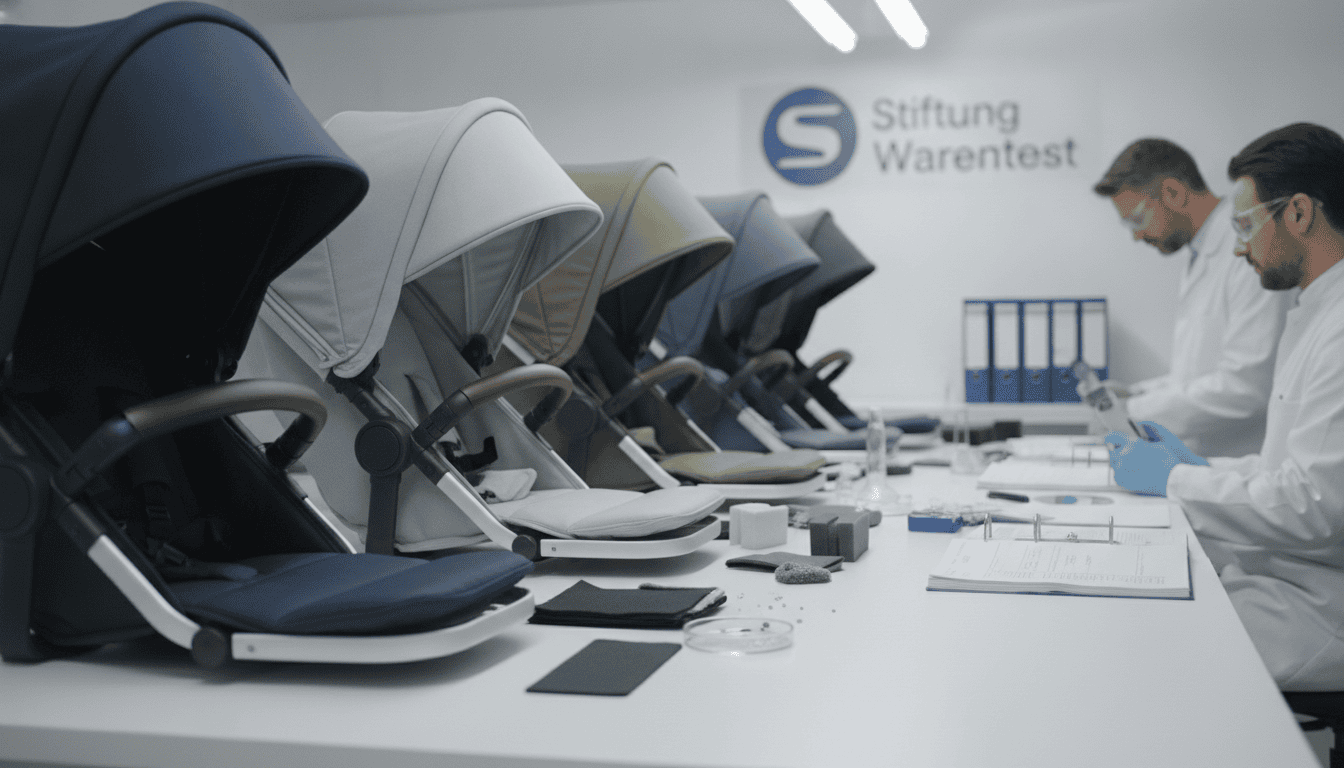
The German consumer testing foundation Stiftung Warentest reported that its latest test of baby strollers detected concerning levels of banned softening agents and PFAS “forever chemicals” in multiple models, raising questions about product compliance and ingredient control across the market. The test sampled twelve strollers from well-known manufacturers and concluded that while most products were structurally sound, chemical findings require urgent remediation. Consumers and regulators are now assessing the implications for product safety, labeling and manufacturer responsibility.
Details of the chemical findings and regulatory concerns
Stiftung Warentest said the laboratory analysis identified phthalate-like softeners and per- and polyfluoroalkyl substances (PFAS) in several stroller fabrics and components. PFAS are persistent in the environment and have been subject to increasing restrictions in the EU and elsewhere, prompting critics to call the detections unacceptable for children’s products. The foundation’s investigations team emphasized that some of the substances found have been prohibited in certain uses for years, signaling potential non-compliance or lapses in supply-chain controls.
Models tested and overall ratings
The test covered twelve strollers, consisting of nine combination single-child models and three twin or duo models, assessing chemical composition, ergonomics, safety and durability. Only four of the twelve models earned an overall rating of “good,” with the remaining products downgraded mainly because of the chemical findings and, in a few cases, dimensional shortcomings. Although none of the tested strollers showed critical safety faults in mechanical or structural tests, the chemical ratings drove significant reductions in overall scores.
Brands named and scope of affected products
The sampled products included models from established manufacturers such as Britax Römer, Bugaboo, Hauck, Joolz, Maxi‑Cosi and Stokke, according to the foundation’s summary of tested items. Several of these brands are household names in the European market, which has intensified attention on how banned or restricted substances entered consumer-facing components. Stiftung Warentest did not report that every listed brand had multiple non-compliant items, but its findings covered several models across different manufacturers.
Fit, comfort and other performance results
In addition to chemistry, testers examined the physical dimensions of carrycots and lie-flat assemblies, finding that some liewannen (bassinet units) were too narrow or short to comfortably accommodate infants for an extended period. Despite these dimensional critiques, the foundation noted that all strollers were “particularly robust” in build and that no model displayed grave safety defects in crash, stability or braking assessments. The mixed results underscore a split between satisfactory mechanical performance and problematic chemical composition.
Implications for manufacturers and supply chains
Holger Brackmann, head of investigations at Stiftung Warentest, criticized the presence of prohibited substances and urged manufacturers to address the shortfall in material compliance. The foundation’s assessment implies that suppliers and brands must improve material sourcing, testing and traceability to guarantee that banned softeners and PFAS do not appear in finished baby strollers. Industry observers said the report could trigger broader supply‑chain audits and calls for clearer labeling and testing standards across Europe’s juvenile product market.
What parents and retailers should consider now
Parents who own or plan to buy baby strollers should consult product documentation and labels for material declarations and check for recent updates from manufacturers and retailers. Those preferring to reduce potential exposure can prioritize models that received a “good” overall rating or contact vendors for detailed material safety data and remediation plans. Retailers and second‑hand sellers should also review inventories to identify models flagged by independent tests and communicate transparently with customers.
Stiftung Warentest, an independent foundation that has tested consumer products since 1964 and funds most of its work through publication sales and subscriptions, said it would publish full test details and laboratory data to allow consumers to compare models and make informed choices. The foundation’s findings are likely to prompt follow‑up by regulators and voluntary corrective action by some manufacturers.
The report underlines persistent challenges in ensuring chemical safety for infant products and the need for tighter controls from raw material suppliers to finished-goods manufacturers, while reaffirming the role of independent testing in spotting compliance gaps.
