
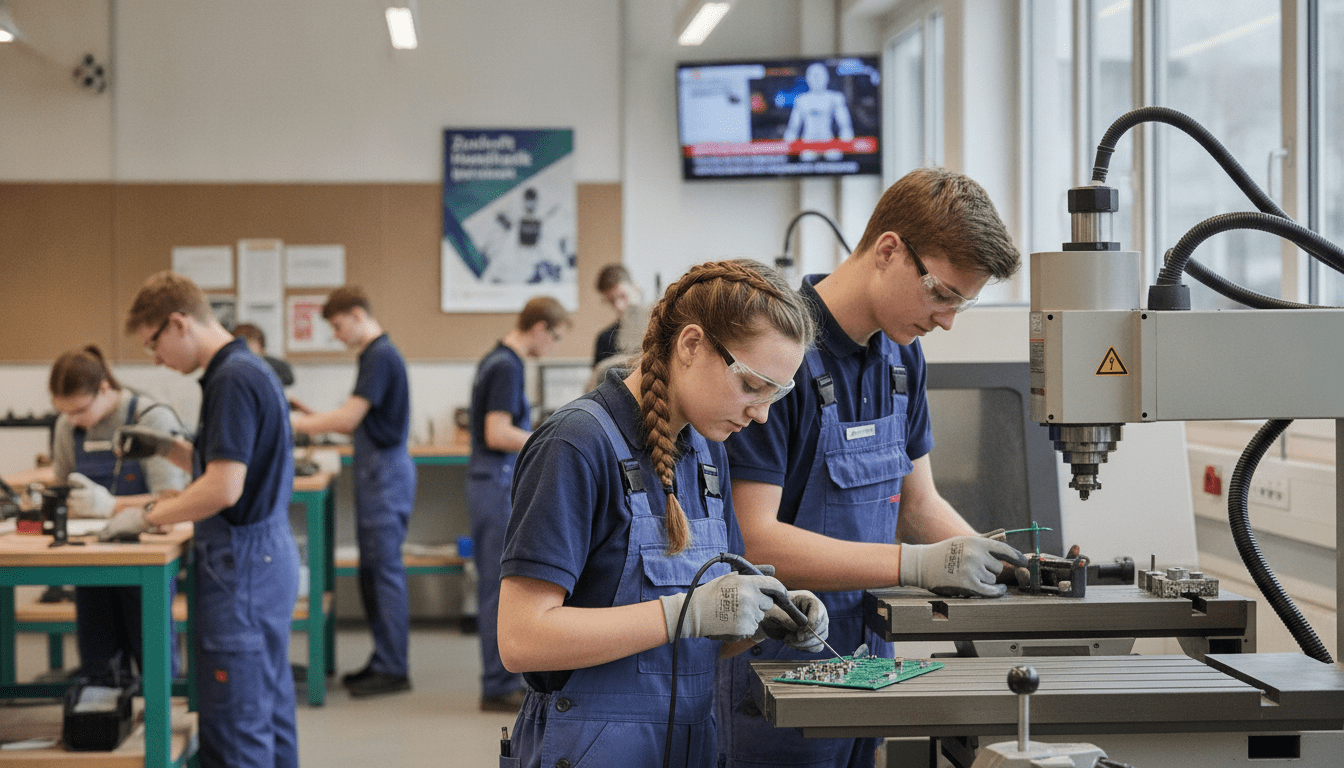
Apprenticeship Surge: More Abitur Graduates in Germany Choose Trades Over University
Rising numbers of Abitur graduates in Germany are opting for apprenticeship training in skilled trades amid job-market shifts, AI risks and strong local demand.
Young Germans with Abitur are increasingly choosing apprenticeship routes into skilled trades rather than pursuing university degrees, according to reports from regional chambers of crafts and training providers. The apprenticeship trend reflects both shifting attitudes toward practical work and a growing mismatch between the supply of graduates and demand in the labor market. Employers in sectors from plumbing to electrical engineering report thousands of vacancies, and many young people cite clearer job prospects and hands-on learning as decisive factors.
Chambers and companies report rising apprenticeship enrollments
Regional chambers of crafts have recorded a measurable uptick in applications from Abitur holders and, in some cases, university graduates switching to vocational training. Training offices say outreach campaigns, open days and modernized course offerings have made apprenticeships more visible and attractive to academically qualified young people. Employers note that candidates with Abitur often bring study skills and theoretical grounding that complement practical instruction.
Apprenticeship programs remain dominated by the dual system of classroom and on-the-job training, which local industry groups highlight as a key selling point. The system’s blend of certified coursework and paid workplace experience provides immediate income and a clear occupational pathway, advantages that many prospective students find persuasive compared with uncertain entry into some academic fields.
Labor market pressures and automation fears pushing choices
Economic shifts and concerns about automation and artificial intelligence have intensified interest in trades that are perceived as resilient to technological disruption. Young people and their families increasingly weigh long-term employability when choosing between university and apprenticeship. Employers across construction, manufacturing and building services report that demand for skilled technicians and craftsmen remains high despite broader economic headwinds.
At the same time, early-career unemployment and prolonged job searches for some recent graduates have undermined the promise of a university degree as a guaranteed route to secure employment. For many observers, the apprenticeship appeal lies in immediate placement, practical skill acquisition and clearer progression to independent business ownership.
Earnings potential and routes to entrepreneurship
Beyond initial training, trade careers offer multiple paths for income growth that can outpace early-career salaries in some academic professions. After completing an apprenticeship, craftsmen and women who pursue further qualifications—such as master craftsman certification—or who start their own firms can significantly increase earnings. Local business associations point to success stories of small workshops growing into profitable regional companies.
However, income trajectories vary widely by trade, region and market conditions. Apprenticeship wages during training are modest, and the transition to higher pay depends on experience, certification and, often, entrepreneurial risk. Observers advise prospective trainees to assess long-term qualification routes and regional demand before committing.
Workplace challenges reported by apprentices
Despite improving perceptions of trades, apprentices report persistent problems in certain workplaces, including long hours, physically demanding tasks and, in some male-dominated trades, incidents of sexism or exclusion. Training supervisors and trade unions acknowledge these concerns and say targeted efforts are needed to improve workplace culture and ensure fair conditions for young workers.
Regulators and industry groups are under pressure to tighten oversight of training quality and to enforce standards that protect apprentices. Advocates call for better complaint mechanisms, more transparent contracts and stronger support for small firms that struggle to provide structured mentoring.
Industry responses and efforts to diversify intake
To sustain recruitment momentum, trade associations and chambers are stepping up campaigns aimed at broader and more diverse applicant pools. Initiatives include vocational taster weeks for school-leavers, female-focused recruitment drives in technical trades, and promotional work that highlights digital skills and modern equipment in contemporary workshops. Many employers are also marketing the pathway to self-employment and the potential for skilled technicians to specialize in emerging areas such as renewable energy installation and smart building systems.
Training institutions are updating curricula to include digital competencies and customer-service skills, reflecting the evolving nature of trade work. Those changes are intended to make apprenticeship journeys more compatible with the expectations of Abitur holders and other academically trained entrants.
Public discussion around this shift is intensifying as policymakers evaluate how best to support vocational pathways alongside higher education. Observers say coordinated investment in training infrastructure and improved career guidance in schools will be critical if the apprenticeship trend is to translate into robust, long-term workforce supply.
The uptick in apprenticeship enrollments among Abitur graduates signals a recalibration of career expectations in Germany, with many young people prioritizing immediate employment, tangible skills and the prospect of running their own businesses over a traditional academic route. Continued monitoring of outcomes, wages and workplace standards will determine whether this trend represents a sustainable rebalancing of the country’s education-to-work transition.
