
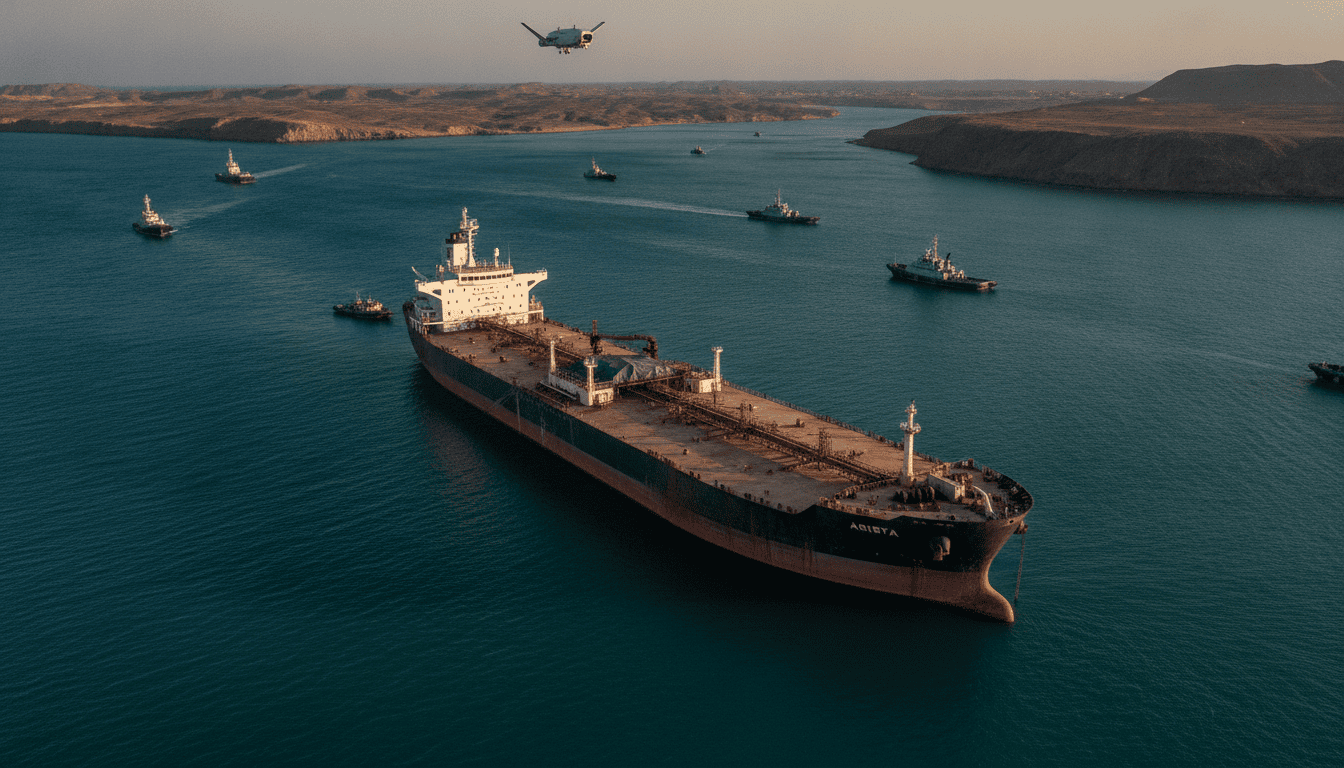
TankerTrackers links Mohammad Hossein Shamkhani to Arista stranded in the Strait of Hormuz
TankerTrackers says Mohammad Hossein Shamkhani’s Arista has been stuck in the Strait of Hormuz since March, tying the vessel to a sanctioned oil-smuggling network under fresh scrutiny.
Iranian state media reported this week that a foreign ship had run aground in the Strait of Hormuz after following a route it said was “US-suggested,” but maritime monitoring data show the vessel identified as the Arista has been stationary north of Hormuz Island since mid-March. TankerTrackers and ship-tracking records place the ship at coordinates just inside Iranian territorial waters, contradicting Tehran’s recent account. (apnews.com)
Strait of Hormuz incident and conflicting accounts
Iranian broadcasters framed the grounding as a navigational accident involving a vessel that ignored naval directions, a narrative that was relayed across state channels on July 1 and 2. Shipping analysts immediately flagged inconsistencies between that account and continuous Automatic Identification System (AIS) data showing the Arista had not moved from the same location for months. (gulfnews.com)
Independent trackers and analysts say the vessel is Comoros-flagged and was previously listed under the name Gauja before changes in registry and identity were recorded last year. Those changes, plus the ship’s prolonged inactivity at the reported coordinates, have sharpened scrutiny of its ownership and operations. (apnews.com)
Identification of the Arista and ties to Shamkhani
Tracking firms and press reports identify the stuck vessel as Arista and link it to a broader maritime network run by Mohammad Hossein Shamkhani, an Iranian shipping magnate who has been subject to Western sanctions. Analysts point to vessel name changes, flag switches and corporate registrations that match patterns used to obscure ownership. (apnews.com)
Officials and investigators say the Arista’s registry and historical movements are consistent with ships previously flagged in sanctions actions and civil forfeiture complaints, raising questions about whether the recent public explanation fully reflects the ship’s status. (apnews.com)
Allegations against Mohammad Hossein Shamkhani
Mohammad Hossein Shamkhani, described by U.S. officials as a central figure in a multi-billion dollar shipping network, is accused of operating a fleet that moves Iranian and Russian oil while obscuring its origin. U.S. Treasury statements say the Shamkhani network uses layers of corporate front companies and complex vessel transactions to evade sanctions and generate revenue for actors tied to Tehran and Moscow. (home.treasury.gov)
Western authorities have repeatedly linked Shamkhani to a broader “shadow fleet” ecosystem that facilitates sanctioned exports, and they say his activities have included operations across the Persian Gulf and routes that transfer crude and refined products between ships at sea. The Treasury has described recent actions as part of a coordinated effort to disrupt those channels. (home.treasury.gov)
Investigations into property, passports and financial links
Reporting by investigative journalists has supplemented government findings, alleging that members of the Shamkhani family used assumed names and Caribbean “golden passports” to acquire luxury real estate in Dubai and other jurisdictions. Those ownership structures are cited as part of efforts to hide proceeds and provide cover for sanctioned transactions. (occrp.org)
Civil forfeiture filings and other enforcement moves in the United States have sought to seize funds and assets tied to the shipping network, asserting that the underlying commercial activity was structured to avoid sanctions and to launder revenues through multiple intermediaries. Those legal steps underscore the cross-border reach of the inquiries. (irs.gov)
Sanctions, international response and enforcement steps
The Shamkhani network was first targeted in a broad U.S. sanctions action in July 2025, with additional Treasury designations and enforcement measures announced in subsequent months as evidence and tracking data accumulated. The U.S. Treasury has emphasized coordinated pressure on shipping intermediaries and vessels tied to the network. (home.treasury.gov)
European Union measures aimed at the so-called shadow fleet and related enablers have expanded in recent months, reflecting an effort to clamp down on techniques used to conceal oil origin and ownership. The EU and other partners have increasingly targeted vessels, registries and service providers seen as instrumental to circumvention schemes. (europa.eu)
Mohammad Hossein Shamkhani has not issued a public response to the recent tracking revelations, and his representatives were not immediately available for comment when contacted by reporters following the disclosures. (occrp.org)
Maritime risks and implications for global shipping routes
Analysts say the Arista episode highlights the operational risks of a fragmented shipping landscape in which ageing tankers, frequent reflagging and complex ownership webs complicate enforcement. The presence of vessels tied to sanctioned networks in busy chokepoints such as the Strait of Hormuz adds navigational, legal and diplomatic dimensions to routine maritime traffic. (gulfnews.com)
The incident may prompt fresh calls from governments and industry groups for improved tracking, stricter vetting of registries and more robust information-sharing among states and private maritime monitors to prevent sanctioned cargoes from moving undetected. Enforcement authorities say integrating financial investigations with ship movement data is central to future efforts. (home.treasury.gov)
As investigators and shipping monitors continue to examine AIS logs, registry filings and corporate records, the Arista’s prolonged presence north of Hormuz will remain a focal point for questions about how sanctioned networks operate and how effectively international measures can disrupt them.
