
German growth package unveiled: 34 measures aim to jump-start economy but experts warn gains will be small
New 34-point German growth package, the “Program for Upswing and Employment,” promises tax relief, labor changes and deregulation—economists say growth effects will be modest. (155 characters)
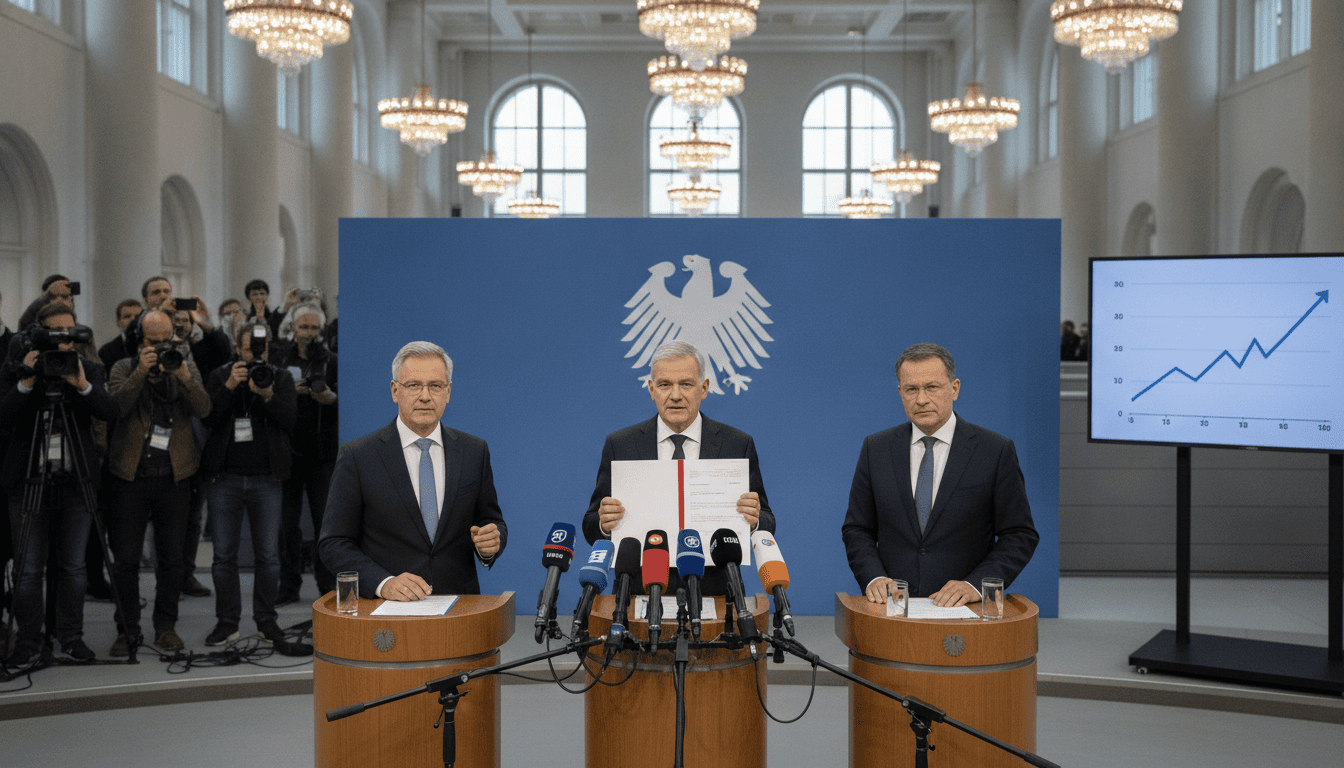
The coalition unveiled a 34-measure “Program for Upswing and Employment” meant to revive the economy, with Chancellor Friedrich Merz presenting the package as a decisive step to “get Germany moving” again. The German growth package focuses on tax adjustments, workplace rules, data law consolidation and a series of business-friendly deregulations, but critics and economists argue the measures fall short of delivering a major growth impulse. Key provisions include targeted tax relief for families, a partial offset of inflation-driven tax creep, tighter rules on sick notes and a rollback of reporting obligations for companies.
Coalition unveils 34-point growth package
The 12-page plan presented at the chancellery lists 34 measures intended to spur jobs and investment while easing burdens on households and businesses. Chancellor Friedrich Merz framed the package as a “big step forward” that would make the economy more dynamic and competitive. The government emphasized support for middle- and lower-income earners and measures aimed at restoring investor confidence amid recent real-estate and policy debates.
Economists say growth uplift will be limited
Leading economists questioned the package’s capacity to produce a sharp growth uptick. Clemens Fuest of the Ifo Institute described the measures as likely to be “positive but small” in their growth impact, while Moritz Schularick of the Kiel Institute warned that gains could approach zero unless the plan substantially reduces bureaucracy. A recurring criticism is the absence of broad spending cuts, which limits the scope for deeper tax relief and sustained fiscal stimulus.
Tax changes favor families but only partially offset inflation effects
The finance ministry put the net fiscal relief from the tax measures at roughly €10 billion, effective in 2028, with most benefits concentrated on families with children. The package foresees a phased rise in the basic tax allowance to €12,900 by 2028, an increase in child benefit to €272, and a €200 boost to the employee lump-sum deduction. Yet the coalition confirmed it will not fully compensate for cold progression—the automatic tax burden increase caused by inflation—leaving critics to call the approach a partial and insufficient remedy.
Redistribution and new top-rate thresholds announced
Measures to shift the tax burden include steeper rates for very high incomes while easing loads for middle earners. The government will introduce a 45 percent top rate at a taxable income of €250,000 and a 47 percent rate from €280,000, while the threshold for the 42 percent rate will move modestly to €70,600. Observers note these changes are calibrated to fund targeted relief but will do little to boost disposable income for many singles and childless taxpayers.
Workplace and sick-leave rules tightened, provoking medical backlash
The package rolls back pandemic-era allowances for telephone sick notes and requires employees to present a medical certificate from day one of illness unless companies opt out in contracts. Employers and business associations praised the move as a response to Germany’s high sickness absence costs, estimated at €82–85 billion annually for continued pay. Doctors’ groups and insurers, however, warned of overburdened practices and rising administrative strain, predicting longer waits and potential impacts on patient care.
Deregulation and data law consolidation aimed at start-ups and SMEs
A central plank of the plan is a broad reduction in reporting duties and a “radical reversal of the burden of proof” for bureaucratic obligations, which ministers said would free companies to innovate. Firms will also be permitted to extend fixed-term contracts to a total of four years with up to six renewals, a change pitched as improving hiring flexibility. The coalition further plans to centralize data regulation under a federal commissioner and create a single “data law book” to simplify compliance across the country.
The business community offered a mixed response, with the German Association of Industry (BDI) calling the package a sign of reform willingness but not a powerful growth catalyst, while the Chamber of Commerce warned Germany still faces one of the world’s heaviest tax and contribution burdens. Supporters within government argued the measures also block local expropriation initiatives and clarify property rights—steps they say are essential to re-attract investment flows concerned by recent municipal proposals.
The package includes targeted reductions in tax-favored benefits: the deductibility for domestic renovation work will drop from 20 percent to 15 percent (lowering the maximum annual tax relief), and the flat-rate tax on mini-jobs will rise from 2 to 5 percent, changes whose effects on labor supply and demand will require close monitoring. Small and medium-sized enterprises stand to gain from fewer obligatory company data officers and clearer federal oversight, but start-ups had lobbied for even more far-reaching labor-market relaxations.
Public reaction is split along economic and professional lines: employer groups welcomed steps to curb absenteeism and red tape, while medical associations and unions warned that stricter sick-leave rules could create unintended pressure on physicians and erode trust between employers and workers. Academics and fiscal experts urged that without more substantial spending discipline or broader tax reform, the German growth package is unlikely to shift the country onto a markedly faster long-term trajectory.
The coalition now faces the task of translating the policy paper into legislative proposals and concrete timelines, with many measures slated to take effect in stages through 2028. Lawmakers, stakeholders and legal authorities will scrutinize the details as bills enter parliament, and the real economic impact will depend on implementation choices and whether the administration follows through on ambitious deregulation promises.
